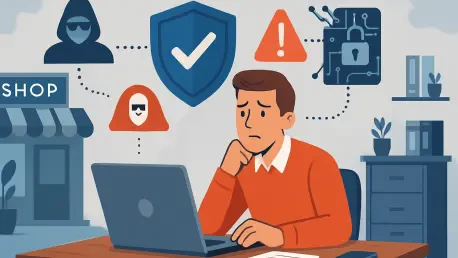

Professional consultants often hold sensitive strategy documents and proprietary client data that function as digital keys for hackers to unlock third-party corporate secrets. In the hyper-connected economy of 2026, small businesses have migrated almost entirely into the digital space to maintain operational efficiency and reach a global customer base. While this transition offers immense opportunities for rapid scaling and market penetration, it simultaneously exposes these enterprises to a vast frontier of vulnerabilities that were non-existent a few decades ago. For many entrepreneurs, digital infrastructure serves as the essential backbone of their operations, yet it frequently remains one of the least protected assets within their overall business portfolio. Recent shifts in the global threat landscape have transformed cyber liability insurance from an optional niche product for tech giants into a fundamental requirement for small firms across every economic sector. The harsh reality of modern commerce is that no business is considered too small to be a target for sophisticated cybercriminal organizations. In fact, the limited security budgets and lean staffing models of smaller companies often make them the most attractive candidates for opportunistic hackers looking for a quick payday without the resistance offered by corporate giants. Navigating this dangerous risk environment requires a comprehensive understanding of the financial, legal, and operational safeguards necessary to survive a data breach.
The Strategic Miscalculation: Why Small Firms Are Primary Targets
Small business owners frequently fall into the trap of the small business fallacy, operating under the mistaken belief that their internal data is not valuable enough to attract professional criminal attention. However, modern hackers are rarely searching for the most prestigious target in a specific industry; instead, they are looking for the path of least resistance to extract any form of liquidable data. Small firms typically lack the robust, multi-layered IT departments and sophisticated security protocols found in major corporations, making them easy gateways for large-scale data harvesting operations. A single point of failure, such as an unpatched legacy software application or a compromised employee login through a basic phishing attempt, can grant a malicious actor full access to sensitive client files, personnel records, and private financial data. Once an intruder gains access, they can monitor internal communications, steal identities, or deploy fraudulent payment schemes at their leisure, often without being noticed by the business owner until the damage is already irreversible. Because many small enterprises lack the monitoring tools to detect these intrusions in real-time, a hacker can remain active within a network for several months before any red flags appear to the management team.
This vulnerability is compounded by the fact that smaller organizations often prioritize immediate functionality and customer service over the long-term security of their digital assets. In the rush to deliver products or services, security updates are delayed, and administrative privileges are often granted too broadly across the staff. Hackers are well aware of these operational tendencies and use automated scanning tools to identify businesses with weak perimeter defenses. These tools do not discriminate based on the size of the company or its annual revenue; they simply search for open ports and known software vulnerabilities that can be exploited for a profit. When a small business is breached, the primary goal of the criminal is often to move laterally into the accounts of larger partners or clients, turning the small business into an unintentional Trojan horse. This dynamic makes the security posture of a small firm a matter of concern not just for the owner, but for every partner and vendor within their professional network. Consequently, failing to maintain high security standards can lead to a loss of trust that is far more damaging than the initial technical breach itself.
Quantifying the Crisis: Data Breach Statistics in the Current Economy
Current data from the beginning of 2026 highlights a sobering trend within the global small business community, with a vast majority of enterprises reporting significant security incidents or data breaches within the last twelve months. Statistics indicate that approximately 81% of surveyed small businesses experienced some form of security compromise, effectively debunking the common misconception that hackers only pursue high-profile multinational corporations. For a small business owner, the strategy of flying under the radar is no longer a viable or responsible method of risk management, as criminal organizations now utilize artificial intelligence to scan the internet for any weak entry point in real-time. These automated attacks are relentless and indifferent to the specific nature of the business, focusing instead on the ease of data extraction and the likelihood of a successful extortion attempt. The sheer volume of these attacks means that for most small enterprises, the question is no longer if they will be targeted, but how well they are prepared to handle the inevitable attempt on their systems.
The financial fallout from these digital incidents is frequently catastrophic, with total losses for a single breach often reaching hundreds of thousands of dollars when accounting for recovery costs and legal fees. For a small enterprise operating on tight profit margins, such a significant financial hit can be completely insurmountable without the proactive support of a dedicated insurance policy. Many business owners find themselves in a position where they are forced to drastically hike prices for consumers to recoup their losses or, in the most severe cases, shut down their operations entirely because they simply lack the liquid capital to recover from a sophisticated digital attack. Beyond the immediate monetary loss, the long-term impact on customer retention and brand reputation can haunt a business for years, as clients are often hesitant to return to a provider they perceive as negligent with their personal information. The cost of acquiring new customers after a publicized breach is significantly higher than maintaining a secure environment from the outset, making cyber insurance an essential component of any sustainable business model in the current decade.
Professional Services Vulnerability: Consultants and Financial Advisors
While every business with an active internet connection faces significant risks, professional and management consultants are particularly vulnerable because they function as high-value information brokers. These specialized firms store proprietary client strategies, detailed financial forecasts, and sensitive legal documents that serve as digital keys to other larger organizations. This concentration of high-value intelligence makes them prime targets for business email compromise schemes, where hackers infiltrate executive accounts to redirect large payments or harvest sensitive trade secrets for sale on the dark web. A consultant whose email has been hijacked can unknowingly send malicious links to their entire client list, effectively spreading the infection and causing massive collateral damage across multiple industries. This ripple effect can lead to professional liability claims that extend far beyond the initial cost of repairing the consultant’s own IT infrastructure. The interconnected nature of consulting work means that a single security lapse can destroy decades of built-up professional trust in a matter of hours.
The financial services sector, including local accounting firms and independent financial advisors, handles what is considered the gold standard of stolen data in the criminal underworld. Information such as Social Security numbers, internal revenue identifiers, and private bank account details provides everything a criminal needs to execute identity theft or massive financial fraud. A breach in this industry triggers a complex and expensive chain of legal obligations that most small business owners are unprepared to manage on their own. These requirements often include mandatory notifications to all affected clients across multiple jurisdictions, the provision of multi-year credit monitoring services, and potential regulatory fines from government agencies. Cyber liability insurance is specifically designed to handle these post-event expenses, which can quickly drain a firm’s cash reserves and lead to insolvency. Without the specialized legal and technical support provided by an insurance carrier, the administrative burden of complying with data privacy laws can be enough to paralyze the daily operations of a small financial firm.
High-Value Transaction Fraud: The Real Estate Crisis
Real estate professionals currently face a unique and growing crisis involving high-value wire transfers and increasingly sophisticated spoofing techniques. Criminals often monitor the communications between real estate agents, home buyers, and title companies to identify the precise moment when a large sum of money is scheduled to be moved. By using deepfake technology or highly convincing email templates, hackers can intercept these communications and provide fraudulent banking details to divert closing costs or down payments into accounts they control. The scale of this specific type of fraud is massive in 2026, and because these transactions involve the life savings of individuals, the loss of even a single transfer can result in devastating litigation and permanent reputational damage for the agency involved. The speed at which these funds are laundered or moved across international borders makes recovery almost impossible without the immediate intervention of specialized forensic teams and law enforcement agencies coordinated through an insurance provider.
The emotional and financial toll on the victims of real estate fraud often leads to aggressive legal action against the broker or agent, regardless of whether the security lapse occurred on the client’s side or the professional’s side. Defense costs in these cases can be exorbitant, as attorneys must navigate complex questions of digital liability and professional duty of care. Furthermore, a real estate firm that becomes associated with a wire fraud incident may find it impossible to secure future partnerships with title companies or mortgage lenders, effectively ending their ability to do business in the local market. Cyber insurance provides a critical buffer in these scenarios, offering not only the funds to settle claims but also the expert public relations support needed to manage the fallout. In an industry built entirely on trust and the secure handling of large assets, having a robust insurance policy is a clear signal to clients that the firm takes its fiduciary responsibilities seriously and has the resources to back up its promises.
Retail Infrastructure Risks: POS Malware and Payment Integrity
In the retail and restaurant industries, the Point of Sale system represents the most critical vulnerability for modern business owners. Cybercriminals utilize specialized malware designed to harvest credit card information directly from these payment channels during the actual transaction process, often before the data can be encrypted by the central processor. If these localized systems are compromised, a business can lose its ability to process revenue immediately, leading to a terminal cash flow problem in just a few days of downtime. The transition to contactless payments and mobile wallets in 2026 has introduced new layers of complexity, as hackers find innovative ways to intercept signals or exploit vulnerabilities in the hardware itself. For a small boutique or a family-owned restaurant, the loss of a weekend’s worth of transactions combined with the subsequent investigation costs can wipe out an entire year of profit.
Ransomware has also emerged as one of the most significant threats to modern small retail businesses, now accounting for nearly half of all analyzed data breaches in the current year. This specific type of attack involves encrypting a company’s essential digital tools, such as inventory management software and customer databases, and demanding a steep fee for the decryption key. For a small shop or a local service provider, being locked out of their own appointment calendars and supplier logs can bring all professional work to a grinding halt. Unlike larger corporations that may have redundant systems and off-site backups, many small businesses find themselves with no choice but to negotiate with criminals or lose their data forever. Cyber insurance policies are increasingly focused on providing the resources needed to avoid paying ransoms, such as data recovery from secure clouds and the deployment of emergency IT teams to rebuild systems from scratch. This proactive support allows the business to regain control without funding criminal activities or risking the permanent loss of their operational history.
The Anatomy of Modern Threats: Ransomware and Extortion Tactics
Modern cyber threats have evolved far beyond simple viruses that slow down a computer; they are now sophisticated, multi-stage extortion campaigns designed to maximize the pressure on a business owner. Ransomware in 2026 often involves a double extortion tactic, where criminals not only lock the business out of its systems but also threaten to leak sensitive customer information to the public if the demand is not met. This puts the business owner in an impossible position, facing both operational paralysis and a massive public relations nightmare. For a small business that relies on local community trust, the threat of having customer names, addresses, and purchase histories published online is a powerful incentive to pay. However, there is no guarantee that the criminals will actually release the data or provide a working key after receiving payment, making this a high-stakes gamble that few owners are equipped to win.
Furthermore, the rise of account takeover attacks has made it easier for criminals to impersonate business owners and authorize fraudulent activities from within the company’s own trusted accounts. By stealing credentials through automated brute-force attacks or purchasing them on underground forums, a hacker can gain the same level of access as the CEO. This allows them to change payroll routing, approve fake invoices, or send malicious instructions to employees who have no reason to doubt the source of the message. These internal threats are much harder to detect with traditional antivirus software because the activity appears to be coming from a legitimate user. Cyber liability insurance addresses this by covering the costs of specialized forensic audits to track the intruder’s movements and identify exactly which accounts were compromised. This level of investigation is essential for ensuring that the threat has been fully removed from the system before normal business operations resume.
Technical Countermeasures: Implementing Multi-Factor Authentication
While insurance provides a necessary safety net, business owners must implement a defense-in-depth approach to deter attackers and minimize the likelihood of a successful breach. One of the most effective and accessible tools for any small enterprise is the mandatory implementation of multi-factor authentication across all sensitive accounts and remote access points. By requiring a second form of verification, such as a biometric scan or a one-time code sent to a secure mobile device, a business can prevent the vast majority of unauthorized access attempts even if a hacker has successfully stolen a password. This simple layer of security acts as a significant deterrent, as most opportunistic criminals will move on to an easier target that does not utilize such rigorous verification. In the current technological environment, failing to use multi-factor authentication is often seen as a sign of negligence by both insurance providers and legal entities.
Securing payment protocols is another essential pillar of a strong digital defense, requiring businesses to use modern hardware and software that prioritize end-to-end data encryption. Adhering to the latest industry standards for payment card security ensures that as little customer data as possible is actually stored on-site or in the business’s own local servers. This strategic reduction of stored data significantly decreases the prize available to hackers and minimizes the potential scope of a data breach should a technical intrusion occur. Business owners should also prioritize working with reputable third-party payment processors who assume much of the security burden, allowing the small firm to focus on its core operations. By treating data security as a fundamental part of the customer experience rather than a back-end IT issue, small businesses can build a reputation for reliability that sets them apart from less-prepared competitors in the crowded 2026 marketplace.
Social Engineering Defense: Empowering the Human Firewall
The human element is consistently the weakest link in any corporate security chain, as a single lapse in judgment by an untrained employee can bypass the most expensive technical safeguards. Social engineering tactics used in 2026, such as highly personalized phishing links disguised as internal meeting invitations or urgent software updates, are specifically designed to exploit basic human curiosity or a sense of professional urgency. Regular team training on how to spot these red flags is essential for creating a culture of security awareness that permeates every level of the organization. When employees understand the specific tactics used by criminals, they transform from a potential vulnerability into an active human firewall that can detect and report suspicious activity before it leads to a breach. This training should be an ongoing process rather than a one-time orientation, as the methods used by cybercriminals continue to evolve and become more convincing over time.
Cybersecurity should not be viewed by management as a temporary project, but rather as a permanent business function that evolves alongside emerging digital threats. Training programs should focus on teaching staff to identify misspelled domain names, unusual sender addresses, and specific requests for secrecy or extreme urgency regarding financial transactions. When employees are empowered to question suspicious activity without fear of reprisal, they become the most effective line of defense against digital exploitation. Many modern insurance policies actually offer discounted rates or additional resources for businesses that can demonstrate a commitment to regular employee security training. By investing in the education of their workforce, small business owners can significantly reduce their risk profile and create a more resilient operation that is prepared to face the complexities of the current digital economy.
Financial Restoration: Understanding Policy Coverage and Benefits
When preventative measures are inevitably bypassed by a determined attacker, cyber liability insurance acts as a vital financial safety net to keep the business operational during a crisis. These policies are designed to cover the high costs of professional data restoration and the forensic investigations needed to determine the exact extent of a security breach. Technical specialists are often required to recover encrypted data after a ransomware attack or to purge a network of hidden malware that could re-infect the system later. Without insurance, the hourly rates for these high-level cybersecurity experts can quickly become prohibitive for a small firm, leading to extended periods of downtime. The insurance carrier essentially provides the business with an emergency response team that can be deployed at a moment’s notice to stabilize the situation and begin the recovery process.
The legal and regulatory landscape surrounding data privacy has become increasingly complex in 2026, with heavy fines and strict compliance requirements for businesses that fail to protect consumer information. Cyber insurance provides the necessary funds for specialized legal defense fees and the payment of any regulatory penalties imposed by state or federal government bodies. This protection is crucial for avoiding the long-term, crushing debt that often follows a highly publicized security failure or a class-action lawsuit from affected customers. Additionally, the policy can cover the costs of public relations firms that specialize in crisis management, helping the business owner communicate transparently with the public while protecting the company’s long-term brand equity. This multifaceted approach to coverage ensures that a small business has the resources to survive both the technical and the reputational fallout of a modern digital disaster.
Future-Proofing Operations: Actionable Steps for Risk Mitigation
The synthesis of recent digital trends and security data made it clear that small businesses must adopt a proactive stance toward cyber risk management to remain viable in the current economy. Organizations that prioritized the integration of robust security protocols with comprehensive insurance coverage were far better positioned to handle the turbulent digital landscape of 2026. By moving away from a reactive mindset, business owners successfully identified their most critical data assets and implemented layered defenses that included both technical tools and human training. The most successful enterprises were those that viewed cybersecurity not as a technical burden, but as a strategic advantage that allowed them to win the trust of security-conscious clients and partners. This comprehensive approach to risk provided a stable foundation for growth, ensuring that a single digital incident did not become a terminal event for a promising company.
To move forward effectively, business owners should conduct a thorough audit of their current digital dependencies and evaluate the potential impact of a total system shutdown. Implementing multi-factor authentication across all accounts and establishing a strict verification protocol for all financial transactions served as the most immediate and impactful steps for reducing risk. Furthermore, partnering with an insurance provider who offered proactive risk assessment tools allowed many small firms to identify and patch vulnerabilities before they could be exploited by criminals. The lessons learned from the high breach rates of the mid-2020s highlighted that preparation is the only effective defense against an increasingly automated and persistent threat landscape. By taking these actionable steps today, entrepreneurs ensured the longevity of their revenue streams and protected the professional reputations they worked so hard to build in the modern marketplace.