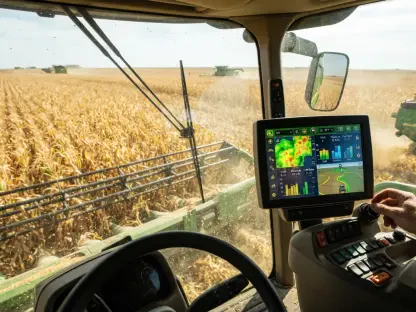

The use of field-level performance metrics allows growers to make informed management decisions based on how soil health directly influences their bottom line and insurance costs. This development marks a partnership between insurance giant Aon and agricultural risk firm SAGE that is transforming how American farms are insured. By moving away from outdated county-wide averages, these organizations are introducing a precision model that prices risk based on specific field data. This approach uses artificial intelligence to move past the limitations of traditional federal programs that often ignore unique management styles and individual land quality. At the heart of this shift is the use of high-resolution data to provide a more accurate financial picture for growers. Historically, farmers who invested in high-quality soil management often ended up paying higher premiums to subsidize the risks of more volatile land in their county. This initiative fixes that imbalance by offering hyper-localized pricing that reflects the true performance of every acre. By leveraging high-resolution data and artificial intelligence, this collaboration is setting a new standard for how risk is measured and mitigated across the diverse landscapes of the United States.
Bridging Technology and Sustainable Agriculture
Data Integration: Harnessing AI for Soil-Based Financial Metrics
SAGE utilizes a highly sophisticated AI-driven analytical engine that synthesizes a massive array of data points to deliver granular insights. This technology brings together satellite imagery, historical farm equipment data, and deterministic process models sourced from leading university research to build a comprehensive risk profile for each field. Historically, federal agencies considered such a level of detail to be a technological and operational impossibility. However, the advent of sophisticated remote sensing and cloud-based machine learning has finally brought this capability within reach for private insurers. By processing these disparate data streams, SAGE provides Aon with the necessary intelligence to price insurance policies based on the actual risk characteristics of a single field rather than a regional average. This transition from macro-level statistical averages to micro-level data precision ensures that every farmer is treated as a unique business entity rather than a component of a broad geographical statistic.
Actuarial Evolution: Verifying the Value of Regenerative Soil
A transformative aspect of this initiative involves the integration of soil health directly into the actuarial equation. For decades, agricultural scientists have emphasized that regenerative practices like no-till farming and cover cropping improve land resilience against extreme weather events. Despite this consensus, these benefits were rarely reflected in federal insurance premiums, leaving sustainable farmers without a financial incentive for their conservation efforts. The new AI-driven model treats soil as a foundational financial asset, analyzing its composition to determine whether specific management practices are increasing or diminishing the value and stability of the land. This shift creates a direct financial link between sustainable farming and lower insurance costs. If a grower’s practices verifiably reduce the risk of crop failure, those practices can now result in immediate premium reductions. By making soil health a measurable financial metric, the program encourages wider adoption of regenerative techniques across the Corn Belt, aligning environmental goals with farm profitability.
Strategic Rollout and Economic Transformation
Pilot Programs: Testing the Model and Scaling Across the Corn Belt
The rollout of this program is structured as a phased implementation to demonstrate proof of concept before achieving wide-scale adoption across the country. A critical component of this strategy involves a pilot program in Michigan, developed in collaboration with the Resilience in Agricultural Lending and Insurance Coalition and the Michigan Department of Agriculture. Starting in 2027, corn and soybean farmers in four specific Michigan counties will become eligible for reduced premiums if they can demonstrate the use of conservation practices through the SAGE platform. This pilot serves as a real-world laboratory to examine how soil conditions can be effectively incorporated into modern insurance underwriting processes. By starting with a focused geographic area, the partners can refine the data collection and analysis pipelines, ensuring that the technology is robust enough to handle the complexities of different soil types and weather patterns before expanding the service to other major agricultural regions.
Distribution Networks: Expanding Coverage Through Strategic Partnerships
Following the initial pilot, the broader program is scheduled for a comprehensive launch across the 2027 and 2028 crop cycles, targeting corn and soybean acreage across 15 states in the heart of the Corn Belt. AgriCap is serving as the primary distribution partner for this expansion, facilitating the connection between high-tech risk assessment and the local insurance agents who serve the farming community. The primary objective is not to replace federal crop insurance entirely but to offer a more tailored and accurate alternative for growers who feel the current system does not reflect their specific operational reality. This expanded reach will allow for the collection of even more diverse data, further training the AI models to recognize patterns of resilience and vulnerability in different ecological zones. As the program grows, it is expected to provide a blueprint for other insurance sectors on how to integrate environmental data into financial products, potentially leading to similar innovations in livestock.
Future Directions: Reshaping the Financial Landscape of Farming
In the past, the agricultural industry struggled to quantify the long-term value of land stewardship, but the Aon and SAGE initiative successfully turned environmental health into a tangible economic asset. This development suggested that future land valuations would be tied directly to ecological health and proven productivity rather than geographic location alone. To prepare for this shift, farmers were encouraged to begin digitizing historical field data and investing in soil testing to establish a baseline for risk profiles. Financial institutions also recognized the need to update lending criteria to reward those who maintained resilient acreage. As the 2027 rollout approached, the focus shifted toward ensuring that the data infrastructure was secure and accessible to all participants in the supply chain. This transition eventually fostered a more equitable and resilient food system, where the intelligence derived from AI served as a catalyst for sustainable growth. The integration of advanced analytics proved to be a decisive step.