
Artificial intelligence is fundamentally altering the underwriting process by digesting vast amounts of submission data to identify patterns that human analysis might overlook. In the current economic climate of 2026, middle-market enterprises find themselves at a precarious crossroads where operational complexity has outpaced traditional risk management frameworks. These organizations, often defined by revenues reaching up to one billion dollars, generate a massive economic footprint but frequently lack the dedicated internal personnel required to navigate a shifting regulatory landscape. Unlike Fortune 500 giants that employ full-time risk officers to monitor every threat, middle-market firms often assign these critical responsibilities to generalist executives who are already stretched thin. This structural gap creates a risk management void where vulnerabilities remain unaddressed until a crisis strikes. Consequently, the relationship between these businesses and their insurance partners is transforming from a simple procurement exercise into a high-stakes strategic alliance.
Identifying Hidden Exposures
Addressing Specialized Liability Gaps
Many middle-market firms mistakenly assume that their foundational general liability policies offer a comprehensive safety net for all operational failures, particularly when it comes to professional errors. In reality, service-oriented businesses and specialized manufacturers often operate with significant exposure gaps because they fail to secure dedicated Errors and Omissions (E&O) coverage. When a client alleges financial loss due to a technical mistake or a failure to meet contractual specifications, the lack of specific professional liability protection can lead to catastrophic out-of-pocket costs that threaten the very survival of the enterprise. This disconnect is particularly prevalent in industries that have traditionally viewed themselves as product-focused but have increasingly integrated digital services or consulting components into their primary business models. Without a granular assessment of how these services intersect with professional negligence, companies remain dangerously exposed to high-stakes litigation that falls outside standard insurance.
Analyzing Shifts in Claim Severity
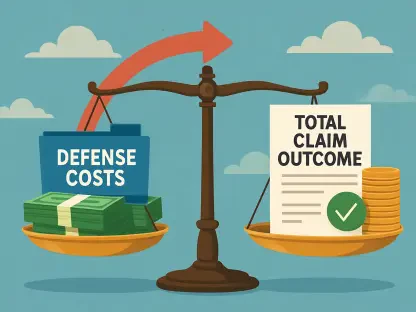
While high-frequency incidents like minor workplace injuries or slip-and-fall accidents have long been the primary focus of safety committees, the contemporary focus has shifted toward the rising severity of individual claims. This trend is most evident for businesses maintaining distribution fleets, where a single auto accident can now result in millions of dollars in losses due to escalating vehicle repair technology and rising medical costs. The financial impact of these large-loss events is no longer predictable, and they can easily overwhelm a mid-sized balance sheet if the underlying coverage structure is not robust. Furthermore, the aggressive tactics employed by plaintiffs’ attorneys have transformed routine legal disputes into high-stakes battles that often lead to settlements far exceeding historical norms. This environment requires middle-market executives to reevaluate their umbrella and excess liability limits to ensure they are adequately protected against the possibility of a single catastrophic claim that could otherwise permanently impair their operational viability.
Evolving Mitigation Strategies
Transitioning to Loss-Sensitive Programs
As middle-market companies continue to mature and achieve greater financial stability, many are moving away from traditional guaranteed-cost insurance models in favor of more sophisticated loss-sensitive programs. These structures, often characterized by large deductibles ranging from one hundred thousand to two hundred and fifty thousand dollars, allow businesses to retain a portion of their own risk in exchange for lower premium payments. This shift represents a fundamental change in the insurance dynamic, as the carrier becomes more of a financial partner and claims administrator rather than just a safety net for every minor incident. By taking on a greater share of the financial burden for smaller losses, companies are incentivized to invest more heavily in their own internal safety cultures and loss-control measures. This alignment of interests ensures that the business directly benefits from its efforts to maintain a safe working environment, effectively turning risk management into a potential profit center rather than just a fixed operational expense.
Utilizing Proactive Risk Engineering
In the absence of a dedicated internal risk manager, the role of the insurance carrier’s risk engineer has become an indispensable resource for middle-market companies looking to stabilize their premiums. These professionals act as highly specialized consultants who visit physical facilities to conduct deep-dive assessments of safety protocols, fire protection systems, and operational workflows. By identifying potential pain points and physical hazards before they lead to an actual claim, risk engineers help businesses design safer layouts and implement rigorous maintenance schedules that significantly reduce the likelihood of a catastrophic event. This hands-on intervention is particularly valuable for growing firms that may be expanding into new facilities or adopting new manufacturing processes that carry unfamiliar hazards. The objective is to move beyond simple compliance with local building codes and instead adopt best-in-class safety standards that protect both the workforce and the long-term integrity of the physical assets, ensuring that operations remain uninterrupted.
Leveraging Technology and Expansion
Streamlining Through Digital Innovation
The integration of advanced technology platforms is fundamentally reshaping the speed and accuracy with which middle-market risks are assessed and serviced by the modern insurance industry. New digital systems have streamlined the rate, quote, and bind process, allowing businesses to secure essential coverages with far greater efficiency than was possible in previous years. However, the true value of this digital transformation lies in the synthesis of data, where artificial intelligence is used to scan thousands of data points to identify emerging trends and correlations. These insights allow underwriters to develop a much more granular understanding of a company’s risk profile, leading to more accurate pricing and coverage terms that are tailored to the specific needs of the industry. This technological shift is particularly beneficial for companies with complex operations that do not fit into traditional insurance categories, as AI-driven analysis can highlight the unique strengths of their risk management practices that might be missed by a more manual review.
Navigating Geographic and Regulatory Growth
As middle-market enterprises expand their operations across new geographic territories, they often encounter a fragmented regulatory environment that can complicate their risk management strategies. To support this growth, insurance carriers are expanding their own footprints to provide localized expertise in key markets across the United States and international hubs. This includes a significant increase in presence on the West Coast and expanded cross-border capabilities in Canada, where distinct legal and regulatory frameworks require specialized knowledge to ensure compliance. Having a carrier partner with a broad geographic reach allows firms to maintain consistent coverage levels and claim handling procedures regardless of where their employees or physical assets are located. This consistency is vital for maintaining operational efficiency and ensuring that there are no gaps in protection as the business scales. By providing a unified platform for multi-state or multinational operations, carriers help middle-market executives navigate the complexities of expansion without needing to build an expansive internal risk department.
Strategic Evolution: Practical Steps for Future Resilience
The middle-market landscape in 2026 was defined by a transition from reactive insurance purchasing to a sophisticated, data-driven partnership model that effectively bridged the internal risk management void. Companies that moved toward loss-sensitive deductible programs and integrated proactive risk engineering into their core operations were better positioned to absorb the shocks of an increasingly volatile global market. The strategic adoption of AI and technology platforms provided the insights necessary to address hidden exposures in professional liability before they translated into catastrophic financial losses. Looking forward, executives should prioritize the formalization of their risk management partnerships, ensuring that their carriers act as an extension of their own leadership teams. By focusing on jurisdictional data and localized expertise, organizations will navigate the complexities of expansion while maintaining a stable cost of risk. This evolution toward a collaborative approach to mitigation ensured that middle-market firms remained resilient, even as legal pressures continued to rise.