
Recent flooding events in the UAE demonstrated that a business can suffer a total loss even without physical damage if critical regional infrastructure fails to operate. This revelation has fundamentally altered the landscape of financial risk management across the Emirates. For decades, the region’s perception of environmental hazards was limited to extreme heat and sandstorms, viewed as predictable elements of an arid climate. However, the catastrophic rainfall patterns experienced in early 2024 served as a watershed moment, leaving an estimated five-billion-dollar protection gap in their wake. As the market moves through 2026, the focus has shifted from mere disaster recovery toward a more sophisticated understanding of systemic vulnerability. The financial sector now recognizes that climate change is an immediate operational reality that directly threatens the balance sheets of corporations and the stability of national banking systems. This necessitates a total re-evaluation of how risk is quantified and shared.
Addressing the Complexity: How Coverage Gaps Emerge
The protection gap is frequently a matter of misunderstood policy language rather than a total absence of insurance products. Many corporate entities operate under the illusion of comprehensive security until a claim is denied based on specific exclusions for natural disasters or “acts of God” that were not explicitly added as riders. Furthermore, a persistent trend of underinsurance complicates the recovery process, as asset valuations often lag behind the actual costs of modern rebuilding and technological replacement. In the current economic climate, property owners must ensure that their coverage limits are meticulously aligned with the current market value of their infrastructure. Closing this gap requires insurers to provide greater transparency and for policyholders to take a more active role in auditing their existing contracts. Without this alignment, the financial burden of future climate events will continue to fall heavily on individual businesses and state emergency funds.
Beyond physical assets, the most significant threat to business continuity in the UAE is the disruption of operational workflows. While a warehouse or office can be physically restored, the time required to resume full operations—especially when regional power grids or transport networks are compromised—can lead to terminal financial losses for many firms. Small and medium-sized enterprises are particularly vulnerable, as they often lack the liquidity to survive extended periods of inactivity. Current market trends suggest a growing demand for robust business interruption coverage that accounts for these secondary systemic failures. Insurers are now emphasizing the importance of integrated catastrophe protection that triggers not just upon physical damage, but also when external infrastructure failures prevent a business from functioning. This shift marks a transition toward a more holistic view of insurance where operational resilience is just as critical as physical protection.
Predictive Modeling: The Shift from Historical Data
The traditional insurance model, which relies on looking backward at decades of historical data, is no longer a viable strategy for predicting future climate hazards in the UAE. Since the atmosphere is behaving in ways that lack historical precedent, insurers are adopting forward-looking climate scenarios that model multiple compounding risks simultaneously. These simulations include the impact of extreme heat on labor productivity, the strain on energy systems during peak demand, and the increasing frequency of flash floods that overwhelm urban drainage infrastructure. By utilizing predictive analytics, the industry is moving toward a more dynamic pricing structure that reflects the real-time evolution of the environment. This methodology allows for a more accurate assessment of risk frequency and severity, ensuring that premiums remain sustainable for both the insurer and the insured. The goal is to eliminate the guesswork that has historically led to market volatility and unexpected coverage withdrawals.
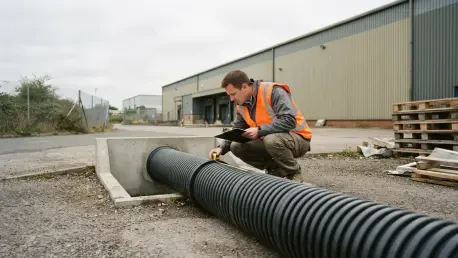
A modern approach to risk assessment also requires a deeper understanding of the interdependence between private assets and public utilities. A facility might emerge from a severe storm with zero physical damage, yet remain functionally paralyzed if the local water treatment plant is offline or if submerged highways prevent employees from reaching the site. Consequently, insurers are developing a networked view of risk that evaluates how failures in regional infrastructure ripple through the broader economy. This perspective encourages businesses to analyze their external dependencies more rigorously during the insurance procurement process. By factoring in the resilience of the surrounding ecosystem, financial institutions can better estimate the total potential loss associated with any given event. This systemic approach is essential for maintaining economic stability, as it highlights the critical need for coordinated investment in both private security measures and public infrastructure upgrades.
Granular Assessment: Using AI for Local Pricing
Artificial Intelligence and machine learning are now at the forefront of the UAE’s insurance revolution, providing the tools necessary to bridge the information gap. By processing vast datasets, including satellite imagery, topographical surveys, and high-resolution climate projections, insurers can achieve a level of granular risk assessment that was previously impossible. This technological leap allows for hyper-local pricing models, where two identical commercial buildings on the same street might have significantly different insurance profiles based on their specific elevation or proximity to flood-prone areas. These AI-driven insights provide the precision needed to price risk accurately, even in regions where historical weather records are incomplete or outdated. Furthermore, these tools allow for the continuous monitoring of environmental conditions, enabling insurers to adjust their exposure in real-time as new data becomes available. This precision is vital for maintaining market confidence.
Beyond improving accuracy, the use of AI in risk modeling creates a clear financial incentive for businesses to prioritize climate adaptation measures. When a company invests in physical resilience—such as installing flood barriers, improving drainage capacity, or setting up redundant power systems—AI tools can immediately reflect these improvements in the form of lower insurance premiums. This creates a proactive loop where insurance costs serve as a catalyst for physical mitigation rather than just a passive expense. It also empowers brokers to offer more tailored advice, helping clients understand exactly which investments will provide the greatest reduction in their overall risk profile. As the industry moves forward through the rest of 2026, this transition toward incentivized resilience will be a defining feature of the UAE’s economic landscape. By turning insurance into a tool for adaptation, the region can foster a culture of preparedness that protects long-term capital and operational stability.
Economic Signals: The Relationship Between Risk and Capital
In the current economic environment, insurance has evolved into a powerful signaling mechanism that dictates the flow of investment across the UAE. The annual policy renewal process provides a rapid feedback loop for risk, often moving faster than governmental regulatory changes or urban planning initiatives. As environmental hazards become more pronounced, the market responds not only by increasing premiums but also by narrowing the scope of coverage or withdrawing it entirely for high-risk assets. When a particular sector or geographic area becomes uninsurable, it effectively becomes uninvestable, signaling to capital markets that the current business model is no longer sustainable. This “pricing of risk” forces developers and investors to take climate resilience seriously from the earliest stages of project planning. Consequently, the availability and cost of insurance have become primary considerations for any entity looking to maintain a long-term presence in the regional market.
However, this transition toward risk-based pricing raises significant concerns regarding economic equity and market fragmentation. Large corporations often possess the financial resources and technical expertise to invest in sophisticated risk management and negotiate favorable terms with global underwriters. In contrast, smaller businesses and individuals may find themselves disproportionately affected by rising costs, potentially being priced out of essential protection. If the gap between those who can afford resilience and those who cannot continues to widen, it could lead to a two-tier economic landscape where the most vulnerable are left without a financial safety net. Addressing this challenge requires a coordinated effort between the private sector and government regulators to ensure that insurance remains accessible and affordable for all segments of the economy. Maintaining a balanced market is essential for long-term social and economic stability, particularly as the climate continues to present new challenges.
Systematic Threats: Integrating Climate and Geopolitical Risk
The UAE’s climate challenges are unfolding within a complex regional context where environmental risks often intersect with geopolitical volatility. This creates a “double burden” for businesses, as the practical consequences of these two distinct categories of risk frequently overlap in the real world. For example, a climate-related flood can be significantly more damaging if regional instability has already disrupted shipping routes and supply chains, thereby extending the time required to source repair materials. This synergy between different types of risk increases the overall complexity of business interruption claims and complicates the underwriting process. Insurance providers are now forced to consider these overlapping factors when calculating potential payouts and setting coverage limits. As a result, risk management is no longer a siloed activity but a comprehensive discipline that must account for the fluid nature of both environmental change and international relations within the Gulf region.
In response to these growing complexities, regulatory bodies like the Central Bank of the UAE have introduced stringent frameworks for climate-related financial risk management. Starting in late 2025 and continuing through 2026, financial institutions are required to integrate climate hazards into their broader risk oversight processes. These regulations ensure that lenders and insurers maintain sufficient capital buffers to absorb the shocks associated with extreme weather and shifting environmental conditions. By mandating a standardized approach to risk disclosure, the government aims to increase transparency and protect the overall integrity of the financial system. This regulatory push encourages a more disciplined approach to climate risk, forcing institutions to move beyond vague sustainability goals and toward concrete, data-driven strategies for resilience. For the UAE, this oversight is a critical component of maintaining its status as a global financial hub in an era defined by increasing environmental uncertainty.
Strategic Resilience: Moving from Recovery to Adaptation
Achieving long-term economic resilience in the UAE requires a fundamental shift from a culture of disaster recovery to one of proactive physical adaptation. While insurance is a vital component of a financial safety net, it cannot serve as a substitute for robust public infrastructure and resilient urban design. The future stability of the regional economy depends on massive investment in drainage systems, flood defenses, and hardened power grids that can withstand the increasing volatility of the climate. Businesses must also take direct ownership of their physical risks by implementing mitigation strategies long before a disaster occurs. This transition involves a collaborative ecosystem where insurers provide the necessary data and financial incentives, while the government provides the regulatory framework and infrastructure support. By treating climate risk as a shared responsibility, the UAE can ensure that its growth remains sustainable and that its infrastructure remains functional during periods of stress.
The transition toward a climate-resilient insurance market in the UAE ultimately proved that financial safety nets required more than just premium payments. Stakeholders throughout the region recognized that the traditional methods of risk transfer were insufficient for the scale of the challenges ahead. Insurers refined their models to become more transparent and predictive, while brokers acted as essential educators for a business community seeking clarity. Governments led the way by prioritizing infrastructure investments that reduced the overall risk profile of the nation, making insurance more accessible to a broader range of participants. These actions successfully shifted the focus toward physical adaptation, ensuring that businesses were prepared for volatility rather than just compensated for its aftermath. By integrating technology and regulation into a unified strategy, the UAE established a blueprint for economic survival that balanced financial protection with tangible, on-the-ground resilience measures.