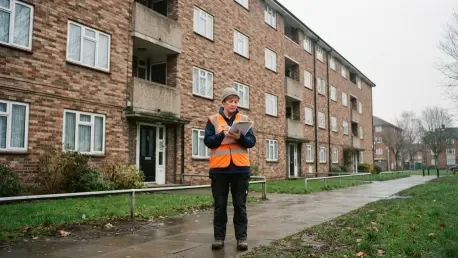

For centuries, the bedrock of English property law rested on a complex web of leasehold agreements that essentially turned homeowners into long-term tenants, but a sudden legislative storm is now sweeping away these ancient foundations. The United Kingdom property market is currently bracing for a legislative overhaul that threatens to dismantle centuries of established land law. For generations, the leasehold system has served as the backbone of multi-unit residential ownership, but new government mandates are set to replace this structure with commonhold. As resident-led associations prepare to seize control from corporate landlords, the insurance industry faces a fundamental question regarding who will manage the risk when the professionals are gone.
This transition moves away from the institutional stability that characterized property ownership for decades. While the move toward resident empowerment is politically popular, the technical reality of property management requires a level of expertise that volunteer boards rarely possess. The shift creates a vacuum in the market where institutional knowledge used to reside, forcing insurers to reconsider how they evaluate the safety and sustainability of residential buildings across England and Wales. This governance gap poses a significant challenge for financial institutions that rely on predictable management structures to underwrite multi-million-pound risks.
The End of an Era for Traditional Property Ownership
The traditional model of property ownership in the UK is undergoing a radical simplification that removes the third-party landlord from the equation. Historically, these building owners acted as the ultimate stewards of the property, ensuring that insurance was secured and that the structure remained compliant with safety regulations. However, the government now views this system as an outdated obstacle to true homeownership. By promoting commonhold, the state is effectively placing the keys to the kingdom in the hands of the residents, which significantly alters the liability landscape for the insurance sector.
This dismantling of traditional ownership does not come without friction, as the professionalization of the sector is replaced by localized management. Professional property managers have long provided a buffer between insurers and the building’s occupants, ensuring that professional standards are met. Without this professional layer, the insurance market must adapt to a world where decisions are made by committees of neighbors rather than corporate entities. This change introduces a degree of unpredictability that is already causing ripples through the underwriting departments of major global carriers.
Understanding the Shift: From Leasehold to Commonhold
The proposed Commonhold and Leasehold Reform Bill aims to ban the creation of new leasehold apartments, effectively shifting ownership to collective resident groups. This move, championed as a necessary modernization of the housing market, fundamentally alters the relationship between property owners and the financial institutions that protect them. Under commonhold, every unit owner has a stake in the ownership of the building, removing the requirement to pay ground rent to a separate landlord and giving residents direct control over the purchasing of essential services, including building insurance.
Starting November 1, 2027, landlords will be prohibited from recovering insurance commissions through maintenance fees, limiting them to strictly defined “permitted insurance payments.” Legislative efforts also seek to cap existing ground rents at £250 annually, with a long-term goal of reducing these to a nominal amount. These reforms aim to lower costs for residents and eliminate the opaque financial models that have historically dominated property management and insurance brokerage. While these measures increase transparency, they also remove the financial incentives that once encouraged large-scale landlords to maintain comprehensive insurance portfolios.
Market Fragmentation and the Purchasing Crisis
The transition to commonhold decentralizes the way insurance is purchased, moving away from large-scale professional portfolios toward individual building procurement. This shift carries significant weight for market stability and premium pricing because it eliminates the benefits of scale. Under the current system, professional property managers oversee extensive portfolios where well-maintained buildings help subsidize higher-risk properties. Commonhold associations lose this advantage, leaving high-risk or aging buildings to face the open market alone without the protective umbrella of a larger group.
Without the bargaining power of a large portfolio, standalone buildings—particularly those with complex risk profiles—are likely to see substantial hikes in insurance costs. Carriers may become increasingly hesitant to provide quotes for “marginal” risks when they are presented as isolated cases rather than part of a diversified, professionally managed group. This fragmentation threatens to create a two-tier insurance market where only the most pristine properties remain affordable. Organizations like the Association of British Insurers have already noted that such retrospective changes to existing contracts could undermine the stability of the entire UK investment landscape.
Navigating the Governance Gap: Liability Risks
Legal and insurance experts are increasingly concerned about the governance gap that emerges when volunteer resident directors take the helm. Unlike professional managers, these volunteers often lack the specialized knowledge required to navigate the complexities of building insurance and property law. Inadvertent errors in property appraisals or inaccurate disclosures by resident directors can lead to rejected claims or insufficient payouts in the event of a disaster. The Spectrum building case in Dagenham serves as a cautionary tale, illustrating how complex ownership and management failures can leave residents in financial ruin during a crisis.
Administrative hurdles and claims delays represent another growing concern for the industry. Without professional oversight, the handling of complex claims can become paralyzed by internal disputes or a lack of procedural expertise among residents. As resident directors assume legal responsibility for their buildings, the demand for directors and officers (D&O) liability insurance will skyrocket to protect these individuals from personal financial ruin. This surge in liability exposure represents a significant shift in the risk landscape for residential management, making specialized coverage a non-negotiable requirement for anyone serving on a commonhold board.
Strategies: Transitioning to a Commonhold Landscape
As the market shifts toward a two-tier system, stakeholders are adopting practical strategies to mitigate emerging risks. Resident-led associations are prioritizing the hiring of specialized consultants to oversee insurance procurement and ensure compliance with disclosure requirements. Boards are ensuring that management liability and directors and officers policies are in place before taking control of a building to protect volunteer decision-makers from litigation. These proactive steps move the responsibility of risk management into a professional framework even within the commonhold structure, securing the safety of the assets.
To combat the loss of risk pooling, associations are demonstrating rigorous building maintenance to remain attractive to insurers and secure competitive premiums. Brokers and property managers are proactively restructuring their fee models before the 2027 commission ban, ensuring financial viability in a more transparent environment. These actions provide a roadmap for navigating the complexities of a decentralized market, ultimately stabilizing the residential sector during a period of unprecedented legal transformation. Future stakeholders must now focus on digital risk monitoring and long-term capital expenditure plans to ensure buildings remain insurable in an increasingly fragmented landscape.