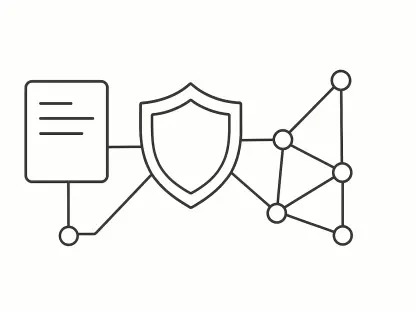

A decade ago, a standard claim involved a small circle of participants, but today’s files require coordination across a sprawling network of specialists. While the absolute frequency of workplace accidents has trended downward in recent years, the administrative and clinical complexity of managing those fewer incidents has grown exponentially. This shift creates a significant paradox where claims professionals are expected to do more with less, even as the volume of documentation per file reaches historic highs. The modern “information load” is no longer just a hurdle; it is a fundamental challenge to the efficiency of the entire workers’ compensation ecosystem. Today, an adjuster must interpret complex diagnostic imaging, manage multidisciplinary treatment teams, and navigate a shifting landscape of state-level mandates, all while attempting to provide empathetic support to an injured individual. To remain effective in this environment, organizations must move away from the fragmented, manual processes of the past and toward a human-centric, integrated framework. This approach prioritizes meaningful, high-level decision-making over repetitive administrative labor, ensuring that technology serves the person rather than the other way around.
Overcoming Information Silos and Fragmented Systems
Reducing the Burden: The Swivel-Chair Effect
Many organizations have historically attempted to solve growing claim complexity by layering a patchwork of disparate software tools onto their existing infrastructure. This might include one portal for bill review, another for pharmacy benefit management, and a third for physical therapy scheduling. While each tool may perform its specific function well, the cumulative effect on the claims professional is a phenomenon known as the “swivel-chair” effect. This occurs when an adjuster is forced to constantly toggle between multiple disconnected windows, manually copying data from one system to another or searching through different databases just to find the status of a single prescription. The mental fatigue associated with this constant context-switching is significant, as it draws the professional’s focus away from the human elements of the claim and toward the mechanical task of data entry and retrieval. Furthermore, these disconnected systems often create data discrepancies, where information updated in one portal does not reflect in another, leading to potential errors and delays in treatment authorization.
The solution to this fragmentation lies in the creation of a centralized hub that serves as the “single source of truth” for every stakeholder involved in the claims process. By integrating these specialized functions into a unified workflow, the technology works behind the scenes to sync data, ensuring that when a physician submits a report, it is immediately accessible to the case manager and the claims adjuster without manual intervention. This level of synchronization eliminates the need for the “swivel-chair” maneuvers that once defined the workday. Instead of hunting for information, the professional receives actionable alerts that fit within their natural daily workflow. This shift allows for a more streamlined experience where the adjuster can spend more time evaluating the medical necessity of a treatment or discussing a return-to-work plan with an employer, rather than wasting hours navigating through archaic software interfaces that do not communicate with one another.
Achieving Total Visibility: The Power of Connected Workflows
The most effective remedy for the modern information overload is the implementation of connected workflows that bridge the gap between seemingly disparate data points. When services like clinical case management, provider networks, and indemnity payments are consolidated into a single platform, the organization gains a comprehensive view of the entire claim lifecycle. This total visibility allows a claims professional to instantly see the big picture, identifying how a delay in a diagnostic test might be impacting the overall recovery timeline or how a specific provider’s treatment patterns compare to industry benchmarks. Without this level of integration, these insights are often buried under mountains of digital paperwork, only coming to light after costs have already spiraled or the claimant’s recovery has stalled. By making these connections visible in real-time, the system transforms from a simple record-keeping tool into a strategic asset that supports proactive intervention and more accurate financial forecasting.
Moving toward a connected ecosystem also facilitates a level of collaboration that was previously impossible in the era of siloed operations. When every participant in the claim—from the field case manager to the legal consultant—operates within the same integrated environment, the risk of miscommunication is drastically reduced. Documentation flows seamlessly from the point of care to the adjuster’s desk, allowing for faster approvals and a more responsive experience for the injured worker. This transparency also extends to the employer, who can track the progress of their employees’ claims and understand the factors driving their total cost of risk. By removing the friction caused by switching between tools and departments, organizations can identify potential roadblocks, such as behavioral health issues or comorbid conditions, much earlier in the process. This early detection is critical for reducing the overall duration of the claim and ensuring that the injured worker returns to health and productivity as safely and quickly as possible.
Leveraging Automation and AI for Strategic Support
Lifting the Load: Strategic Automation in Practice
Automation is often misunderstood as a tool intended to replace human workers, but in the realm of workers’ compensation, its true value is found in providing massive administrative relief. Strategic automation focuses on handling high-volume, low-complexity tasks that typically consume a disproportionate amount of a claims professional’s day. For instance, the system can automatically approve standard medical bills that meet pre-set criteria or cross-reference pharmacy orders against an approved formulary without requiring a human to review every single line item. This “lifting” of routine burdens allows the technology to act as a silent assistant, clearing the desk of mundane tasks so the professional can focus on activities that require high-level judgment and expertise. By automating these binary decisions, the organization ensures that simple tasks are handled with lightning speed and perfect consistency, which prevents the bottlenecks that often occur when adjusters are overwhelmed by sheer volume.
The impact of this automation extends far beyond simple speed; it fundamentally changes the nature of the claims professional’s role from a processor to a strategist. When the system handles the repetitive “busy work,” the adjuster has the mental bandwidth to dive deep into complex cases that involve suspicious claim patterns or require intricate return-to-work negotiations. They can spend more time collaborating with medical providers to ensure that the treatment plan is actually driving toward a positive outcome, rather than just checking boxes in a database. This shift not only improves the quality of the claim management but also increases job satisfaction for the professionals who joined the industry to help people, not to manage data entry. Automation serves as the foundational layer that supports a more sophisticated and humane approach to insurance, ensuring that the most valuable resource—human intellect—is applied where it can have the greatest impact on recovery and cost control.
Enhancing Decision-Making: The Role of Artificial Intelligence
Artificial Intelligence serves as a powerful synthesis tool that organizes vast quantities of unstructured data, such as lengthy medical records, legal depositions, and hand-written physician notes. In the modern landscape, AI models can scan hundreds of pages of documentation in seconds to surface the most relevant clinical insights, such as a prior injury that might impact the current claim or a specific trend in the claimant’s pain levels. By putting this information into a logical, prioritized order, the AI allows the adjuster to understand the nuances of a file without having to read every single word across multiple different documents. This is a critical development because it addresses the core issue of “information density,” providing a clear map through a forest of data. The technology identifies gaps in documentation or flags potential issues—like a prescription that deviates from standard treatment protocols—before they become major problems.
It is essential to understand that this application of AI is a “decision-support” mechanism rather than a decision-making one. The final choice regarding a claim’s direction or a settlement amount always remains with the human professional, who brings empathy, ethics, and nuanced experience to the table. The AI acts as a high-powered lens that brings the facts into focus, but the adjuster remains the one to interpret those facts within the context of the claimant’s unique life situation. This partnership ensures that the claims process stays grounded in human values while benefiting from the speed and analytical rigor of modern computing. As these AI tools continue to evolve through 2026 and 2027, they will become even more adept at predicting which claims are at risk of litigation or long-term disability, allowing teams to allocate their best resources to the cases that need them most. The result is a more accurate, faster, and fairer system that leverages the best of both human and machine capabilities.
Improving the Claimant Experience and Future Agility
Empowering the Worker: Transparency as a Tool
The ultimate beneficiary of a simplified, integrated system is the injured worker, who often feels ignored or confused by the fragmented nature of a traditional claims process. By utilizing modern claimant portals and streamlined communication tools, organizations have empowered workers to take an active role in their own recovery. These integrated platforms allow an employee to check the status of a reimbursement, view their upcoming doctor’s appointments, or message their case manager directly from a smartphone. This level of transparency builds a foundation of trust between the worker and the insurer, which is often the most important factor in preventing a claim from becoming adversarial. When a worker feels that they have a window into the process and that information is being shared openly, the anxiety that often leads to litigation is significantly mitigated. They no longer feel like a number in a system, but like a participant in a coordinated effort to restore their health.
This shift toward transparency also provides a secondary benefit by drastically reducing the number of “status-check” calls that flood an adjuster’s voicemail every day. When the worker can find the answer to a basic question—such as when their next check will arrive—via a self-service portal, the adjuster is freed from providing repetitive updates and can focus on managing the more complex aspects of the file. This creates a more collaborative environment where the relationship between the worker and the insurance carrier is defined by support rather than friction. Furthermore, the integration of digital education tools within these portals can provide workers with customized information about their specific injury and recovery expectations. By providing the right information at the right time, integrated technology ensures that the worker remains engaged and motivated throughout the healing process, which is the most effective way to drive down long-term costs and improve clinical outcomes for everyone involved.
Maintaining Resilience: Agility in a Complex World
The trend toward medical and regulatory complexity shows no signs of slowing down, making long-term agility essential for any modern risk management organization. Success in this environment requires a commitment to a “living” technology strategy that is constantly re-evaluated to ensure it meets the evolving needs of the workforce and the legal landscape. An integrated platform provides the necessary infrastructure to pivot quickly when new regulations are introduced or when a new medical treatment becomes the standard of care. By prioritizing human-centric design, such as minimizing the number of clicks required to complete a task or optimizing the mobile interface for field adjusters, organizations ensure that their tools remain effective and do not become obsolete. This focus on the “person in the seat” helps maintain high quality and predictable outcomes across the entire organization, regardless of the individual nuances of any specific claim.
The partnership between human expertise and integrated technology has become the only viable path forward in this increasingly complex landscape. The core mission of any claims organization was always to manage the recovery of the injured worker while mitigating financial risk for the employer, but the methods used to achieve this had to change. When technology removed the unnecessary administrative drudgery that once defined the industry, it returned valuable time to the professionals who needed it most. This evolution resulted in a situation where the adjuster felt less overwhelmed, the injured worker received a higher standard of care, and the organization achieved superior results. By focusing on the integration of data and the empowerment of the human element, the industry transformed a burdensome process into a streamlined and effective system. The advancements made in these workflows established a new benchmark for excellence, ensuring that the recovery process remained focused on people rather than paperwork.