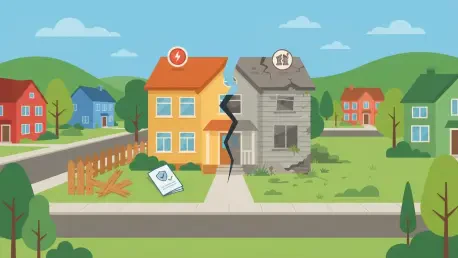

Policyholders must move away from the assumption of universal coverage and treat their insurance as a dynamic contract that requires a thorough annual review. While many individuals view home insurance as an all-encompassing safety net that will automatically resolve any domestic crisis, recent data from regulatory bodies like the Financial Conduct Authority suggests a significant disconnect between expectations and reality. This gap has resulted in a staggering thirty percent of claims being denied, leaving thousands of homeowners to shoulder massive financial burdens entirely on their own. The rejection of these claims is rarely the result of a single catastrophic error but is instead the culmination of neglected fine print and the dangerous habit of automatic policy renewals. In the current economic climate of 2026, the reliance on outdated terms is no longer viable, as insurers have tightened their definitions of coverage. This high rate of failure underscores the necessity for consumers to proactively verify their specific protections rather than assuming a standard policy covers every possible scenario.
Maintenance Requirements: Navigating Environmental and Structural Definitions
One of the most frequent catalysts for a denied claim is the complex distinction that insurance companies make between sudden, accidental incidents and gradual deterioration over time. While a homeowner might expect a burst pipe to be a straightforward case for reimbursement, the underlying cause often dictates the outcome of the claim. If the insurer determines that the pipe failed due to years of corrosion or a slow leak that should have been addressed through routine maintenance, they will likely categorize the event as general wear and tear or neglect. This distinction is critical because standard policies are explicitly designed to cover unforeseen accidents rather than the results of poor property management. Statistics indicate that accidental damage is only included in approximately twenty-three percent of standard policies, meaning that common DIY mistakes or unapproved renovations often fall entirely outside the scope of basic protection, necessitating expensive add-ons for full security.
Beyond internal maintenance, the way an insurer defines environmental factors can lead to immediate claim rejections, particularly during severe weather seasons. Many homeowners are surprised to find that garden structures, specifically fences and gates, are almost universally excluded from storm damage coverage across ninety-nine percent of available policies. Furthermore, the very definition of a storm is not left to the homeowner’s interpretation; instead, insurers utilize technical metrics such as the Beaufort scale to measure wind speeds during the recorded event. If the local weather data does not meet the specific wind-speed threshold dictated in the policy’s fine print, the insurer will argue that the conditions did not constitute a storm, resulting in an automatic denial. This technicality places the financial responsibility for external repairs back on the property owner, who may have assumed that a severe thunderstorm was enough to trigger their coverage regardless of specific velocity readings.
Operational Restrictions: Addressing Occupancy Clauses and Evidentiary Proof
The operational status of a home significantly influences the validity of an insurance contract, primarily through the implementation of unoccupied property clauses. Most standard policies are written under the assumption that the residence is being actively monitored and maintained on a daily basis. Consequently, if a property is left empty for more than thirty to sixty consecutive days, the policy typically becomes void unless the insurer has been formally notified and an extension has been granted. This poses a massive risk for individuals planning extended international travel or for those who have moved out while trying to sell a property in the competitive 2026-2027 market. During these periods of vacancy, the risk of undetected water leaks or targeted burglaries increases exponentially, and insurers are unwilling to absorb that heightened risk without specialized “unoccupied home” terms. Failing to address this specific clause is a guaranteed pathway to a rejected claim when a major incident finally occurs.
In addition to residency requirements, the burden of proving a loss rests squarely on the shoulders of the policyholder, which often leads to friction during the claims process. Insurance companies rarely provide payouts for what they classify as a “mysterious disappearance,” where an item is simply missing without a clear narrative of theft or loss. To secure a successful claim for high-value items like jewelry, watches, or high-end electronics, the owner must be prepared to present a comprehensive trail of evidence. This includes original purchase receipts, high-resolution photographs of the items in the home, and formal police reports in the event of a suspected crime. Without this rigorous documentation, insurers are likely to argue that the homeowner failed to take reasonable care of their belongings, leading to a total loss. This evidentiary requirement highlights the need for meticulous asset cataloging as a standard part of modern home management, ensuring that every valuable is accounted for before a crisis arises.
Financial Limitations: Calculating Payouts and Off-Premises Coverage
Understanding the financial mechanics of a policy is just as important as knowing the covered events, as the final payout often differs significantly from a homeowner’s initial estimate. Every policy operates with a mandatory excess, also known as a deductible, which represents the portion of a claim that the policyholder must pay out of pocket. If a homeowner has a two-hundred-dollar excess on a two-thousand-dollar repair, they will only receive eighteen hundred dollars from the provider. While choosing a high-excess policy can effectively lower monthly premiums, it often makes smaller claims financially unviable and can lead to frustration when the check finally arrives. Policyholders frequently overlook these calculations until they are in the middle of a crisis, failing to realize that filing a claim for a minor issue might actually cost them more in the long run through increased future premiums and the immediate loss of their deductible amount.
Another significant area of confusion involves the geographic limitations of contents insurance, specifically regarding items that are frequently taken out of the residence. There is a widespread but incorrect assumption that personal belongings are protected by a standard home policy regardless of where they are located. In reality, only about fifteen percent of policies include “personal possessions cover” as a standard feature, with most requiring an optional add-on for mobile items like smartphones, laptops, and bicycles. Without this specific endorsement, an expensive piece of technology stolen at a local coffee shop or a bicycle taken from a public rack will not be covered, as the standard policy only applies to items physically located inside the home. As mobility becomes even more integral to daily life through 2026 and into 2028, ensuring that portable assets are explicitly listed for off-premises protection is a vital step in maintaining a comprehensive and effective insurance strategy.
Professional Transitions: Managing Home Businesses and Short-Term Rentals
The modern shift toward remote work and the growth of the “side hustle” economy has created a significant coverage gap for many households that use their residences for commercial purposes. Standard domestic insurance policies are specifically designed for residential use and do not typically account for the unique risks associated with professional activities. If a homeowner is running a business that involves storing substantial inventory, housing specialized high-value equipment, or hosting clients for meetings, they likely require a commercial or home-business insurance extension. Relying on a standard policy while conducting business can lead to the complete invalidation of a claim if the insurer discovers the property was being used for unapproved commercial gain. This is particularly relevant for professional liability and public indemnity, which are never covered under a basic home policy but are essential for anyone operating a business from their living room.
The popularity of the sharing economy and platforms like Airbnb has introduced a separate set of risks that many standard insurance policies are not equipped to handle. Most insurers view paying guests as a significantly higher risk factor than family members or traditional houseguests, as the transactional nature of the stay changes the liability profile of the home. Damage caused by a short-term lodger, theft committed by a guest, or a liability claim resulting from an injury sustained by a paying visitor is generally excluded from standard residential coverage. Homeowners who participate in short-term rentals must transition to specialist landlord or hospitality insurance to protect their assets. Failing to disclose the presence of paying guests to a traditional insurer is often considered a breach of contract, which can result in the immediate denial of any claim, even those unrelated to the guest’s stay, leaving the homeowner vulnerable to catastrophic loss.
Strategic Management: Implementing Proactive Solutions for Total Protection
The primary finding of this analysis was that home insurance was far from a static, “set and forget” product in the modern landscape. Successful policyholders avoided the common trap of claim rejection by treating their contracts as evolving documents that required constant updates to reflect their current lifestyles and property conditions. Those who maintained their homes with the same rigor they applied to their financial planning were significantly more likely to receive full payouts during emergencies. By documenting every high-value asset with photographs and receipts, and by ensuring that maintenance tasks were performed regularly to prevent the “gradual damage” classification, these proactive individuals turned their insurance from a gamble into a reliable financial guarantee. They recognized that the fine print was not a hurdle to be ignored, but a roadmap for maintaining the validity of their coverage through 2026 and beyond.
Ultimately, the most effective strategy for homeowners involved moving away from the assumption that every mishap would be covered by default. They took the necessary steps to engage with their providers whenever significant life changes occurred, such as starting a home-based business or leaving the property vacant for an extended period. By shopping around annually rather than allowing policies to auto-renew, they ensured their coverage levels matched the rising costs of repairs and the specific needs of their unique residences. This transition toward active policy management provided a much clearer path to financial security, ensuring that when disaster struck, the claim was not just a hope, but a successful transaction. The lessons learned from the high rate of claim rejections demonstrated that the key to protection was not just having a policy, but fully understanding and complying with the specific contractual obligations it demanded.