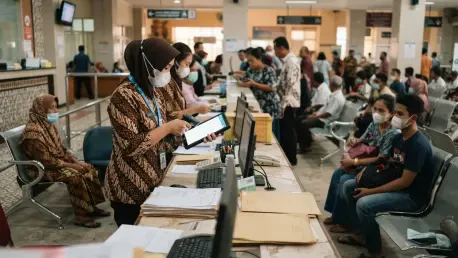

A multi-agency circular issued on July 30 mandated that healthcare facilities must move toward machine-readable formats for all insurance claim submissions. This directive represents a foundational shift for BPJS Kesehatan as it moves to integrate electronic medical records into the national SATUSEHAT platform. By modernizing the National Health Insurance program, the government is replacing antiquated, paper-based workflows with a unified digital infrastructure designed to eliminate administrative bottlenecks. Historically, hospitals were forced to print and manually submit physical documents, creating a disconnected system that delayed reimbursements and obscured data. This comprehensive digital overhaul is not merely a change in the medium of record-keeping but a fundamental reimagining of health data governance. The goal is to ensure that patient information flows seamlessly across the healthcare landscape, fostering a more transparent and responsive medical system for millions of citizens.
Optimizing Clinical Outcomes and Interoperability
Patient Experience: Streamlining Data Access
The integration of electronic medical records offers substantial clinical benefits by centralizing information through the national Population Identification Number (NIK). Doctors can now access a patient’s comprehensive medical history, regardless of which facility provided the original treatment. This transparency is crucial for maintaining continuity of care, as it allows medical professionals to review previous diagnoses, medication lists, and surgical histories in real-time. By utilizing a Master Patient Index, the system bridges the gap between disparate providers, ensuring that critical health data follows the patient rather than being locked in a single hospital’s file room. This connectivity reduces the likelihood of redundant testing and enables more accurate clinical decision-making. Despite this high level of digital integration, the agency maintains traditional registration protocols at individual clinics to ensure that technology serves as a complement to the physical healthcare journey.
Privacy remains a cornerstone of this digital transition, with strict protocols requiring explicit patient consent before a physician can view sensitive medical details. This consent-driven model ensures that individuals retain control over their personal health information while still benefiting from the efficiency of an interconnected network. Security frameworks within the SATUSEHAT platform use advanced encryption and audit logs to monitor every data access event, preventing unauthorized use of patient records. Furthermore, this digital synergy simplifies the administrative burden on patients, who no longer need to carry physical folders of test results or referral letters between specialists. By streamlining these backend processes, the healthcare system reduces the time spent on paperwork and increases the time available for patient-doctor interactions. The result is a more patient-centric model that leverages data to improve the quality of care while upholding the highest standards of data protection.
Technical Standards: Enforcing Consistency Across the Archipelago
Achieving true interoperability across more than 20,000 healthcare facilities requires a rigorous adherence to the Fast Healthcare Interoperability Resources (FHIR) standards. Without a common digital language, the disparate IT systems used by various hospitals and community clinics would remain silos of inaccessible information. BPJS Kesehatan is now enforcing these global standards to ensure that every diagnosis code, laboratory result, and treatment record is interpreted identically across the national grid. This technical uniformity is the bedrock of the automated verification system, allowing computers to read and process complex medical data without human intervention. To bridge the existing gap in technical expertise, the Ministry of Health has organized a series of digital sandboxes. These initiatives provide a controlled environment where local IT teams can test their systems against national requirements, ensuring that every facility can synchronize effectively.
The push for standardization extends beyond simple data entry, influencing how healthcare providers structure their entire operational workflows. By adopting FHIR standards, Indonesian healthcare enters a new era of data-driven governance where clinical outcomes can be measured and compared with unprecedented accuracy. This standardized approach also facilitates the secondary use of health data for public health surveillance and research, provided that anonymity and security are maintained. As more facilities join the integrated network, the compounding value of this shared data ecosystem becomes more apparent, enabling the government to identify health trends and allocate resources more effectively. While the initial transition requires significant effort from local administrative staff, the long-term benefits of a unified digital landscape outweigh the temporary hurdles of implementation. This structural foundation is essential for the reliability of insurance claims and the overall sustainability of the healthcare program.
Safeguarding the System Through AI and Infrastructure
Insurance Fraud: Mitigating Risks With Data Analytics
A significant driver behind the move toward machine-readable records is the urgent need to mitigate insurance fraud, particularly the practice of upcoding. In this scenario, medical facilities might inflate a diagnosis or add unnecessary services to a claim to receive higher reimbursements from the state. With BPJS Kesehatan processing approximately two million claims every single day, the task of manually verifying each submission is impossible for its limited staff of 1,000 human verifiers. To address this, the agency has deployed Artificial Intelligence systems capable of cross-checking 18 specific data categories in under a second. These categories include medication orders, radiology results, and duration of hospitalization, which are compared directly against the clinical notes recorded in the electronic medical record. This automated scrutiny flags discrepancies instantly, allowing the agency to protect public funds while maintaining a high volume of claim processing.
The integration of AI into the verification process creates a hybrid model that combines machine speed with human clinical judgment. When the software identifies a suspicious pattern or a mismatch between the diagnosis and the services rendered, the claim is rerouted to a human expert for further investigation. This approach ensures that genuine clerical errors are distinguished from intentional fraudulent activity, preserving the integrity of the insurance fund. Moreover, the data collected through this process allows the agency to identify systemic trends in claim submissions, helping to refine medical guidelines and improve the overall efficiency of the JKN program. By making the claims process more transparent and harder to manipulate, BPJS Kesehatan is fostering a culture of accountability among healthcare providers. This technological shield is vital for the financial health of the nation’s universal coverage, ensuring that resources are directed toward legitimate patient care.
Infrastructure Challenges: Overcoming Geographic and Technical Barriers
Expanding a high-tech digital health network across an archipelago as diverse as Indonesia presents formidable infrastructure challenges. Many of the 10,200 community health centers, known as Puskesmas, are located in remote regions where reliable electricity and internet connectivity were historically unavailable. To bridge this digital divide, the Ministry of Health collaborated with global satellite providers to deliver high-speed internet to these underserved areas. This infrastructure push was not merely about connectivity but about ensuring that a patient in a distant province receives the same standard of data-driven care as one in a major city. By providing satellite-based solutions and portable solar power units, the government began to eliminate the dead zones that previously hindered the rollout of electronic records. This commitment to physical infrastructure demonstrated that technical standards must be paired with tangible hardware to achieve true national coverage and health equity.
The transition toward integrated electronic verification represented a landmark shift in Indonesia’s health strategy, addressing long-standing systemic barriers through innovation. Government officials successfully moved the nation away from fragmented, paper-based systems by prioritizing the deployment of satellite technology and enforcing international data standards. This shift not only streamlined the administrative lifecycle but also fortified the insurance program against financial leakage and fraud. As the system matured, the focus turned toward optimizing the user interface for clinicians and expanding the use of AI to predict future health needs. Stakeholders established a more resilient healthcare environment where data integrity and patient care were inextricably linked. Ultimately, the program proved that a comprehensive approach—combining policy mandates with robust physical infrastructure—was the only way to modernize a diverse medical landscape. Future efforts were directed toward refining these digital tools for population health.