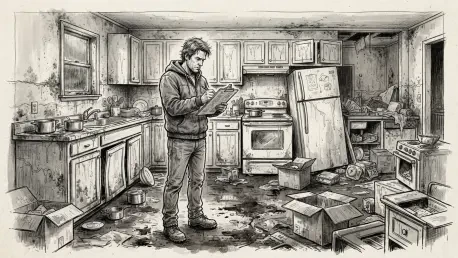

The financial reality for those without flood insurance is a multi-front battle against rising repair costs and the limitations of centralized government recovery programs. For thousands of families across South Florida and the Treasure Coast, the recent deluge revealed a catastrophic oversight in their risk management strategies. Many residents residing in areas historically classified as low-risk zones opted out of supplemental flood insurance, assuming their standard homeowners policies would provide a safety net. However, as residential streets transformed into rivers, the fine print of these policies became a barrier to recovery. The “insurance gap” is not merely a technicality; it is a financial chasm that leaves property owners solely responsible for the high costs of structural drying, mold remediation, and interior reconstruction. This situation underscores a broader trend where changing environmental patterns render traditional flood maps increasingly unreliable for urban planning and individual protection.
Navigating the Financial Realities of Post-Flood Restoration
The legal framework surrounding property insurance in Florida is uncompromising regarding water damage caused by rising ground levels. Standard policies are specifically structured to cover wind-driven rain that enters through a roof or window, but they categorically exclude damage resulting from surface water inundation or overflowing water bodies. Without a dedicated policy through the National Flood Insurance Program or a specialized private carrier, homeowners often face repair bills that exceed one hundred thousand dollars for a single-story residence. This massive exposure frequently leads to the depletion of savings or the accumulation of high-interest debt as families scramble to make their living spaces habitable again. In some extreme cases, the cost of restoration surpasses the remaining equity in the home, forcing difficult decisions regarding property abandonment. The absence of a federal mandate for insurance in non-special hazard areas has effectively created a hidden vulnerability.
When private insurance claims are denied, many individuals turn toward federal assistance with the expectation of full reimbursement, yet the reality of government aid is far more restrictive. The Federal Emergency Management Agency only provides grants when a formal federal disaster declaration is issued by the President, and even then, the funds are intended to return a home to a basic, functional state rather than a pre-loss condition. This often means providing enough to repair a kitchen or a single bathroom rather than replacing high-end finishes or landscaping. Furthermore, a substantial portion of disaster relief is distributed through the U.S. Small Business Administration in the form of low-interest disaster loans. While these offer a lower rate than commercial lenders, they still represent additional long-term debt that can be a significant burden for those on fixed incomes. Homeowners must navigate a complex web of paperwork that can delay actual construction for several months.
Strategic Pathways for Immediate Recovery and Documentation
For those navigating the aftermath of a flood without the cushion of a dedicated insurance policy, the importance of meticulous documentation cannot be overstated. Before any physical cleanup begins or damaged materials are discarded, every inch of the affected property must be recorded through high-resolution photography and video. This digital evidence serves as the foundation for any future appeals to federal agencies or applications for private charitable grants. Professional restoration experts suggest creating an exhaustive inventory of damaged personal property, including serial numbers and purchase dates, as this level of detail can expedite the verification process for non-profit aid. Furthermore, maintaining a centralized physical folder for all receipts related to temporary housing, emergency repairs, and sanitation supplies is essential. These records are often required to prove the extent of financial loss when seeking tax deductions or localized assistance programs that prioritize individuals with the greatest need.
Beyond immediate cleanup, the path to recovery involves engaging with community-based resources and specialized non-profit organizations that bridge the gap left by government programs. Local systems like the “211” information line provide a vital link to regional grants and labor assistance, such as those offered by faith-based groups that assist with the “muck out” process. These organizations often provide the heavy labor necessary to strip saturated drywall and flooring, which prevents the rapid onset of toxic mold growth. This immediate intervention is critical because the longer a structure remains damp, the higher the eventual cost of professional remediation becomes. Additionally, residents are encouraged to use county-specific reporting portals to log damage even if they do not expect immediate aid. These reports are aggregated to help local governments demonstrate the need for federal disaster declarations, which can eventually unlock broader funding for the entire community.
Future Considerations and Actionable Solutions
The recent crisis in South Florida necessitated a profound shift in how property owners approached environmental risk and financial preparedness. It became evident that relying on historical data or outdated flood maps was no longer a viable strategy for protecting long-term investments. Forward-thinking homeowners transitioned toward a model of proactive mitigation, recognizing that a relatively small annual premium for flood insurance offered far more security than any post-disaster loan program could provide. Many residents utilized the recovery period to install physical barriers, such as permanent flood gates or elevated electrical systems, to reduce the impact of future inundation events. These structural upgrades, combined with the acquisition of comprehensive coverage, transformed the way inland neighborhoods viewed their relationship with the landscape. By treating flood protection as a standard utility, the community began to build a more resilient financial foundation that stood firm.
The shift in public perception also led to a more rigorous scrutiny of real estate transactions and disclosure requirements throughout the state. Prospective buyers and current owners alike were encouraged to seek independent elevation certificates rather than relying solely on municipal zoning classifications. This data-driven approach allowed individuals to make informed decisions about where to invest and how much protection was truly necessary for their specific elevation. Local governments played a role by investing in modernized drainage infrastructure and providing tax incentives for homeowners who implemented sustainable water management systems on their lots. Ultimately, the recovery process taught that the only true defense against the “insurance gap” was a combination of comprehensive coverage and structural adaptation. By the end of the restoration cycle, the emphasis moved from reactive crisis management to a culture of continuous preparedness that defined the region.