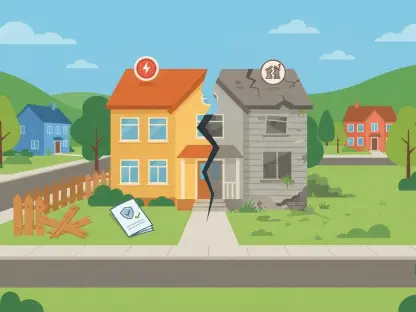

The disparity between the premiums collected from households and the actual reliability of coverage has created a significant friction point in the financial services sector that can no longer be ignored. The House of Lords Financial Services Regulation Committee has issued a definitive call to action, demanding that the Financial Conduct Authority (FCA) take a more assertive stance in overseeing the home and travel insurance sectors. Following a rigorous five-month inquiry, the committee’s findings highlight a persistent gap between regulatory intentions and consumer outcomes. Despite the introduction of the Consumer Duty framework, many individuals still find themselves navigating a maze of complex policies and disappointing claims experiences. This analysis explores the findings, the systemic issues within the industry, and the proposed path toward a more transparent and fair marketplace for all participants.
The Evolution of Insurance Oversight and the Consumer Duty Gap
Historically, insurance regulation focused primarily on the solvency of firms and the fairness of contract terms to ensure market stability. However, the recent introduction of the FCA’s Consumer Duty marked a fundamental shift, requiring firms to proactively deliver good outcomes for retail customers. While this was intended to be a watershed moment for the industry, the transition from high-level principles to tangible improvements remained sluggish. The significance of this background lies in the fact that while motor insurance achieved high levels of claims acceptance, the home and travel sectors continued to lag, suggesting that the regulatory approach did not yet address the unique nuances of these specific markets.
Evaluating Market Disparities and Systemic Challenges
The Disconnect: Policy Expectations vs. Claims Outcomes
One of the most striking revelations from the committee’s report was the disparity in claims acceptance rates. While motor insurance boasted a 99% acceptance rate, home insurance rates often lingered between 62% and 71%, and travel insurance ranged from 83% to 86%. This data suggests a profound expectations gap, where consumers believe they are protected against certain risks only to face a denied claim during a crisis. This discrepancy often stemmed from restrictive exclusions buried in dense legal jargon. To address this, the committee argued that the FCA must move beyond observing these trends and begin mandating better transparency regarding outcomes, ensuring that a policy’s value is as clear as its price.
The Impact: Price Comparison Culture and Product Quality
The rise of Price Comparison Websites (PCWs) revolutionized how consumers shop for insurance, driving down premiums through fierce competition. However, this race to the bottom inadvertently marginalized the importance of policy quality. Without standardized metrics to compare service levels or claims success, consumers were incentivized to choose the cheapest option, which often lacked the comprehensive coverage they required. The committee emphasized that a data gap exists; without intervention, consumers will continue to prioritize upfront costs over long-term security. The proposed solution involved the FCA mandating the publication of comparable claims data, shifting the market focus from pure price to holistic value from 2026 to 2028.
The Literacy Barrier: Addressing Product Complexity
Home and travel insurance policies are notoriously complex, often leading to low levels of consumer literacy. The committee noted that many purchase errors occurred because exclusions were not clearly communicated at the point of sale. Industry leaders argued that many declined claims resulted from uninsurable events or customer choices rather than misconduct. Nevertheless, the committee maintained that the burden of clarity lay with the providers. There is a pressing need for a regulatory roadmap that forces firms to simplify language and improve consumer education, ensuring that the average person can make an informed decision without needing a law degree.
Emerging Trends: The Future of Regulatory Enforcement
Looking ahead, the insurance landscape is set to be reshaped by technological innovation and stricter operational oversight. The committee raised specific concerns regarding the use of Artificial Intelligence (AI) in policy research and the outsourcing of claims handling to third parties. As AI tools become a primary method for consumers to compare products, the FCA faces the challenge of regulating these non-traditional intermediaries. Furthermore, the market will likely see a crackdown on cash settlements and delays in communication, as the regulator is pressured to set specific strategies for backend operational efficiency. The industry is moving toward an era where the regulator is expected to move from a consultative role to one of active enforcement.
Actionable Strategies: Industry Stakeholders and Consumers
For the brokerage sector and insurance professionals, the committee’s findings served as a catalyst for change. Brokers are encouraged to leverage their expertise to act as the human element that algorithms lack, helping clients understand limits and exclusions. For consumers, the best practice is to look beyond the top result on comparison sites and investigate a firm’s claims acceptance history where available. Businesses should prepare for increased transparency requirements by conducting rigorous due diligence on third-party claims handlers. By prioritizing outcomes data over simple sales figures, the industry can begin to align its operations with the core tenets of the Consumer Duty.
Reforming the Insurance Landscape: Long-Term Trust
The House of Lords committee signaled that the period of waiting and seeing for the Consumer Duty ended. The core theme of the report was a demand for accountability and a shift toward a value-driven market. As home and travel insurance remained essential financial safety nets for millions, the significance of these reforms could not be overstated. By bridging the gap between policy language and actual protection, the FCA sought to restore waning consumer confidence. Ultimately, the success of these measures was judged not by the number of policies sold, but by the reliability of the promises kept when a claim was finally made. Actionable next steps included the standardization of claims data and the implementation of educational tools designed to deconstruct complex exclusions for the average buyer.