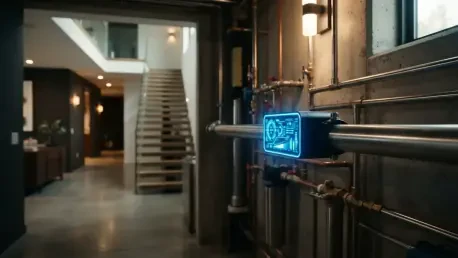

Validating that mitigation hardware is active and functioning in real time enables insurers to offer pricing that reflects actual operational reality. This transformation addresses a critical instability within the global property market, where the traditional model of reacting to damage after it occurs has become financially untenable. In 2026, the industry witnessed a surge in property claims that pushed traditional risk-sharing mechanisms to their breaking point, necessitating a pivot toward proactive mitigation strategies. The focus is no longer just on providing a safety net for financial recovery but on actively preventing the loss from ever happening. By shifting the paradigm from “detect and repair” to “predict and prevent,” insurers are leveraging asset intelligence to secure buildings. This evolution marks the end of an era where insurance was a static, once-a-year transaction and heralds the beginning of a continuous partnership between the policyholder and the provider. By focusing on asset health, the industry aims to create a sustainable future for all stakeholders involved.
The Technological Engine: Deploying Smart Risk Systems
Internet of Things (IoT) sensors and Artificial Intelligence are the primary catalysts in this new architectural framework, specifically targeting the pervasive issue of water damage. Historically, “escape-of-water” incidents have constituted nearly a third of all domestic claims, creating an annual billion-dollar drain on the industry. To counter this, insurers are deploying high-resolution flow meters and environmental sensors that provide a granular view of a building’s internal health. These systems do more than just alarm; they provide diagnostic capabilities that can distinguish between a standard appliance cycle and a catastrophic pipe failure. By identifying minute irregularities, such as slow-motion pipe degradation, the technology intervenes at the earliest possible stage. This shift toward continuous surveillance transforms a property from a silent asset into an interactive environment that communicates its status directly to underwriters and maintenance teams, ensuring that risks are mitigated before they escalate into disasters.
The integration of automatic shut-off valves represents a significant advancement in physical risk management, particularly for commercial or high-value residential properties. During periods of low occupancy or weekends, a single undetected leak can cause structural damage that far exceeds the property’s deductible. However, when an AI-driven system detects an anomaly and immediately severs the water supply, the potential for catastrophic loss is virtually eliminated. Industry data suggests that these interventions can reduce the severity and frequency of water claims by as much as eighty percent, offering a profound return on investment. This shift allows the insurance sector to reallocate capital that was previously reserved for avoidable repairs into more innovative coverage products. The result is a more stable ecosystem where risk is not just shared through premiums but is actively suppressed through a combination of hardware and predictive analytics. This model ultimately rewards the most diligent property owners with lower costs and greater peace of mind.
Market Dynamics: Overcoming Adoption and Systemic Barriers
Despite the clear efficiency of these systems, the initial capital expenditure for hardware and installation remains a deterrent for many policyholders. To address this friction, forward-thinking insurers are moving toward a structural subsidy model, absorbing the costs of deployment to ensure widespread adoption. Firms such as Aviva and Hiscox have recognized that the price of providing and installing a smart sensor is a small fraction of the cost associated with a single major property claim. By funding the rollout themselves, insurers are effectively buying down future risk while simultaneously gathering the data needed to refine their underwriting models. This proactive investment changes the relationship between the provider and the client, moving from a purely financial arrangement to a service-oriented partnership. This model also simplifies the value proposition for the consumer, removing the burden of technical setup and focusing on the shared goal of safety, which in turn accelerates the saturation of these technologies across the market.
The evolution of this market also significantly impacts the role of insurance brokers, who must now act as intermediaries for complex technical data rather than just policy terms. Brokers are increasingly utilizing real-time flow-monitoring telemetry as a powerful lever during contract negotiations to secure more favorable conditions for their clients. For instance, demonstrating the presence of an active and functioning mitigation system can lead to the total waiver of high “escape of water” excesses that typically burden policyholders. This transition requires brokers to possess a deeper understanding of building management systems and the specifics of IoT hardware. By presenting a live risk profile to underwriters, brokers can argue for premium discounts based on a property’s actual operational safety rather than general neighborhood statistics. This shift fosters a more transparent and competitive marketplace where safety and technological adoption are rewarded with lower costs, benefiting everyone in the chain.
Operational Resilience: Bridging the Legacy Gap
As property management becomes more data-reliant, the industry must contend with the significant psychological and operational hurdle known as alert fatigue. If environmental sensors generate frequent false positives or unnecessary water shut-offs, policyholders and maintenance crews may begin to ignore notifications or even deactivate the hardware entirely. Such behavior undermines the entire “predict and prevent” philosophy, potentially leading to a scenario where a real crisis is dismissed as another technical glitch. Furthermore, in complex commercial environments, there is often a notable “repair lag” between the moment a leak is detected and the arrival of a qualified technician. Even with accurate data, if the human response is not as rapid as the digital detection, the damage can still reach substantial levels. Solving these issues requires the development of more sophisticated AI filters that can minimize errors and ensure that every alert is both actionable and urgent, maintaining the integrity of the prevention system.
The integration of these high-tech tools into the legacy IT infrastructure of traditional insurance firms was a daunting operational hurdle that required significant modernization. Most underwriting frameworks were originally built for annual, static renewals and were not fully equipped to process the constant stream of real-time data provided by IoT devices. For the industry to fully realize the potential of this technological revolution, insurers found ways to bridge the gap between their historical data sets and modern, high-resolution environmental telemetry. This shift eventually created a more resilient property market where technology acted as a silent guardian, transforming water risk from an unpredictable financial drain into a manageable and transparent variable. By aligning the interests of insurers, landlords, and tenants through financial rewards for active asset management, the industry established a new standard for property protection. The journey toward this model confirmed that the cost of prevention was far lower than the price of recovery.