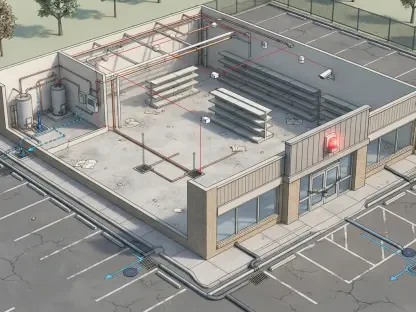

The quiet evolution of property assessments from clipboard-carrying inspectors to sophisticated algorithmic eyes represents the most significant shift in risk evaluation since the dawn of the modern insurance era. Historically, the process of securing a property policy relied on a manual and often social exchange where homeowners or brokers provided specific details about a structure’s age, materials, and maintenance history. This application-based model functioned on a foundation of self-reporting and periodic physical inspections that allowed for a certain level of human nuance and contextual explanation. However, the industry has rapidly transitioned toward a regime of data-intensive, intelligence-based systems that prioritize speed and scale over personal interaction.
For market players, this shift has fundamentally altered the power dynamics of the insurance transaction. Insurers now utilize automated platforms to ingest massive datasets before a single human eyes the application, allowing for nearly instantaneous risk profiling. While brokers benefit from streamlined workflows and faster quote generation, policyholders often find themselves at a disadvantage, facing premium hikes or coverage denials based on data they never personally provided. This structural change is driven by the convergence of high-speed computing, advanced computer vision, and geospatial modeling, all of which operate within a maturing regulatory framework that is struggling to keep pace with the sheer velocity of technological implementation.
The influence of computer vision has been particularly profound, as it allows algorithms to interpret pixels as physical attributes like roof deterioration, pool safety hazards, or vegetation proximity. Geospatial modeling further complicates this by layering environmental risks such as wildfire paths and flood plains over specific property coordinates with pinpoint accuracy. Consequently, the traditional underwriting file has transformed from a static questionnaire into a living digital entity that monitors properties in real time, creating a new standard for how risk is perceived and priced in a world where data is the ultimate arbiter of eligibility.
Mapping the Digital Shift: Emerging Industry Trends and Market Forecasts
High-Resolution Surveillance and the Rise of the Digital Property Dossier
The most prominent trend currently reshaping the industry is the development of the one-way surveillance system, characterized by the creation of comprehensive digital property dossiers. These dossiers are compiled from a wide array of non-traditional sources, including high-frequency aerial imagery, historical building permits, and environmental sensors that track local weather patterns. This move toward ubiquitous observation means that insurers can identify a missing shingle or a newly installed deck long before the property owner considers it a matter for their insurance carrier. This pervasive monitoring has fundamentally altered consumer behaviors, as policyholders become increasingly aware that their actions are being cataloged by unseen digital entities.
The traditional relationship between the insurer and the insured, once built on mutual disclosure, has been replaced by a dynamic where secret data often overrides the narrative provided by the policyholder. This asymmetry creates a tension where the availability of external information permits insurers to bypass the owner entirely, relying instead on satellite-captured “truth.” As a result, the industry is witnessing a shift toward proactive risk management where insurers might preemptively adjust premiums based on observed changes in property condition, rather than waiting for a renewal period or a claims event. This trend signals a departure from the collaborative nature of insurance, moving toward a more clinical and detached form of risk assessment.
Projecting Growth: The Economic Performance of AI-Integrated Insurance Models
From 2026 to 2029, the adoption of AI-driven underwriting tools is projected to correlate with a significant increase in operational efficiency for carriers that successfully integrate these technologies. Market data suggests that companies utilizing automated geospatial analysis have reduced the time spent on manual inspections by over forty percent, leading to a leaner expense ratio. This economic performance is driving a competitive race where insurers who fail to adopt these intelligence-based models risk becoming adverse selection targets for high-risk properties that AI-savvy competitors have already filtered out of their portfolios.
The forward-looking perspective on premium structures suggests that while AI efficiency may lower administrative costs, it will likely lead to higher volatility in individual pricing. As models become more granular, the pooling of risk is becoming more fragmented, with low-risk properties seeing slight decreases in premiums while properties with AI-flagged vulnerabilities face steep increases. This market competition is fostering a landscape where the primary differentiator among insurers is no longer just brand reputation or agent networks, but the sophistication of their proprietary algorithms and the breadth of the data lakes they can access.
Overcoming the Black-Box DilemmChallenges in Data Accuracy and Fairness
One of the most persistent obstacles in the current landscape is the black-box dilemma, where decisions are made based on information that is neither transparent nor consistently accurate. Temporal lags in aerial imagery represent a significant hurdle, as a satellite photo taken eighteen months ago may show a damaged roof that has since been replaced. When AI models rely on these outdated snapshots, the resulting underwriting decision is inherently flawed, yet the system often treats the visual evidence as an objective reality. This creates a cycle of frustration for homeowners who find themselves penalized for hazards that no longer exist, simply because the machine has not yet updated its view.
Interpretive errors by AI models further complicate the fairness of the process, as algorithms frequently struggle with contextual nuance. For instance, a computer vision system might interpret the shadow cast by a nearby tree as a structural hole in a roof, or mistake harmless aesthetic discoloration for functional deterioration. This contextual blindness means that the AI lacks the common sense to distinguish between a property that is neglected and one that has merely been photographed during a period of unfavorable lighting. Without a human in the loop to verify these findings, the automated system can inadvertently trigger non-renewals or massive surcharges based on visual hallucinations rather than physical reality.
To overcome these hurdles, a growing movement within the industry is advocating for the right of homeowners to review and correct their digital files. Strategies are being developed to allow policyholders to access the same imagery and data points used by the insurer, creating a pathway for dispute resolution. By transforming the digital dossier from a secret file into a shared document, insurers can mitigate the risks of interpretive errors and ensure that their models are working with the most current information. This transition toward data transparency is not merely a matter of fairness but a practical necessity for maintaining the integrity of the risk assessment process.
The Regulatory Mandate: Enforcing Transparency and Anti-Discrimination Standards
The evolving regulatory landscape is increasingly focused on the intersection of automated technology and consumer rights, as evidenced by the widespread adoption of the NAIC Model Bulletin. This framework emphasizes that insurance carriers are ultimately responsible for the outcomes of their AI systems, regardless of whether the technology was developed in-house or purchased from a third-party vendor. State-specific mandates in jurisdictions such as Colorado, New York, and California have set a high bar for compliance, requiring insurers to prove that their algorithms do not produce biased results that unfairly target protected classes or specific geographic regions.
Enforcing these anti-discrimination standards involves a rigorous analysis of how external data sources influence pricing and eligibility. Regulators are moving beyond simple disclosure requirements, demanding that insurers provide evidence of ongoing testing for algorithmic bias and the mitigation of “proxy” variables that might inadvertently replicate systemic inequalities. Compliance now involves a multi-layered approach where data security measures are integrated with transparency laws to ensure that the use of non-traditional data—such as credit-based scores or social indicators—does not result in arbitrary or capricious underwriting actions.
Moreover, the role of state oversight has expanded to cover the proprietary models used by third-party data providers, who were previously able to operate in the shadows. New regulations are forcing these vendors to open their black boxes to state examiners to ensure that the scores they sell to insurers are based on sound actuarial principles. This shift ensures that the decision-making chain remains visible from the initial data harvest to the final premium calculation, preventing insurers from using technological complexity as a shield against accountability.
The Future of Property Coverage: Shifting Toward a Collaborative Risk Dialogue
The next generation of property insurance is poised to move away from the current model of one-way surveillance and toward a collaborative risk dialogue between carriers and consumers. This evolution will likely be characterized by a more transparent exchange where the insurer shares identified risks with the property owner, who then has the opportunity to mitigate those issues before coverage is impacted. Such a dialogue fosters a sense of trust that is currently lacking in the industry, as it transforms the insurance company from a distant monitor into a partner in property preservation.
Potential market disruptors are already emerging in the form of direct-submission platforms, where homeowners can upload high-resolution photos, drone footage, or engineering reports to counter inaccurate AI findings. These tools allow the insured to exert control over their digital narrative, providing a real-time “ground truth” that can override aerial imagery or outdated public records. As catastrophe-prone markets continue to experience volatility, this innovation will be critical in maintaining market stability, as it encourages homeowners to invest in verified mitigation efforts like fire-resistant landscaping or reinforced roofing in exchange for more favorable terms.
Innovation in this space is ultimately about creating a more resilient market where risk is understood by all parties involved. When policyholders understand the specific factors driving their premiums, they are more likely to take proactive steps to reduce those risks, which benefits the insurer by lowering potential claims payouts. This shift toward a transparent and collaborative framework is not just a technological upgrade but a fundamental reimagining of the social contract that underpins the insurance industry, ensuring that the benefits of AI are shared more equitably across the entire ecosystem.
Conclusion: Harmonizing Technological Progress with Policyholder Protections
The investigation into the digital transformation of property insurance revealed a landscape where the concentration of power shifted decisively toward those who controlled the algorithms and the data. The report identified that while the move from manual to intelligence-based systems offered unprecedented efficiency, it also created significant vulnerabilities related to data accuracy and the opacity of decision-making. The analysis focused on the emergence of the digital property dossier, a tool that provided insurers with deep insights but often left policyholders without a voice or a means of correction. Regulatory bodies responded by establishing new standards for transparency, ensuring that automated systems remained accountable to existing anti-discrimination laws and consumer protections.
The path forward necessitated a transition toward a more collaborative risk dialogue, where the benefits of high-resolution surveillance were balanced by the right of the consumer to challenge and correct their data. The industry found that stability in high-risk zones could only be maintained through the integration of homeowner-generated evidence and proactive mitigation strategies. It was concluded that the successful harmonization of technological progress with fairness required insurers to treat transparency as a core competitive advantage rather than a regulatory burden. By fostering a shared understanding of risk, the industry moved toward a future where AI served as a tool for collective resilience rather than a source of systemic exclusion.