



Simon Glairy is a seasoned authority in the insurance landscape, known for his deep understanding of how risk assessment and policy language intersect with legal precedents. With a career dedicated to navigating the complexities of property claims and the evolving role of technology in risk management, he brings a unique perspective to the recent shifts in judicial handling of late-reported claims. In this discussion, we explore the implications of a significant court ruling involving American Coastal Insurance and the nuances of “prejudice” clauses that are currently reshaping the duties of insurers and policyholders alike. This dialogue covers the burden of proof in late-notice claims, the impact of specific policy wording on legal presumptions, and the role of expert testimony in overcoming technical hurdles during litigation.
How does the specific wording regarding “prejudice” in an insurance policy fundamentally change the legal obligations of a carrier when a claim is filed years after an event?
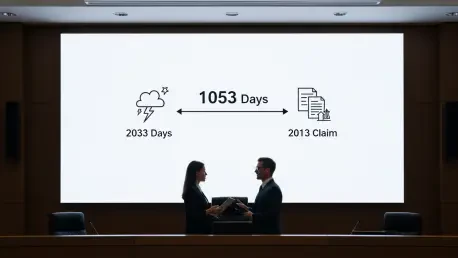
In the ruling by Florida’s Second District Court of Appeal on July 22, 2026, the court sent a clear signal that the literal text of a policy overrides general legal presumptions. Usually, Florida common law assumes that if a claim is late, the insurer is automatically “hurt” or prejudiced by the delay, but the American Coastal policy explicitly stated they had no duty to cover if the failure to comply with certain duties was prejudicial to them. This specific phrasing effectively stripped away the insurer’s shield of presumed prejudice, forcing them to provide concrete evidence of how the delay actually hindered their investigation. By including this language, the carrier took on a heavy evidentiary burden that they might have otherwise avoided under standard common law. It serves as a stark reminder that every word in a contract carries weight, and even a 1053-day delay doesn’t grant an automatic win if the policy demands proof of harm.
Looking at the timeline of the Hurricane Irma claim filed by the Wild Oak Bay Owners Association, what are the most critical factors that led the court to reconsider a claim reported nearly three years late?
The timeline here is quite extraordinary, starting with Hurricane Irma’s landfall on September 10, 2017, and ending with a claim notification on July 29, 2020. This gap represented a massive 1053-day delay, a timeframe that usually makes insurers very comfortable in their denial of coverage based on late notice. However, the court had to grapple with the fact that while the Wild Oak Bay Owners Association’s meeting minutes from November 2017 already logged nine roof leaks and flashing issues, the legal battle shifted once the benefits were assigned to SFR Services. SFR pushed forward with an estimate for roof replacements on forty-eight different buildings, creating a high-stakes litigation environment despite the passage of time. The court’s decision to reverse the summary judgment shows that even when a delay is glaringly obvious, the specific procedural requirements of the policy language must be satisfied before a case can be closed.
In what ways did the technical evidence and expert testimony from the assignee’s engineer challenge the traditional view that the passage of time always hinders a damage investigation?
The engineer for SFR Services provided a fascinating counter-narrative, arguing that the passage of time actually aided rather than obstructed the investigation of the damage. By reviewing fifty-five buildings and utilizing data from the National Oceanic and Atmospheric Administration alongside detailed pressure calculations, the expert was able to rule out subsequent storms. He made a compelling sensory observation that the “patina” buildup over the years actually helped distinguish Irma’s specific damage from newer wear and tear. Although the trial court initially dismissed this logic as “preposterous,” the appeals court reminded everyone that evaluating an expert’s credibility belongs to a jury rather than a summary judgment. This shift highlights how sophisticated data and unconventional expert opinions can successfully push back against the standard assumption that older claims are impossible to verify accurately.
What are the broader implications for the insurance industry when appellate courts certify conflicts between different jurisdictions on issues like the presumption of prejudice?
When a court certifies a conflict, as seen in this case with another appeals court on the prejudice question, it creates a period of significant uncertainty for both insurers and policyholders. In this specific instance, the coverage denial was reversed and sent back for further proceedings, meaning the insurer now faces the very real possibility of paying for a claim they thought was long dead. This creates a fragmented legal landscape where the outcome of a case might depend entirely on the specific district in which the litigation is filed. It also forces carriers to re-evaluate their settlement strategies, especially since the court ruled that SFR could not accept a settlement offer once a judgment was already entered. These legal ripples ensure that insurance companies will be much more cautious about the exact wording in their notice clauses to avoid being caught in similar jurisdictional tug-of-wars.
What is your forecast for the future of policy language and claims handling in Florida following this ruling?
I anticipate a rigorous overhaul of policy forms as carriers move to eliminate the word “prejudice” from their notice requirements to regain the protection of common law presumptions. We will likely see a surge in insurers using forensic tools to more aggressively document how they are harmed by delays, ensuring they have the proof required if they are forced into court. There will also be a heightened focus on the “duty to notify” sections, with stricter language designed to prevent 1053-day delays from ever reaching a jury. Ultimately, the industry will pivot toward more defensive drafting, as the risk of losing a summary judgment on a technicality in the policy wording is simply too great for most carriers to ignore.


