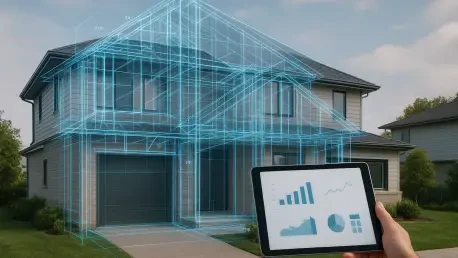

The Equinox platform distinguishes itself by embedding artificial intelligence into its core architecture rather than treating it as a secondary, retrofitted add-on. This foundational design choice enables insurance carriers to transcend the limitations of legacy systems, which often struggle with the latency and fragmentation associated with layered-on technology. In a bold move to modernize its service delivery, Orange Insurance Exchange recently transitioned its primary personal lines to this advanced infrastructure. By launching its HO-3 homeowners, HO-6 condominium, and DP-3 dwelling fire products simultaneously, the Florida-based reciprocal exchange has signaled a shift toward high-velocity operational models. This deployment represents a strategic pivot away from the industry-standard phased rollout, opting instead for a comprehensive integration that manages the entire policy lifecycle. Through this single, unified environment, the carrier is now positioned to oversee rating, issuance, renewals, claims, and billing with unprecedented technical fluidity.
A Unified Approach: The Strategy of Simultaneous Deployment
Synchronized Integration: Core Property Product Launches
The simultaneous activation of multiple property lines on the Solstice Innovations platform on September 1, 2026, marks a significant milestone in the evolution of insurance administration. While traditional carriers often spend months or even years migrating individual products one by one, the strategy employed by Orange Insurance Exchange demonstrates that a unified approach is increasingly viable when supported by AI-native tools. This methodology minimizes the period of double-entry and system overlap that typically plagues digital transformations, allowing the organization to focus on growth rather than technical debt. By consolidating homeowners and dwelling fire policies into a singular workflow, the exchange has significantly reduced the friction that agents face during the submission process. This streamlined environment ensures that data flows seamlessly from the initial quote through to final issuance, providing a consistent experience while maintaining high standards of data integrity.
Agile Management: Flexibility in Rating and Rule Configuration
Beyond the initial launch, the core advantage of this deployment lies in its long-term configurability and market agility. Both CEOs, Don Matz of Orange and Travis Pine of Solstice, highlighted that the platform allows the insurer to adjust rates, rules, and forms instantly without being tethered to a rigid software development release schedule. This flexibility enables the underwriting team to react swiftly to market shifts or regulatory changes, which is a critical capability in the high-stakes Florida property market. Furthermore, Solstice stands as a unique provider by offering a platform that combines NFIP flood, private flood, and homeowners lines within a single AI-driven environment. This consolidation allows for a more holistic view of risk, ensuring that overlapping coverages are managed efficiently and that policyholders receive comprehensive protection without the administrative hurdles of navigating multiple disparate systems.
Operational Excellence: Enhancing Underwriting with AI
Data Enrichment: Streamlining the Submission Lifecycle
The AI-native architecture facilitates real-time property data enrichment during the initial quoting phase, which acts as a powerful force multiplier for underwriters. Instead of relying on manual entry, the Equinox platform pulls and analyzes risk signals to populate fields and validate information automatically. This process not only enhances submission accuracy but also organizes administrative duties such as loss runs and inspections before a human underwriter even reviews the file. Crucially, while the technology provides data-driven support, a human-centric approach is maintained by requiring manual sign-off for all binding decisions. This hybrid model ensures that the speed of the process is accelerated by machine learning while the final decision remains rooted in professional expertise. As the industry moves toward 2027, the planned expansion into commercial lines will likely validate the scalability of this unified tech stack.
Strategic Outcomes: Actionable Insights for Modern Carriers
The successful integration of these technologies established a new benchmark for agility and operational clarity in a volatile market. By prioritizing a configurable foundation, carriers found themselves better equipped to handle diverse product portfolios while accelerating their speed-to-market. For insurance executives, the takeaway was clear: organizations should prioritize systems that unify flood and property lines to eliminate coverage gaps and reduce administrative overhead. Moving forward, the industry must look toward adopting similar AI-native frameworks to maintain underwriting discipline in the face of increasing climate and economic uncertainty. The transition underscored that deep technological integration was not just a luxury but a necessity for surviving the complexities of modern risk management. Firms that implemented these solutions early were able to offer faster decision-making for members while providing agents with a cleaner, more intuitive submission environment.