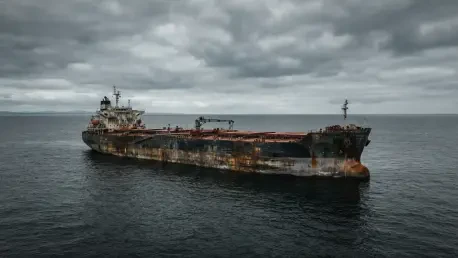

Current maritime insurance premiums for high-risk voyages are now nearly triple the highest rates seen during any previous twentieth-century naval conflict. This unprecedented surge transformed the Black Sea from a standard trade corridor into a high-stakes financial gamble for shipowners and cargo handlers alike. As geopolitical tensions intensified throughout the year, the mechanisms of international shipping were pushed to their absolute limits, forcing a radical recalculation of maritime economics. Historically, this region served as a reliable conduit for global agricultural and energy exports, yet the current climate of instability introduced risks that modern underwriting models were never designed to accommodate. The resulting volatility is not merely a regional concern but a global disruption that affects everything from fuel costs in Europe to food security in the Middle East and North Africa. This shift underscores the fragile nature of global maritime commerce when faced with persistent conflict and a lack of insurance stability.
Comparing Current Premiums to Historical Benchmarks
Why Are War Risk Premiums Rising So Fast?
The most striking development in the current maritime landscape is the sheer magnitude of the increase in war risk insurance premiums, which have skyrocketed to approximately 20% of a vessel’s total market value for certain high-risk routes. To understand the gravity of these figures, consider a standard merchant vessel valued at roughly $40 million; navigating into contested waters now requires an upfront insurance payment of nearly $8 million for a single voyage. This represents a seismic shift from the conditions observed prior to 2022, when premiums in the Black Sea typically ranged between 0.25% and 0.35%. Such a dramatic escalation suggests that the traditional methods of calculating maritime risk have been completely upended by the current conflict. Shipowners are now faced with a reality where the cost of protection rivals the operational costs of the journey itself, creating a massive barrier to entry for smaller firms that cannot absorb such significant financial outlays without external support.
Security Threats and the Fog of War
Much of this financial volatility is rooted in the constant threat of kinetic attacks against civilian and merchant shipping, particularly near the strategic hubs of Odesa and Chornomorsk. Recent reports of strikes targeting dry-cargo and container vessels have cast a long shadow over the region’s commercial viability. However, the difficulty in obtaining independent verification of these incidents creates a persistent “fog of war” that fuels market anxiety. When official statements from conflicting parties contradict one another, underwriters have no choice but to adopt the most conservative and expensive risk postures. This lack of transparency means that even a minor incident or a rumored threat can trigger an immediate spike in insurance costs across the entire basin. For the maritime industry, the inability to distinguish between actual danger and psychological warfare remains a primary driver of the current pricing crisis, as insurers prioritize capital preservation in such an opaque environment.
Global Trade Impacts and Reinsurance Limitations
How Do Shipping Costs Affect the Global Economy?
The burden of these historic insurance costs was rarely borne by the shipowners alone; instead, it was systematically passed down the supply chain to cargo owners and eventually the end consumer. This transfer of cost was visible in the emergence of specific “war risk surcharges” implemented by major global carriers. For instance, companies like CMA CGM introduced fees of roughly $35 per twenty-foot equivalent unit for shipments moving through regional ports such as Constanța, Varna, and Poti. While this may seem like a manageable figure in isolation, the cumulative effect on large-scale logistics operations was immense. For a manufacturer importing hundreds of containers monthly, these surcharges represented a significant blow to their bottom line, often forcing them to seek alternative, more expensive overland routes or to reduce their overall trade volume. These financial pressures reshaped regional trade patterns, as the high cost of insurance effectively functioned as a trade barrier.
Market Capacity and Future Recovery Requirements
Ultimately, stakeholders prioritized the development of private-public insurance partnerships as a potential solution to mitigate these risks and stabilize the market. To ensure long-term viability, maritime analysts suggested that trade volumes would only return to their pre-conflict equilibrium once war risk premiums descended toward a more sustainable level of 2% of vessel value. Achieving this goal required the implementation of verified security corridors and the establishment of durable diplomatic frameworks that provided legal and physical protection for civilian vessels. These steps were essential for restoring confidence within the global financial markets and allowing reinsurers to return to the basin with expanded capacity. Furthermore, industry leaders advocated for enhanced satellite monitoring and real-time data sharing to reduce the “fog of war” that previously inflated risk assessments. These proactive measures aimed to ensure that the critical flow of agricultural goods remained uninterrupted.