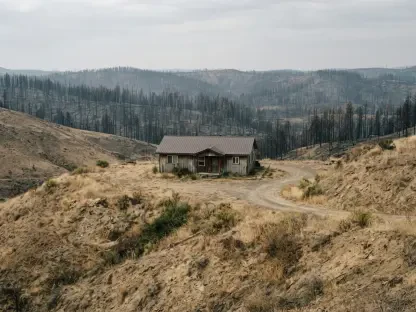

Strengthening El Niño patterns are shifting the disaster landscape, threatening to increase wildfire risks while the current reinsurance pool remains limited only to cyclone damage. This environmental shift occurs at a time when the Australian insurance sector is grappling with an unprecedented level of data precision that allows insurers to pinpoint risks with granular accuracy. While such advancements in modeling are technically impressive, they have created a stark reality for homeowners in vulnerable areas where premiums now reflect the full, unvarnished cost of potential destruction. The transition from broad regional assessments to street-level risk identification has fundamentally altered the social contract of insurance, making coverage a luxury for many. As 2026 progresses, the conflict between actuarial science and social affordability has intensified, forcing a national conversation about the role of the state in backstopping private markets. Currently, 1.61 million households are navigating extreme financial strain.
Success of the Existing Cyclone Pool
The federal Cyclone Reinsurance Pool, managed by the Australian Reinsurance Pool Corporation, has served as a pivotal experiment in stabilizing volatile markets through government intervention. Since its full implementation, the pool has demonstrated that it is possible to decouple extreme weather risk from consumer pricing without completely dismantling the private sector. Findings from regulatory bodies indicate that residents in the most cyclone-prone regions have experienced premium reductions averaging 37%, a significant reprieve for those previously facing double-digit annual increases. This mechanism works by providing a government-backed layer of reinsurance that absorbs the most catastrophic losses, thereby allowing private insurers to offer more competitive rates to their customers. The success of this model suggests that a state-supported safety net can effectively mitigate the peril premium that often traps low-income residents in high-risk zones, providing a functional proof of concept for broader applications.
Despite these clear wins, the current framework is remarkably narrow, focusing exclusively on damage caused by cyclones and the subsequent flooding that occurs within a rigid 48-hour window. This chronological and categorical restriction means that the vast majority of Australians remain unprotected from the full financial impact of standalone riverine floods or the devastating wildfires that characterize the southern states. While the cyclone pool has successfully aided the roughly 2% of policyholders living in the northern tropical regions, nearly half of the broader population currently describes their insurance costs as barely manageable or completely unaffordable. This discrepancy has fueled growing demands for the pool’s mandate to be broadened, as the current siloed approach to disaster management fails to address the multi-faceted nature of the Australian climate. The industry recognizes that as risk data continues to improve, the gap between those who can afford protection and those who are left exposed will only widen.
Differing Industry Perspectives on Expansion
Stakeholders advocating for the expansion of the reinsurance pool point to the ongoing success of the cyclone model as a definitive blueprint for future resilience. Major industry players, including Allianz and the Australian Consumers Insurance Lobby, have become vocal supporters of a multi-peril approach that would incorporate both wildfires and riverine flooding into a national scheme. Their argument is rooted in the concept of social equity; they contend that in a country as vast and geographically diverse as Australia, the financial burden of natural disasters should be shared more broadly across the tax base rather than falling solely on the individuals who happen to live in high-risk areas. These proponents suggest that a government-subsidized reinsurance layer for all major perils would not only lower premiums but also provide the market stability necessary for long-term investment. By creating a unified pool, the government could ensure that homeowners in fire-prone forests or flood-prone valleys are not systematically priced out.
However, the Insurance Council of Australia and various market analysts have voiced significant reservations about a wholesale expansion of government subsidies. Their primary concern revolves around the potential for moral hazard, where artificially lowered premiums might inadvertently mask the true physical risks of a specific location. If the financial consequences of building in a floodplain or a high-danger fire zone are externalized to the taxpayer, there is less incentive for developers, local governments, or individual homeowners to invest in critical mitigation infrastructure like levees, firebreaks, or resilient building materials. The ICA maintains that any expansion of the reinsurance pool must be strictly tied to tangible resilience efforts and physical risk reduction to avoid distorting market signals that discourage settlement in dangerous areas. They argue that insurance should ideally act as a price signal for risk, and while affordability is a pressing social issue, the solution must involve more than just shifting liability.
Addressing the Growing Climate Peril Gap
The urgency of this debate is further amplified by the strengthening El Niño cycle, which is currently reshaping the priority of threats across the continent. Historically, El Niño conditions are associated with a decrease in the frequency of tropical cyclones in the Pacific, which means the one disaster type currently covered by the federal reinsurance pool may actually become less common in the immediate future. Conversely, these same conditions are a primary driver of extreme heat and catastrophic wildfire risks, particularly in the southern and eastern parts of the country. This creates a significant peril gap where the government’s primary intervention tool is focused on a receding threat while the escalating risks of fire and drought remain entirely exposed to market-driven pricing. This misalignment highlights the fundamental limitations of a peril-specific reinsurance model in an era of rapid climate variability, as the current system lacks the flexibility to respond to the shifting geographical and atmospheric patterns that dictate disasters.
To bridge this gap, policy experts are increasingly discussing the transition toward a climate-agnostic reinsurance model that provides stable protection regardless of the specific disaster type. Such a framework would move away from the current 48-hour cyclone rule and instead focus on the severity of the loss across multiple categories, including floods, storms, and fires. By creating a multi-peril pool, the Australian Reinsurance Pool Corporation could offer a more consistent buffer against the volatility of the climate, ensuring that policyholders are not left vulnerable simply because their home was destroyed by a fire instead of a windstorm. This approach would simplify the claims process for consumers and provide insurers with a more predictable reinsurance environment, potentially leading to more stable premium costs across the entire country. A unified strategy would also allow for more efficient data sharing and risk assessment, as the government could coordinate national mitigation strategies that address the full spectrum.
Building Resilience Through Policy Evolution
As the federal government contemplates the future of the Terrorism and Cyclone Insurance Act, the industry remains in a state of watchful anticipation regarding the next steps for regulatory reform. The conclusion of recent monitoring by the Australian Competition and Consumer Commission has provided a wealth of data on the effectiveness of the current pool, but the path toward expanding its scope remains fraught with political and economic complexities. Any significant shift in policy will require a delicate balance between providing immediate financial relief to stressed households and ensuring that the long-term signals for climate adaptation are not lost. In 2026, the focus has shifted toward how the government can integrate insurance subsidies with a massive increase in public funding for disaster mitigation projects. This dual-track approach aims to reduce the underlying physical risk while simultaneously managing the affordability crisis, creating a more resilient national infrastructure that can withstand mounting pressures.
The movement toward an expanded reinsurance pool gained significant momentum as the limits of the traditional private market became increasingly evident to policymakers and the public alike. Decision-makers recognized that the precision of modern risk modeling, while technically superior, had created social fractures that required a coordinated state response to keep communities viable. By examining the lessons from the successful cyclone intervention, the federal government explored various pathways to include wildfires and riverine flooding under a broader protection umbrella. These efforts were closely integrated with localized mitigation programs, ensuring that the reduction in premiums was supported by real improvements in physical safety. The outcome of these discussions pointed toward a future where insurance was treated as an essential utility rather than just a private contract, ensuring that no Australian household was forced to choose between groceries and home protection. This transition underscored the necessity of a collaborative model.