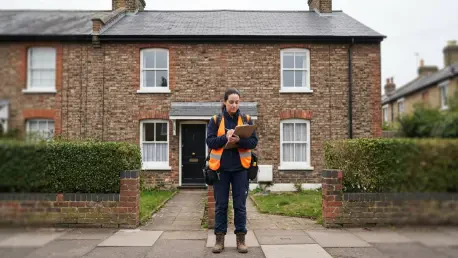

Walking through a neighborhood of newly renovated homes in London or Manchester might suggest a landscape of prosperity, yet beneath these polished facades lies a precarious reality where millions of families are one disaster away from total financial insolvency. This quiet crisis stems from a massive disparity between the perceived safety homeowners feel and the actual legal limits of their insurance contracts. While the market appears stable, a significant portion of the population is navigating a high-stakes gamble without even realizing the dice have been cast. Recent data paints a disturbing picture: the average underinsured home in the United Kingdom is currently covered for only about two-thirds of what it would actually cost to reconstruct it from the ground up.
The importance of this story lies in the convergence of stagnant policy limits and soaring reconstruction costs. As inflation continues to impact the supply chain for lumber, steel, and skilled masonry, the gap between market value and reconstruction cost has widened into a chasm. Homeowners often mistake the price they paid for their house for the amount it would take to clear the debris and start over. Consequently, when catastrophe strikes, they are met with insurance payouts that leave them tens of thousands of pounds short, transforming a manageable recovery into a permanent lifestyle downgrade.
The Illusion: Protection in the UK Property Market
Research conducted by industry observers reveals a startling confidence paradox gripping the nation. More than half of all UK adults report feeling completely secure in their current level of property protection, yet this sentiment is largely untethered from the technical reality of their policies. This false sense of security is fueled by a lack of insurance literacy, where the majority of policyholders cannot define what underinsurance actually entails. Without a clear understanding of these terms, families remain blissfully unaware that their financial safety net has been shrinking every year as the economy shifts around them.
This disconnect is not just a matter of semantics; it is a fundamental failure of communication between the financial sector and the public. When homeowners do not understand the mechanism of a policy, they are unlikely to question its adequacy during periods of relative calm. This passivity creates a dangerous inertia, where the very tools meant to provide peace of mind serve instead as a mask for mounting liability. The result is a housing market that looks robust on paper but remains highly vulnerable to the unpredictable nature of external economic shocks and physical disasters.
The Disconnect: Why the Underinsurance Gap Matters Today
The urgency of this issue has reached a boiling point due to the record-breaking costs of labor and materials currently plaguing the construction industry. Policies written or renewed without a professional valuation often rely on historical data that no longer applies to the 2026 economy. If a policyholder’s coverage is based on figures from even two years ago, they are likely carrying a significant shortfall. This means that in the event of a total loss, the insurance company is legally entitled to reduce the payout proportionally, leaving the homeowner to settle the remaining balance using personal savings or high-interest credit.
Moreover, the consequences of this gap extend beyond the individual to the broader financial ecosystem. When thousands of households are simultaneously unable to rebuild after a localized disaster, the local economy suffers a prolonged period of stagnation and decline. The inability to restore housing stock leads to a drop in community value and places additional strain on public resources. Addressing the underinsurance gap is therefore not just a matter of personal financial hygiene but a necessary step for ensuring the long-term resilience of neighborhoods across the country.
Systemic Failures: Misunderstandings in Policy Coverage
A significant portion of the population continues to operate under the assumption that comprehensive insurance covers every possible domestic mishap. For instance, over half of homeowners believe that accidental damage is a standard inclusion in their building and contents coverage. In reality, these protections are frequently sold as optional add-ons, meaning that common incidents like a burst pipe or a heavy object falling through a floor may not be covered at all. This misalignment between expectation and contract language often only comes to light during the stress of a claim, leading to widespread frustration and financial loss.
The “set it and forget it” mentality is further exacerbated during major life milestones such as refinancing. Even as homeowners negotiate new financial terms for their properties, a quarter of them report that no professional checked the suitability of their insurance during the process. This systemic oversight during the credit application phase represents a missed opportunity for risk mitigation. By failing to integrate insurance reviews into the mortgage journey, the industry allows coverage to stagnate even as property values and lifestyle complexities increase, leaving many owners with outdated protection that no longer fits their lives.
External Pressures: Escalating Risks and Expert Perspectives
The United Kingdom has entered a period of unprecedented environmental volatility that is testing the limits of the insurance industry. The wildfire season of 2025 set a grim precedent, and the trend has continued into 2026 with over a hundred significant fires recorded on protected sites. These events are no longer anomalies but recurring threats that demand more robust coverage. Despite this, data shows that half of the population has not checked if their current fire coverage is sufficient for a total loss, demonstrating a lingering reluctance to acknowledge the changing climate.
Industry experts are sounding the alarm regarding the frequency and severity of property claims, which have recently topped six billion pounds annually. Nasar Hussain, a prominent figure in the sector, has warned that the greatest threat to homeowners is the sheer illusion of coverage. Professional brokers are seeing a sharp rise in cases where final settlements were slashed because properties were undervalued at the time the policy was signed. This trend forces families to find enormous sums of money during what is already the most stressful period of their lives, highlighting the critical need for more accurate property assessments.
Strategies: Closing the Coverage Gap
Closing the underinsurance gap requires a shift toward proactive risk management and a departure from the convenience of automated renewals. Homeowners are beginning to prioritize professional reconstruction cost assessments over the simplified market valuations found on real estate websites. By utilizing appraisers or advanced valuation tools, they ensure that the sum insured accurately reflects the 2026 costs of modern building standards. This move transforms insurance from a passive administrative task into a dynamic component of their broader financial strategy, providing a genuine buffer against the rising tide of economic and environmental instability.
The solution also involves a renewed emphasis on professional advisory services to cut through the confusion of digital comparison sites. Engaging with a broker allows policyholders to tailor their coverage to specific risks like accidental damage and flooding that are often overlooked in standard packages. Looking toward the future, the industry encourages linking insurance reviews directly to financial milestones like refinancing or major home renovations. This holistic approach ensures that as properties grow in value and complexity, the safety nets protecting them remain robust and responsive to the evolving needs of the modern UK homeowner.