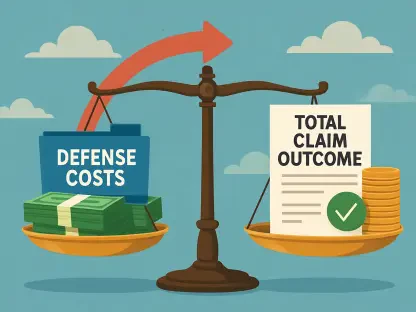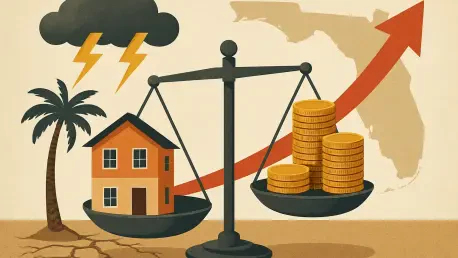

Florida residents navigating the current housing market face a puzzling financial paradox where the cost of protecting their homes has skyrocketed while the actual support provided by insurance companies continues to dwindle at an alarming rate. Between 2021 and 2025, property owners across the state witnessed a 64 percent increase in premiums, a surge that added up to approximately $18.7 billion in additional costs. Curiously, during this same timeframe, the total amount of money paid out by insurers for claims plummeted by 67 percent, creating a massive rift between consumer expenditure and corporate responsibility. This phenomenon is not isolated to the Sunshine State, as national figures indicate that premiums rose by 59 percent while payouts only grew by a modest 28 percent. This widening gap suggests that the fundamental promise of insurance is being eroded by systemic shifts that prioritize corporate liquidity over homeowner recovery.
Financial Market Trends
Lower Payout Ratios
The statistical breakdown of these financial trends reveals a troubling reality for the average policyholder who expects a fair return on their investment during times of crisis. In 2021, approximately 69 percent of every dollar collected in premiums was returned to the public in the form of claim payouts, but by mid-2026, that figure dropped significantly to just 48.4 percent. Research conducted by financial reform advocates characterizes this disparity as a form of excessive profit, estimating that the industry has effectively retained about $113 billion by failing to maintain a traditional 80 percent payout-to-premium benchmark. While insurance companies often point to rising operational costs and modern risk management, the data points toward a highly profitable environment that is not shared with those who fund the system. This shift forces families to shoulder a much larger portion of the financial burden when disasters strike, despite paying record-high rates.
Claims Process Delays
Beyond the raw financial data, the experience of many homeowners is defined by increasingly difficult claims management processes that hinder rapid recovery after property damage occurs. Nationwide, insurance providers have been observed closing roughly 30 percent of all filed claims without any payment whatsoever, leaving many families to fund repairs entirely out of pocket. Furthermore, nearly 22 percent of claims involve payment delays exceeding 60 days, which can be devastating for those living in temporary housing or dealing with mold and structural instability. Critics of these industry practices argue that companies are leveraging the ongoing climate crisis as a convenient justification for both aggressive rate hikes and more restrictive service withdrawals. By emphasizing the unpredictability of extreme weather, insurers have created a narrative that supports higher prices while simultaneously tightening the requirements for successful approvals at the expense of policyholders.
Regional Policy Responses
Local Coverage Limits
Residents in South Florida have felt the sting of these trends most acutely following historic flooding events that impacted Miami-Dade, Broward, and Palm Beach counties. Many families discovered the hard way that standard homeowner policies in Florida typically exclude flood damage, requiring a separate and often expensive policy through the National Flood Insurance Program or private carriers. This realization adds another layer of financial stress to a population already dealing with a 42.8 percent increase in total property maintenance and insurance costs over the last five years. While state officials have defended the current market by highlighting rate reductions for over 824,000 policyholders, these adjustments are viewed as minor when compared to the cumulative increases experienced since the start of the decade. The mismatch between the coverage needed for regional risks and the policies actually held by homeowners underscores a critical need for better education and more protection.
Legal Protection Standards
To address these ongoing inequities, proponents of reform advocated for significant shifts in government oversight, including the implementation of mandatory minimum payout ratios and stricter transparency in underwriting. The conversation centered on ensuring that insurance providers were held to higher standards of accountability regarding how premiums were utilized to support the community. For policyholders navigating the current system, Florida law established specific timelines, mandating that insurers acknowledge a claim within seven days and provide a final written decision within 60 days. State-sponsored mediation remained a vital resource for those facing disputes, offering a path to resolution without the immediate need for litigation. By focusing on these requirements, the state sought to restore a sense of balance to a market in flux, where environmental risks often felt overwhelming. These measures represented a concerted effort to ensure that homeowners were not left entirely vulnerable.