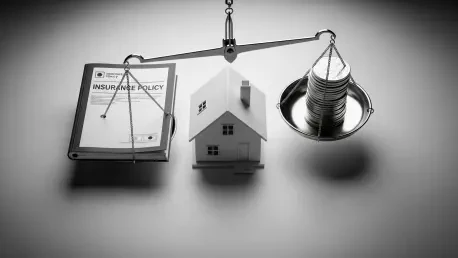

The quiet suburban street where a retired couple once envisioned spending their twilight years has become the site of a slow-motion financial crisis that is eroding the very foundation of the American middle-class identity. For generations, the roadmap to a stable retirement was clear: work hard, pay off the mortgage, and rely on the equity of a home to serve as a final safety net against the uncertainties of old age. However, as the United States navigates the complexities of the current economy, that once-reliable asset is increasingly being viewed through a lens of deep apprehension. The primary culprit is the meteoric rise in homeowners insurance premiums, which has transformed a predictable line item into a volatile and often unmanageable expense. This shift is not merely a budgetary inconvenience; it represents a fundamental threat to the solvency of millions of seniors who live on fixed incomes and possess little flexibility to absorb sudden, four-figure increases in annual costs. As these costs spiral, the psychological security of homeownership is being replaced by a persistent fear that the very walls intended to provide shelter might instead become the instrument of financial ruin. The traditional dream of aging in place is now being weighed against the cold reality of actuarial risk, leaving many to wonder if the home they fought so hard to own is still an asset they can afford to keep in this new era.
The Alarming Rise of National Insurance Premiums
The current insurance landscape is defined by a rapid, nationwide surge in costs that shows no signs of slowing down as the market moves from 2026 toward 2028. Recent data indicates that a vast majority of zip codes across the United States have experienced significant insurance spikes, with the national average premium jumping by roughly 24% over the last several years of economic adjustment. This is no longer just a regional issue affecting high-risk coastal towns or wildfire-prone mountain communities; it is a systemic shift that has added hundreds, and in many cases thousands, of dollars to the annual cost of maintaining a primary residence. The breadth of these increases means that even homeowners in historically stable regions are finding themselves blindsided by renewal notices that bear little resemblance to the rates of the past. For a demographic that often counts every penny to ensure their savings last throughout their lifetime, these sudden spikes act as a regressive tax on the very people who have already fulfilled their financial obligations to the banking system. The stability that once came with a fully paid-off mortgage is being undermined by a variable cost that remains entirely outside the homeowner’s control, creating a new form of housing insecurity that targets the most vulnerable long-term residents.
Nowhere is this crisis more evident than in Florida, which serves as a grim preview for the rest of the country as it attempts to balance population growth with escalating environmental risks. As a primary haven for retirees, the state now grapples with the highest insurance rates in the nation, where even a modest, well-maintained home can cost nearly $10,000 a year to insure properly. This financial pressure is hollowing out the “golden years” for many seniors, forcing them to make impossible choices between maintaining their property coverage and funding other essential needs. When insurance premiums begin to rival or exceed the cost of property taxes, the math of retirement begins to crumble. Many Florida residents have reported that their insurance bills have become their largest single monthly expense, eclipsing food budgets and healthcare costs combined. This trend is beginning to ripple outward to other states, as insurers reassess their portfolios in the face of mounting losses. The result is a growing class of “house-poor” seniors who own their homes outright but are being priced out of them by the secondary costs of ownership, effectively turning the American Dream into a recurring financial nightmare that threatens to deplete their remaining liquid assets.
Real-World Consequences for Long-Term Homeowners
The human cost of these escalating figures is best understood through individual stories of creative desperation and fiscal strain that have emerged in recent years. Consider the situation of individuals like Charlene Craig, a retired artist in California who resides in a home inherited from her grandparents, a property that should have represented the pinnacle of her financial stability. Within a remarkably short period, her premiums quintupled, jumping from a manageable $735 to a projected $2,500 annually. For someone living on a fixed pension, such an increase is not a minor budget adjustment that can be solved by cutting back on occasional luxuries; it is a full-scale financial emergency that threatens the ability to maintain the home and eventually pass down family wealth to the next generation. This narrative is becoming increasingly common as long-term homeowners find that the equity they spent decades building is being slowly drained by the very service meant to protect it. The emotional toll of potentially losing a multi-generational family hub due to insurance costs is profound, creating a sense of betrayal among seniors who played by the rules and expected their housing costs to stabilize once their mortgages were satisfied. These cases illustrate that the insurance crisis is not just about numbers on a balance sheet but about the erosion of the legacy and peace of mind that homeownership is supposed to provide.
Similarly, retired professionals such as former fire chief John Becker are finding themselves abandoned by traditional insurers who have served their communities for decades. When major carriers stop writing policies in certain regions due to perceived risk volatility, homeowners are often pushed toward “insurers of last resort,” such as state-backed FAIR plans. These policies are frequently significantly more expensive while providing less comprehensive coverage than the private market, leaving seniors to manage a fragmented and confusing web of insurance just to protect their primary asset. This transition often happens with little warning, leaving retirees to scramble for alternatives in a shrinking market where their options are both limited and prohibitively priced. The loss of standard coverage options creates a tiered system of homeownership where only those with significant liquid assets can afford the comprehensive protection that was once considered a standard component of the American Dream. For others, the shift to state-backed plans represents a precarious compromise, offering just enough coverage to satisfy legal or lender requirements but leaving them exposed to significant financial gaps in the event of a major disaster. This institutional retreat from high-risk or even moderately risky areas is effectively redlining entire demographics of retirees out of the security they spent their entire careers working to achieve.
The Interconnection of Environmental and Economic Factors
This crisis is fueled by a combination of external factors, starting with the undeniable impact of extreme weather events and the increasing frequency of billion-dollar disasters. From sprawling wildfires in the West to catastrophic storms along the Eastern Seaboard, the sheer volume of claims has forced insurers to pay out hundreds of billions of dollars. To remain solvent in an increasingly volatile environment, these companies are passing those costs onto the consumer, effectively treating every homeowner as a potential liability regardless of their personal claims history. This collective risk-sharing model, while fundamental to the insurance industry, is being pushed to its breaking point as the baseline for “normal” weather continues to shift. Homeowners who have never filed a claim in forty years are seeing their rates double simply because they live in a state that experienced a disaster hundreds of miles away. The predictive models used by insurers are now factoring in “secondary perils” like severe thunderstorms and hail with the same weight once reserved for hurricanes, leading to a permanent upward trajectory in pricing. This environmental volatility has created a situation where the cost of risk is outpacing the ability of the average retiree to pay for it, leading to a fundamental disconnect between the value of a property and the cost of protecting it.
Adding to the environmental strain is the reality of economic inflation and the technological evolution of risk assessment. The cost of raw materials like lumber and steel, combined with a persistent shortage of skilled construction labor, has caused the replacement cost of homes to skyrocket far beyond general inflation rates. When it becomes significantly more expensive to rebuild a house after a fire or storm, insurance companies must adjust their premiums upward to account for these higher potential payouts. Simultaneously, the industry has turned to high-tech surveillance and artificial intelligence to reassess risk with unprecedented granularity. Many insurers now use drones and satellite imagery to spot minor roof wear or overhanging branches that would have been ignored in the past. This influx of data often leads to non-renewals or massive price hikes based on hypothetical scenarios, leaving homeowners feeling like they are being punished for risks they cannot control or even see. The use of AI algorithms to predict future losses has removed the human element from underwriting, replacing local knowledge with cold, data-driven assessments that often fail to account for individual mitigation efforts. This technological shift has made the insurance market more efficient for corporations but increasingly hostile for the individuals who rely on it for their financial survival.
The Financial Vulnerability of Seniors on Fixed Incomes
Retirees are particularly vulnerable to these market shifts because their income is typically static and tied to sources that do not account for hyper-localized inflation in the insurance sector. While working-age homeowners might see salary increases or career advancements that help offset rising bills, seniors rely on Social Security and pensions that rarely keep pace with a 30% jump in home insurance costs. This lack of financial flexibility means that every additional dollar added to an insurance premium is a dollar taken away from essential needs like groceries, utility bills, or life-saving medication. The compounding effect of rising costs across all sectors of the economy has left many retirees with a vanishingly small margin for error. When a surprise insurance bill arrives with a $2,000 increase, it can trigger a domino effect of financial instability, forcing seniors to dip into their principal savings earlier than planned. This accelerated depletion of retirement funds poses a long-term risk to the individual and the broader social safety net, as more seniors may eventually find themselves reliant on public assistance due to the unmanageable costs of maintaining their private residences. The dream of a self-sufficient retirement is being traded for a state of constant financial triage, where the goal is simply to survive until the next premium notice arrives.
The most dangerous outcome of this financial squeeze is the rising trend of “going bare,” a phenomenon where homeowners choose to drop their insurance entirely. An increasing number of older homeowners who have paid off their mortgages are making the perilous decision to forgo coverage because they simply cannot afford the monthly payments alongside their other living expenses. While this provides immediate financial relief, it is a massive gamble that threatens to wipe out decades of wealth accumulation in a single afternoon. One major disaster, whether it be a house fire or a natural catastrophe, could result in the total loss of their home and the destruction of their financial legacy. For many, the choice to go bare is not a reckless act of defiance but a desperate response to a market that has priced them out of safety. This trend creates a precarious situation for communities, as uninsured properties are less likely to be rebuilt after a disaster, leading to neighborhood blight and declining property values. Furthermore, the lack of a financial cushion leaves these individuals with no recourse if they are forced to relocate, potentially leading to a surge in elderly homelessness or forced dependency on family members. The decision to exit the insurance market is a clear signal that the current system is failing to provide the security it was designed to offer to the nation’s most established homeowners.
Strategic Responses: Moving Beyond the Crisis
Despite the challenging outlook, homeowners discovered several effective methods to push back against rising costs and regain control over their retirement budgets. It was found that rigorous market comparison was the first line of defense, as sticking with the same provider out of habit often led to “loyalty taxes” in the form of higher rates. Engaging an independent insurance agent allowed retirees to navigate the complexities of the landscape, identifying smaller, specialized insurers or state-specific pools that offered more competitive rates than the major national carriers. Many individuals also found success by adjusting their policy structures, specifically by opting for higher deductibles. This strategy required maintaining a modest emergency fund to cover initial claim costs, but the resulting reduction in monthly premiums provided significant long-term savings. Furthermore, homeowners who bundled their various insurance needs under a single provider often secured discounts that were unavailable through separate policies. These tactical financial adjustments proved essential for maintaining coverage without exhausting retirement savings, demonstrating that an active, informed approach to insurance procurement could yield measurable relief even in a volatile market.
Retirees who successfully mitigated these risks also prioritized the physical hardening of their properties and engaged in collective advocacy to drive systemic change. They found that installing storm shutters, hail-resistant shingles, and improved roof tie-downs made their homes less of a risk in the eyes of underwriters, often triggering state-mandated discounts. Many individuals took advantage of local grants designed to help seniors upgrade their homes, which provided the dual benefit of physical safety and lower insurance bills. Beyond individual property maintenance, many older homeowners joined advocacy groups to pressure state lawmakers for tort reform and more transparent regulatory oversight of AI-driven pricing models. These collective efforts helped stabilize local markets and ensured that insurers were held accountable for how they assessed risk and set rates. By documenting all home improvements and presenting comprehensive maintenance logs to their providers, many residents successfully negotiated for risk-mitigation credits that were not automatically applied. Ultimately, the transition from passive policyholders to active risk managers allowed the older generation to shield their assets from the most extreme market shifts. These steps ensured that the equity they had spent a lifetime accumulating remained a reliable source of support, preserving the viability of their retirement goals.