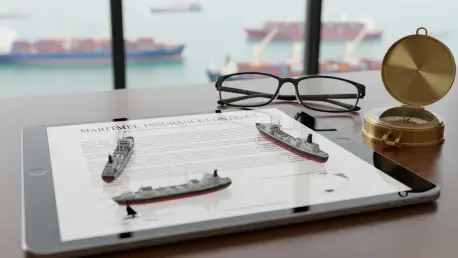

Nigeria’s maritime sector stands at a critical juncture where the vast blue economy offers untapped potential for national prosperity if supported by robust insurance frameworks. Currently, the nation faces a significant drain on foreign exchange as a portion of marine insurance premiums for high-value vessels and assets is funneled to international underwriters in London or Singapore. This reliance on foreign entities weakens the local financial market and limits the capacity of indigenous insurance firms to grow and specialize in complex maritime risks. To reverse this trend, the federal government and private stakeholders have begun prioritizing the localization of insurance services, recognizing that a self-sustaining blue economy requires internal risk management mechanisms. The challenge remains in bridging the trust gap between international financiers and local insurers, while ensuring that the Nigerian insurance industry possesses the capitalization necessary to cover deep-sea losses.
Regulatory Reforms: Market Participation
Legislative Impact: Expanding the Cabotage Act
The integration of more insurance mandates within the Cabotage Act represents a pivotal step toward ensuring that local firms capture a larger share of the maritime market. Legislative efforts have focused on closing loopholes that allowed shipowners to bypass local underwriters under the guise of technical necessity or insufficient local capacity. By enforcing stricter compliance with the Insurance Act, the Nigerian Insurers Association and the National Insurance Commission are working to ensure that every vessel operating within territorial waters carries a locally issued hull policy. This shift encourages the domestic insurance sector to pool resources through coinsurance arrangements, thereby increasing the collective ability to retain high-risk portfolios. Mandatory local insurance of imports through Cost, Insurance, and Freight contracts instead of Free on Board terms has become a cornerstone of this strategy. Such regulatory rigor aims to stimulate maritime investment.
Risk Management: Underwriting in the Gulf of Guinea
Managing the unique security risks of the Gulf of Guinea requires a sophisticated approach to underwriting that incorporates real-time intelligence and modern risk assessment tools. While incidents of piracy and maritime kidnapping have decreased due to increased naval presence, the perception of risk remains high among global shipping lines, leading to inflated premiums. Local insurance companies are now collaborating with specialized security firms to offer comprehensive packages that include cargo protection and kidnap and ransom coverage tailored to the region. By providing localized expertise, these insurers can offer more competitive pricing than foreign firms that lack a granular understanding of the local environment. This specialization is crucial for supporting the expansion of the fishing industry and offshore wind energy projects, both high-priority areas for the blue economy. Developing a robust database of maritime incidents allows underwriters to price risks with precision.
Strategic Growth: Technological Innovation and Capital
Digital Transformation: Data-Driven Risk Assessment
Technological advancements in satellite monitoring and blockchain are transforming how marine insurance is administered and claimed within Nigerian coastal waters. Insurers are increasingly deploying Internet of Things sensors on vessels to monitor cargo conditions and vessel health in real time, which directly influences premium adjustments based on actual behavior rather than static historical data. This data-driven approach reduces the likelihood of fraudulent claims and expedites the settlement process, which has historically been a point of friction for indigenous shipowners. Blockchain technology is also being explored to create transparent, immutable ledgers for policy documentation and claims history, enhancing the credibility of the local market in the eyes of international reinsurers. These digital innovations allow for the creation of parametric insurance products, which trigger automatic payouts based on specific events. By adopting these tools, the industry is becoming a modern partner.
Financial Leverage: Insurance and Fleet Modernization
The synergy between insurance firms and banking institutions emerged as a vital catalyst for fleet expansion among Nigerian shipowners who previously struggled with high-interest rates. By providing credit enhancement and performance bonds, insurers facilitated easier access to loans for the acquisition of modern, environmentally friendly vessels. Moving forward, the government should have formalized a national maritime insurance fund to provide additional backing for large-scale infrastructure projects like deep-sea ports and shipyards. Stakeholders identified that continuous professional training for maritime lawyers and underwriters was essential to handle complex salvage and general average claims efficiently. The transition toward a comprehensive maritime ecosystem required that all players adopted standardized safety protocols to minimize avoidable losses. Regulatory bodies ensured that financial solvency requirements for marine underwriters were strictly monitored. Ultimately, the industry prioritized the development of domestic reinsurance capacity.