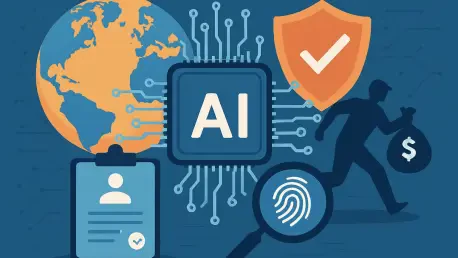

A shifting cultural tide regarding insurance ethics suggests that the willingness to commit fraud is growing alongside the technical ability to execute it. This phenomenon has catalyzed an unprecedented escalation in the financial stakes of the global insurance market, where losses in the United States alone have surged beyond $300 billion annually. As we navigate the complexities of 2026, the industry finds itself at a critical juncture where traditional investigative methods are no longer sufficient to stem the tide of sophisticated criminal activity. The accessibility of generative artificial intelligence and advanced data manipulation tools has effectively democratized the ability to create convincing fake documentation, turning what was once a specialized criminal craft into a widespread operational threat. Consequently, insurance providers are pivoting their entire defensive strategies, moving away from reactive claims processing toward a more proactive, technology-driven ecosystem that seeks to identify fraudulent intent before a single dollar is disbursed.
Understanding the Modern Fraud Landscape
Why Is Insurance Fraud Increasing Now?
Economic uncertainty remains a primary driver for the current spike in fraudulent activity, acting as a catalyst for individuals who might otherwise remain law-abiding. When personal finances are strained by shifting market dynamics or inflationary pressures, many individuals begin to view insurance companies not as risk-mitigation partners but as low-risk sources of supplemental income. This mindset shift has led to a significant increase in “soft fraud,” where legitimate claims are intentionally inflated to maximize the payout. For example, a minor fender bender might be reported as a total loss, or a small household leak might be claimed as a catastrophic plumbing failure. This cultural shift is particularly evident among younger demographics, who have grown up in a digital-first world and are statistically more likely to consider altering digital documentation to bolster their claims, viewing the practice as a victimless adjustment against a wealthy corporate entity.
The normalization of these “opportunistic” deceptions creates a massive cumulative drain on the industry, necessitating a fundamental change in how carriers interact with their policyholders. Beyond the immediate financial impact, this trend reflects a broader societal detachment from traditional concepts of corporate ethics, fueled by a perception that insurance premiums are a sunk cost that deserves a return. In response, companies are beginning to deploy behavioral analytics to understand the psychological triggers that lead to such exaggerations. By analyzing the timing and phrasing of claim submissions throughout 2026, insurers hope to develop more personalized communication strategies that discourage fraud at the source. This involves creating more transparent claim processes where the consequences of minor deceptions are clearly articulated, reinforcing the idea that fraud is not a victimless crime but a primary driver of rising premium costs for every policyholder in the market.
The Digital Scalability of Deception
Technology has fundamentally changed how criminals approach insurance scams by removing the need for the manual, high-risk labor that once characterized professional fraud rings. In the past, a staged accident required physical presence, hired actors, and a high degree of coordination that left behind a substantial trail of evidence. Today, modern fraudsters can operate from the safety of an encrypted terminal, creating synthetic identities by blending real, stolen, and entirely fake data to build personas that appear statistically perfect to older detection systems. These digital personas are then used to file numerous small-scale claims simultaneously across multiple carriers, exploiting the fact that small claims often undergo less rigorous scrutiny. By automating the application and filing processes, organized groups can now scale their operations with minimal effort, generating a high volume of “micro-frauds” that aggregate into multi-million dollar losses.
This shift toward digital scalability means that the speed of the attack often exceeds the speed of traditional detection. When a single bad actor can generate hundreds of plausible medical bills or repair invoices in a matter of seconds using generative AI, the manual review process becomes a bottleneck that criminals are all too happy to exploit. To combat this, the industry is increasingly turning to graph database technology and link analysis to identify hidden connections between seemingly unrelated claims. For instance, if twenty different claims across three different states all utilize the same digital font from a specific “invoice generator” tool or share a subtle pixel pattern in their uploaded photos, AI can flag them as part of a coordinated campaign. This move toward network-based detection is essential as we progress into the future, as it allows insurers to see the “big picture” of organized fraud that individual adjusters would likely miss while focused on their specific cases.
Strategic Integration of Defensive AI
3 Steps: Verifying Digital Evidence
Insurers are implementing rigorous verification protocols to ensure the integrity of every claim submitted through digital channels, creating a multi-layered filter for potential deception. First, predictive modeling analyzes historical data to flag high-risk claim patterns at the very moment of submission. This involves checking whether the claim details match known “scripts” used by fraud rings or if the claimant has a history of suspicious behavior across different policy types. This initial screening serves as a rapid triage system, allowing low-risk claims to pass through quickly for automated payment while holding more complex filings for further scrutiny. By utilizing machine learning models that are updated in real time, these systems can adapt to new fraud trends as they emerge, ensuring that the filter remains effective even as criminal tactics evolve. This step is critical for managing the massive volume of digital claims that modern carriers receive daily.
The second and third steps of this verification process involve deep technical audits of the evidence itself to detect sophisticated digital forgeries. Automated image verification tools scan for pixel inconsistencies or digital signatures that indicate a photo has been tampered with or generated by an AI model. This is followed by a comprehensive metadata analysis that checks the geographic and temporal data of a file to confirm that the evidence was actually captured at the purported scene of the accident. If a photo of a damaged roof is submitted with metadata showing it was taken two hundred miles away from the insured property, the system automatically triggers an investigation. This “forensic” approach to claim evidence makes it much harder for fraudsters to reuse images from previous claims or download them from the internet. By 2026, these three steps have become the industry standard, providing a robust technological barrier that protects the entire claims lifecycle.
AI as a Force Multiplier
Rather than replacing human investigators, AI functions as a force multiplier that automates the most tedious and time-consuming aspects of fraud detection. Modern systems can scan thousands of pages of medical records, invoices, and legal documents in seconds, highlighting specific discrepancies that would take a human adjuster days to find. For instance, an AI might notice that a specific medical provider is using the exact same wording for every patient’s diagnosis or that the billing codes provided do not align with the treatments described in the notes. By handling this heavy lifting of data processing, the technology frees up members of Special Investigation Units to focus their energy on high-value tasks, such as conducting in-depth interviews, performing physical site inspections, and making final determinations on the intent behind a claim. This synergy between machine speed and human intuition ensures that investigations are not only more thorough but also significantly more efficient.
The implementation of these tools has transformed the role of the investigator from a data-gatherer into a high-level strategist. Instead of spending hours cross-referencing spreadsheets, they are now presented with a prioritized dashboard of “red flags” and potential leads generated by AI. This allows for a much more targeted approach to investigative work, where resources are allocated based on the probability of fraud and the potential financial impact. Furthermore, these AI systems provide a consistent baseline for analysis, removing the human bias that can sometimes lead to overlooked clues or inconsistent decision-making. As carriers move forward from 2026, the success of their anti-fraud programs will depend heavily on how well they integrate these technological insights into their human workflows. The goal is to create a seamless feedback loop where investigators can teach the AI about new fraudulent behaviors they encounter, allowing the system to become smarter.
The Path Toward Collective Defense
The insurance industry recognized that the technological arms race against fraud required a total transformation of its operational philosophy. Carriers invested heavily in predictive modeling and digital forensic tools, effectively ending the era when simple photo manipulation could go undetected. These advancements were not merely about saving money; they were about preserving the integrity of the risk-pooling system itself. To remain competitive in this high-stakes environment, companies should now prioritize the integration of explainable AI that provides investigators with clear reasoning for every flagged claim. Furthermore, fostering a culture of cross-industry collaboration through real-time data exchange will be the most effective way to neutralize organized fraud rings that operate across multiple jurisdictions. The path forward lies in maintaining a flexible defensive posture that can adapt to the next generation of AI-driven deception, ensuring that the human element remains at the heart of every critical decision.