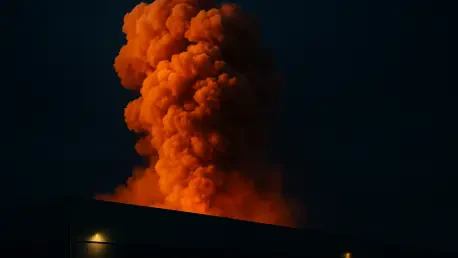

The morning sky over Conyers, Georgia, transformed from a familiar indigo to a haunting, chemical orange as a towering plume of toxic gas drifted toward the heart of the Atlanta metropolitan area. While the world watched the billowing clouds from their television screens, the reality on the ground was a frantic scramble for safety that eventually gave way to one of the most significant legal battles in recent environmental history. This was not just a fire; it was a catastrophic failure of safety protocols that ignited a multi-year struggle for accountability, property recovery, and the definition of corporate negligence in the modern industrial era.
As the legal landscape of 2026 continues to evolve, the federal subrogation complaint filed by Ohio Security Insurance Company against Bio-Lab, Inc. and its parent companies stands as a pivotal case. This litigation, initiated in the Northern District of Georgia, seeks to answer a fundamental question: who pays when a preventable chemical reaction paralyzes an entire region? With the facility allegedly housing nearly 14 million pounds of reactive chemicals—far exceeding its permitted capacity—the case has become a lightning rod for discussions regarding strict liability and the hidden costs of industrial shortcuts.
A Toxic Plume: The Genesis of a Mounting Legal Storm
The catastrophe at Bio-Lab’s Plant 12 began with a deceptive sound: a series of pops that signaled the start of a runaway chemical reaction. At approximately 5:00 a.m. on a Sunday morning, facility staff realized that moisture had infiltrated the storage area for Trichloroisocyanuric Acid (TCCA), a common but highly reactive pool chemical. When the warehouse’s automated sprinkler system activated, it inadvertently served as the catalyst for disaster. Rather than extinguishing the threat, the water triggered an exothermic reaction that released a dense, chlorine-laden fog, which quickly overwhelmed the building’s ventilation and safety barriers.
By midday, the situation had spiraled into a secondary, more intense fire that forced the total structural collapse of the 275,000-square-foot warehouse. The plume produced was a volatile cocktail of chlorine gas, bromine vapor, and hydrogen cyanide, which draped over the community for weeks. The legal storm began almost as quickly as the smoke rose, as the emergency evacuation of 17,000 residents and the shelter-in-place orders for 90,000 others created a massive class of potential plaintiffs. This incident redefined the scale of industrial liability, moving it from a localized property issue to a regional public health crisis.
Corporate Responsibility: The Intersection of Negligence and Recovery
The current legal conflict is centered on a subrogation claim by Ohio Security Insurance Company, a subsidiary of Liberty Mutual, which is aggressively pursuing Bio-Lab to recover payments made for property damage. Unlike standard personal injury suits, this subrogation action focuses on the technical failures and the breach of regulatory trust that led to the event. The complaint alleges that Bio-Lab and its parent organization, KIK Custom Products, were fundamentally negligent in their storage practices. Specifically, the facility was reportedly housing 13.9 million pounds of chemicals at the time of the fire, despite having represented to local authorities that they would cap storage at 6.2 million pounds.
This discrepancy in volume suggests a systemic prioritization of inventory over safety, a point that is central to the argument of industrial negligence. Moreover, the lawsuit highlights that nearly 3 million pounds of these materials were stored outside of the designated “bunker” areas, which are specially reinforced to contain chemical reactions. For insurers, this case is about more than just a single payout; it is an effort to hold global corporations accountable for the full economic fallout of their operational decisions. The legal system is now tasked with determining if the pursuit of higher storage capacity constitutes a “willful and wanton” disregard for public safety.
Legal Liability: Analyzing Primary Repercussions and Obligations
The litigation following the fire is built upon several distinct legal pillars, with “strict liability” for ultrahazardous activities being the most significant. Because the storage of massive quantities of TCCA is inherently dangerous, plaintiffs argue that Bio-Lab is responsible for damages regardless of the specific precautions taken. This shift in the burden of proof is a major hurdle for the defense, as it focuses on the nature of the activity rather than just the intent of the operator. Furthermore, the fire has triggered numerous counts of public and private nuisance, addressing the three-week period where nightly shelter-in-place orders paralyzed local life and commerce.
Environmental torts also play a major role, as the corrosive nature of the fallout caused damage far beyond the fire’s heat. Hydrochloric acid and other chemical residues settled on commercial buildings, leading to long-term structural degradation that may not be immediately visible. Federal oversight has added weight to these civil claims; the Occupational Safety and Health Administration (OSHA) issued multiple citations and monetary penalties in early 2025. These government findings serve as critical evidence in 2026, providing a verified record of workplace safety failures that plaintiffs are using to substantiate their claims of gross negligence.
Systemic Failures: Expert Perspectives on Corporate Accountability
Legal experts and safety boards have pointed out that the 2024 fire was the latest chapter in a long history of incidents at Bio-Lab facilities. The U.S. Chemical Safety Board (CSB) had previously issued warnings following a 2020 fire in Louisiana, noting that the company lacked adequate fire protection for water-reactive materials. This history of “near-misses” and previous disasters makes it difficult for the defense to categorize the Conyers incident as an unforeseeable accident. Attorneys are now employing a strategy to “pierce the corporate veil,” aiming to hold KIK International and KIK Custom Products jointly liable for the actions of their subsidiary.
This approach is vital because it prevents a large corporation from insulating its assets by allowing a single facility to declare bankruptcy in the face of massive claims. By demonstrating that the parent company exercised direct control over the Conyers operations—including staffing, safety budgets, and chemical procurement—plaintiffs hope to access the broader insurance towers and corporate coffers of the parent entities. This legal tactic ensures that the community and impacted businesses can recover the hundreds of millions of dollars in damages that a single local plant could never afford to pay.
Strategic Recovery: A Framework for Affected Property Owners
For those still dealing with the aftermath, the legal path forward requires a meticulous approach to documenting and quantifying losses. Industrial chemical fires produce acidic soot that can compromise the integrity of aluminum roofing, HVAC coils, and metal fixtures through a process of hidden oxidation. Experts recommend that property owners near the plume path commission professional chemical residue testing to prove the presence of contaminants. This technical evidence is often the difference between a successful insurance recovery and a denied claim, as it connects the physical damage directly to the Bio-Lab plume.
Furthermore, businesses must account for the economic impact of the Interstate 20 closure and the persistent shelter-in-place orders that stifled local trade. Quantifying business interruption requires a detailed analysis of year-over-year revenue loss and the specific costs associated with cleaning and remediation. Whether joining a class-action lawsuit for general nuisance or pursuing an individual subrogation claim for specific structural damage, affected parties must remain vigilant. Monitoring the final reports from the CSB and OSHA is essential, as these documents provide the definitive technical narrative needed to navigate the complexities of environmental litigation in 2026 and beyond.
The legal framework established by the Bio-Lab litigation provided a clear roadmap for the future of industrial safety and corporate accountability. Property owners learned that immediate documentation of chemical residue served as the only viable defense against long-term structural decay. Regulators determined that the outcomes of these cases necessitated a complete overhaul of how water-reactive chemicals were stored in populated areas. Ultimately, the resolution of these claims ensured that the true cost of industrial negligence was borne by the entities responsible, rather than the community that lived under the shadow of the plume.