
The speed at which global catastrophes unfold today has rendered traditional periodic reporting obsolete, forcing a shift toward instantaneous, data-driven awareness that spans across entire geographic regions. Verisk has formally integrated McKenzie Intelligence Services (MIS) into its operations, a strategic acquisition designed to embed real-time geospatial data directly into its primary risk analytics infrastructure. This development is not merely a technical expansion but a fundamental transformation of how the industry perceives catastrophe management. By incorporating MIS, Verisk provides a continuous narrative of disaster events, tracking everything from the initial moment of impact to the final settlement of insurance claims. This “live” perspective is becoming essential as global threats, ranging from climate-driven weather events to complex geopolitical disruptions, grow increasingly volatile. The ability to see a disaster unfold in real time gives insurers a decisive advantage in both response speed and financial accuracy.
Leveraging High-Precision Imagery for Rapid Disaster Assessment
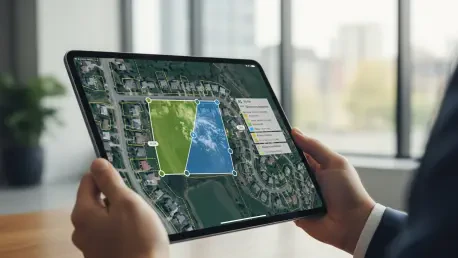
The core strength of MIS lies in its specialized capacity to provide what experts describe as “military-grade” intelligence during the critical hours following a major catastrophe. Utilizing advanced geospatial surveillance and high-resolution imagery, the service delivers granular damage assessments that were previously unavailable through conventional ground inspections. This capability allows insurers and loss adjusters to pinpoint the physical extent of damage at the individual property level, regardless of whether the event is a natural disaster like a flash flood or a man-made crisis. By moving away from generalized damage estimates, organizations can now rely on pinpoint accuracy to determine exactly which assets have been compromised and to what degree. This level of detail is particularly valuable for catastrophic perils such as wildfires, where localized wind patterns can spare one home while destroying another only meters away, creating a complex challenge for traditional aerial or satellite modeling.
Beyond the immediate identification of physical loss, this real-time reporting framework empowers companies to quantify their potential financial exposure with unprecedented precision. Instead of waiting weeks for field reports, stakeholders can visualize the scope of an incident as it happens, allowing for the strategic prioritization of resources toward the most severely impacted areas. This proactive stance ensures that emergency response teams and financial adjusters are deployed to locations where the human and economic needs are greatest. By removing the reliance on historical models that may not account for unique contemporary terrain changes, the MIS platform offers a factual baseline for immediate action. The integration allows for a more efficient allocation of capital, reducing the administrative overhead associated with prolonged claim cycles. Ultimately, this transparency builds a more resilient insurance ecosystem where decisions are rooted in objective, real-time evidence rather than early-stage post-disaster response.
Strategic Integration Within Connected Risk Ecosystems
Verisk is systematically weaving MIS technologies into its existing connected risk platform to establish a seamless bridge between live data streams and sophisticated catastrophe modeling. This architectural integration utilizes modern, cloud-native tools such as Verisk Synergy Studio and the Verisk Model Exchange to facilitate a more dynamic and agile workflow for exposure management. The synergy created by these platforms allows users to overlay real-time damage feeds onto existing risk profiles, creating a multidimensional view of vulnerability. This approach effectively closes the gap that has historically existed between static risk assessments performed during policy underwriting and the dynamic reality of an actual loss event. By leveraging cloud infrastructure, the system can process massive amounts of geospatial information without the latency issues that typically plague legacy software. This connectivity ensures that all stakeholders are operating from a single source of truth throughout the entire lifecycle of a risk.
A particularly significant component of the acquisition is the enhanced ability to manage risks associated with strikes, riots, and civil commotion, collectively known as SRCC. These specific events represent a unique challenge for the insurance sector because they are notoriously difficult to predict and price using traditional actuarial methods. Unlike a hurricane, which follows a traceable path, civil unrest can spark suddenly and spread rapidly across disjointed geographic areas, often driven by social media and shifting political climates. The incident-level intelligence provided by MIS allows Verisk clients to track these developments as they occur, providing a level of clarity that was previously impossible during periods of social volatility. By monitoring the proximity of ongoing unrest to specific insured assets or critical infrastructure, companies can take immediate steps to mitigate potential losses. This real-time visibility is vital for protecting high-value urban properties and retail chains.
In light of these technological advancements, organizations prioritized the adoption of integrated geospatial platforms to maintain a competitive edge in disaster response. The successful absorption of MIS into the Verisk suite demonstrated that the industry moved beyond mere data collection and toward actionable, real-time insight. Forward-thinking firms evaluated their current exposure management strategies and identified gaps where live intelligence replaced lagging indicators. This transition required a commitment to cloud-native infrastructures that supported the rapid ingestion and analysis of external data feeds. By embracing these changes, risk managers and underwriters improved their ability to navigate the complexities of modern catastrophes with greater confidence. The industry realized that the future of risk management depended on the ability to synthesize multiple streams of intelligence into a single, coherent narrative of safety and resilience. Consequently, the reliance on real-time awareness became the new benchmark for excellence.