
Simon Glairy is a distinguished figure in the commercial insurance landscape, renowned for his deep dive into the mechanics of high-risk sectors and the application of Insurtech to mitigate complex hazards. With a career dedicated to bridging the gap between traditional risk assessment and modern technology, Simon has become a pivotal voice for industries that operate under the radar but are essential to public infrastructure. In this conversation, we explore the high-stakes world of industrial laundry insurance—a sector where a single oversight in temperature monitoring or a miscalculation in gross profit can lead to the total collapse of a business that has been a lifetime in the making.
The industrial laundry sector is often described as a high-risk environment where spontaneous combustion can occur within just 30 minutes of a load finishing; how has the industry addressed this volatile window of time?
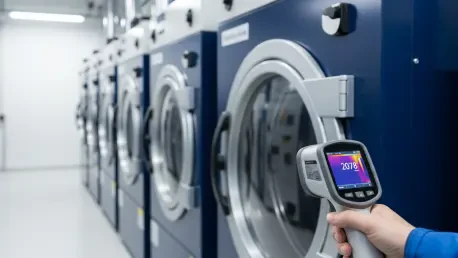
The reality of spontaneous combustion in this sector is a terrifying prospect because of how quickly a successful business day can turn into a total loss. During a particularly dark two-year period, the UK industry witnessed approximately 59 fires, a surge that sent shockwaves through the insurance market and forced many providers to exit entirely. To combat this, we have seen a shift toward proactive monitoring, such as the adaptation of temperature probes originally designed for hay bales to detect internal heat within laundry piles. By integrating these probes and thermographic cameras, operators can now identify thermal anomalies long before ignition occurs. This transition to a technology-led approach, bolstered by the 2025 code of practice, has seen fire losses among specialized clients drop from four major incidents in 2024 to zero by mid-2026.
Could you explain why this “invisible” industry is so critical to national infrastructure and what that means for the pressure on insurance placement?
While the average person rarely thinks about industrial laundries, the sheer scale of their operation is staggering, with over 24,000 staff members processing more than 50 million pieces of laundry every single week. This sector isn’t just about clean towels; it is a vital utility that handles 90 percent of NHS products and 95 percent of hotel linens, meaning a systemic failure in this industry would effectively paralyze the healthcare and hospitality sectors. Because these businesses are the life work of their owners, the emotional weight of a loss is immense, and the pressure on brokers to get the coverage right is heightened by this economic dependency. If an insurer pulls out due to a lack of understanding of these risks, it doesn’t just affect one building; it creates a bottleneck for essential services across the entire country.
Where do generalist brokers typically fail when trying to distinguish between a standard launderette and a complex industrial laundry facility?
The most significant failure we see is a fundamental misunderstanding of the operational differences between a local launderette and a high-volume industrial laundry, which leads to catastrophic gaps in coverage. Underwriters and brokers who lack specialist knowledge often overlook the specific chemical loads, heat-intensive machinery, and the sheer volume of combustible materials that define an industrial site. We frequently find that when these programs are audited, they are missing critical fixtures and fittings cover or essential business interruption extensions like failure of utilities. When a broker treats an industrial plant like a small retail shop, they open a “Pandora’s box” of issues that only come to light once a claim is filed and subsequently repudiated.
One of the most critical errors mentioned in the sector involves gross profit calculations; how does this mistake specifically manifest during a claim?
The error in gross profit calculation is perhaps the most common and damaging mistake we encounter, often resulting in a policy that simply fails to respond when it is needed most. We often see cases where the declared gross profit is actually less than the annual wage roll, a mathematical impossibility that immediately signals the policy has been set up incorrectly. When you multiply that error across a 24-month indemnity period, the business is left severely underinsured, meaning they won’t have the funds to recover even if the cause of loss is covered. It is heartbreaking to see a business owner seek reassurance from their broker, only to have their claim denied because the fundamental financial structure of the policy was flawed from day one.
With the industry facing significant financial strain from rising energy bills and production costs, what is your forecast for the future of risk management in this sector?
My forecast for the industrial laundry sector is one of “survival through specialization,” as the economic pressures highlighted in the 2025 Hatch report continue to squeeze margins. We have already seen six clients enter administration in 2025 and another two by mid-2026, largely due to the combination of downward price pressure and skyrocketing energy costs. Moving forward, the only way for these businesses to remain insurable and viable is to adopt the rigorous risk management protocols and specialist broking advice that have already begun to reverse the trend of fire losses. We must move toward a model where loss adjusters and experts actively train the next generation of brokers to identify these “floating” risks before they result in a total loss, ensuring that the insurance policy is a true safety net rather than a false promise.