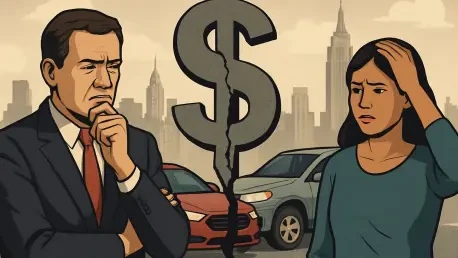

The experience of navigating the congested streets of Manhattan or the sprawling highways of Long Island has become significantly more expensive as New York residents now confront the highest automobile insurance premiums in the nation. As of early 2026, the state has entered a period of profound economic tension, where the skyrocketing cost of maintaining a vehicle threatens the financial stability of millions of households. This crisis is not merely a localized fluctuation in market rates but a deep-seated structural failure that has placed the executive branch at odds with powerful special interest groups. While the state government attempts to mitigate these costs through legislative reform, the existing legal framework and a robust litigation culture have created a formidable barrier to any meaningful progress. The resulting stalemate has left motorists caught in the middle, paying for a system that many argue prioritizes legal payouts over consumer affordability and economic common sense.
Systemic Drivers of High Insurance Premiums
The architectural foundation of New York’s current insurance crisis is built upon a civil justice system that consistently generates the highest tort liability costs in the United States. Economic data suggests that the average New York household now shoulders an indirect annual burden of over $7,000, a cost primarily driven by the excessive litigation expenses embedded throughout the state’s economy. This is particularly evident in the realm of medical malpractice and personal injury, where payout figures have reached unprecedented levels, far outstripping those of neighboring states. When insurance companies are forced to account for these massive potential liabilities, they inevitably pass those costs down to the policyholder. Consequently, what appears to be a simple premium hike is actually the market’s response to a systemic reliance on high-stakes litigation as a primary method for resolving disputes.
Beyond the legitimate claims that pass through the courts, a pervasive culture of insurance fraud continues to drain the resources of both insurers and the public. Staged accidents and fraudulent medical claims have become a specialized industry in certain regions of the state, with sophisticated networks exploiting the nuances of current law to maximize insurance payouts. Analysts estimate that these illicit activities add several hundred dollars to the annual cost of every policy issued in the state, effectively taxing honest drivers to subsidize criminal enterprise. This environment has created a “tort trap” for insurance providers, who often find it more cost-effective to settle questionable or even clearly fraudulent claims rather than risk the unpredictable nature of a New York jury. This cycle of settlement and premium adjustment has become a self-sustaining loop that maintains high costs regardless of individual driving records.
The Governor’s Strategy for Tort Reform
In a decisive move to address the growing outcry from constituents, Governor Kathy Hochul has championed an aggressive reform agenda designed to bring transparency and stability back to the insurance market. The core of this proposal involves a comprehensive crackdown on the legal loopholes that currently allow fraudulent actors to thrive, specifically targeting the coordination of staged crashes that have become so prevalent. By empowering regulatory bodies with better enforcement tools and stricter penalties for fraud, the administration aims to remove the “fraud tax” that currently inflates every driver’s bill. This strategy represents a shift toward seeing insurance costs as a fundamental economic indicator, recognizing that high premiums are a barrier to the state’s overall competitiveness in the regional and national markets.
This push for reform has found strong support among a broad coalition of business leaders, particularly those in the transportation, agriculture, and retail sectors. For these organizations, the tripling of insurance premiums over the last few years has moved beyond a balance-sheet nuisance to become an existential threat to their operations. Small trucking companies, for instance, report that their insurance liabilities often exceed their other operating costs, necessitating higher prices for the goods they deliver. These stakeholders argue that the current legal environment has become skewed, favoring a small group of high-earning trial attorneys at the expense of the general public and the state’s commercial health. They view the Governor’s initiatives as a vital correction needed to prevent a total exodus of businesses that can no longer afford the “New York premium” associated with mere existence in the state.
Navigating the No-Fault System and Legal Thresholds
New York’s automobile insurance landscape is governed by a No-Fault system that was originally conceived as a way to provide rapid financial relief to accident victims without the need for protracted court battles. Under this mandate, insurance carriers are required to provide up to $50,000 in benefits for medical expenses and lost wages, regardless of who was at fault in the collision. While this mechanism succeeds in delivering immediate assistance for basic economic losses, it simultaneously creates a complex legal boundary regarding non-economic damages. The system was designed to function as a safety net for minor incidents, but it has increasingly become a starting point for more complex litigation as parties look for ways to circumvent the limitations of the No-Fault coverage through the civil court system.
The primary point of contention in this framework is the “Serious Injury Threshold,” which serves as the legal gatekeeper for anyone seeking compensation for pain and suffering. To sue for non-economic damages, a plaintiff must prove that their injury meets specific statutory criteria, such as a fracture or a permanent loss of a bodily function. However, the interpretation of these categories, particularly the rule regarding injuries that prevent a person from performing daily tasks for 90 out of the first 180 days following an accident, has become a major source of litigation. Critics argue that this specific rule is frequently manipulated through extended periods of unnecessary medical treatment, allowing minor soft-tissue injuries to be reclassified as “serious.” This ambiguity fuels the very litigation that the No-Fault system was supposed to prevent, leading to a surge in personal injury lawsuits that keep insurance rates among the highest in the country.
Political Resistance and the Trial Lawyer Influence
Despite the clear economic incentives for reform, the legislative path in Albany remains fraught with significant political obstacles. Many members of the State Legislature have remained skeptical of the Governor’s proposals, voicing concerns that any attempt to limit litigation might inadvertently deprive legitimate accident victims of their constitutional right to seek full and fair compensation. This perspective is heavily supported by the state’s trial lawyer lobby, which remains one of the most influential and well-funded political forces in the region. These legal organizations argue that the high cost of insurance is not the fault of the legal system, but rather the result of corporate greed and poor investment choices by insurance companies. This fundamental disagreement on the root cause of the problem has resulted in a legislative stalemate that shows few signs of breaking.
The influence of personal injury firms is not limited to the halls of the legislature; it is a constant presence in the daily lives of New Yorkers through ubiquitous, high-budget advertising campaigns. From highway billboards to late-night television commercials, these firms promote a culture of litigation by highlighting multi-million dollar settlements and promising “no fee unless you win.” While these firms provide an essential service for the truly injured, critics point out that the contingency fee model—where lawyers take a significant percentage of the total settlement—creates a powerful incentive to inflate claim values. This public messaging reinforces the idea that an automobile accident is a potential financial windfall, further complicating efforts to reform the system. As long as this narrative dominates public perception, lawmakers remain hesitant to support any measure that could be framed as an “anti-victim” policy.
The Impact of Uninsured and Unlicensed Motorists
A frequently overlooked but critical component of New York’s insurance crisis is the substantial percentage of motorists who operate vehicles without any valid insurance or licensure. In early 2026, data indicates that approximately 11% of the state’s drivers are uninsured, a figure that places an immense financial burden on law-abiding citizens. When an uninsured driver causes an accident, the responsible party’s insurance company is often forced to cover the costs through “uninsured motorist” provisions, which effectively means that responsible drivers are paying the premiums for those who ignore the law. This creates a “hidden tax” on the insurance pool, as the costs of property damage and medical care for these incidents must be absorbed by the rest of the motoring public, further driving up the base rates for everyone.
The problem is compounded by the legal complexities that arise when vehicle owners permit unlicensed individuals to operate their cars. In many instances, insurance providers will deny coverage if an accident occurs under these circumstances, leaving the vehicle owner personally liable for what could be hundreds of thousands of dollars in damages. This issue is particularly acute in rural counties where public transportation is non-existent and the necessity of driving often overrides legal compliance. In both urban centers like Brooklyn and rural areas like Wayne County, the presence of motorists operating outside the regulatory framework creates a vacuum of accountability. This lack of financial responsibility among a significant portion of the driving population remains a persistent obstacle for regulators trying to stabilize the market and lower overall costs.
Path Toward Market Stability and Legislative Balance
The path forward for New York’s insurance market required a fundamental shift from defensive posturing to collaborative problem-solving between the various branches of government. It was clear that the state could no longer sustain a system where the average annual premium hovered around $4,000, as this cost was actively eroding the disposable income of the middle class. To move beyond the current impasse, policymakers began exploring middle-ground solutions that aimed to preserve the rights of the injured while implementing strict, data-driven caps on non-economic damages for certain categories of claims. This balanced approach sought to provide insurers with a more predictable risk environment, which is the primary prerequisite for lowering consumer premiums. Without such predictability, the market remained volatile and inaccessible for many low-income residents who required a vehicle for employment.
Addressing the crisis also necessitated a renewed focus on modernizing the No-Fault system to better reflect contemporary medical practices and legal realities. By clarifying the “Serious Injury Threshold” and establishing more rigorous standards for the 90/180-day rule, the state worked to eliminate the incentive for prolonged, unnecessary treatments designed solely to meet litigation requirements. Furthermore, increasing the penalties for insurance fraud and improving the coordination between local law enforcement and insurance investigators proved to be a successful strategy in reducing the volume of staged accidents. These steps, combined with a more aggressive stance on uninsured motorists, provided the foundation for a more equitable system. The transition from a state of economic stalemate to one of managed reform offered a clear example of how legislative persistence could eventually overcome long-standing institutional inertia.