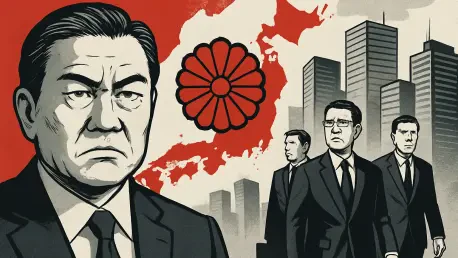

The aggressive judicial and law enforcement campaign against the Kudo-kai, the only syndicate designated as a specified dangerous organized crime group in Japan, has fundamentally altered the nation’s corporate landscape and risk management expectations. For decades, the presence of yakuza organizations in the periphery of the Japanese economy was often viewed through a lens of containment rather than total eradication, but the recent dismantling of the Fukuoka-based group’s leadership has signaled the end of this era. This shift is not merely a regional law enforcement success; it represents a comprehensive overhaul of the legal and ethical standards to which domestic and international firms are held. As the state moves to isolate anti-social forces from the legitimate economy, corporations are discovering that the traditional methods of checking a box for compliance are no longer sufficient to protect them from severe legal repercussions and reputational damage. The pressure is mounting for boards of directors to look beyond surface-level relationships and investigate the deep-seated, often hidden connections that might still exist within their vast and complex operational networks.
Strengthening the Shield: Corporate Compliance and Duty of Care
In the current regulatory environment of 2026, the duty of care for Japanese boards has expanded to include an active, ongoing obligation to purge any trace of criminal influence from their business ecosystems. The legal framework has shifted the burden of proof, essentially requiring companies to demonstrate that they have exercised exhaustive due diligence in every facet of their operations. This zero-tolerance approach means that a simple claim of ignorance regarding a sub-contractor’s or a partner’s criminal affiliations is now viewed as a failure of leadership rather than a legitimate defense. Consequently, compliance departments are being forced to adopt much more intrusive investigative techniques that go beyond checking a central database. They are now tasked with uncovering “silent partners” and beneficial owners who use legitimate-looking fronts to facilitate their activities. This evolution in compliance is driving a broader change in corporate culture, where transparency is valued over long-standing, unverified local ties that may have been overlooked in the past as part of the cost of doing business.
The shift toward a more rigorous, evidence-based discipline has transformed how contracts are negotiated and maintained across all industries. “Anti-social forces” clauses, which were once considered standard boilerplate language, have now evolved into highly specific and actionable tactical tools for risk mitigation. These modern clauses often include triggers that allow for immediate contract termination based on credible adverse media reports or law enforcement inquiries, rather than waiting for a formal criminal conviction. This proactive stance is essential because, in the eyes of the public and the regulators, even the appearance of a connection to a group like the Kudo-kai can be catastrophic for a company’s stock price and brand value. To support these legal safeguards, firms are maintaining meticulous documentation, including audio logs of business refusals and detailed paper trails of vendor onboarding. This rigorous approach serves as a primary defense mechanism, ensuring that if a partner is later found to have criminal ties, the corporation can prove it took every reasonable step to prevent such an association from ever taking root.
Sector Vulnerabilities: The Export of Enforcement Blueprints
Specific sectors such as construction, real estate, and logistics remain particularly vulnerable due to their historical reliance on multi-layered sub-contracting chains where organized crime has traditionally found a foothold. In regions like Kyushu, these industries are undergoing a painful but necessary period of self-reflection and reorganization as they work to untangle legacy ties. The crackdown on the Kudo-kai has highlighted how easily criminal enterprises can obscure their involvement through complex webs of local service providers and scrap recycling operations. As a result, firms operating in these high-risk sectors are now implementing site-level audits and physical inspections of logistics depots to ensure that their supply chains are clean. The goal is to prevent the inadvertent funneling of corporate revenue into criminal hands, a risk that has become far more acute as the police continue to target the economic foundations of these syndicates. This heightened scrutiny is creating a new standard for operational integrity that is quickly spreading beyond the borders of Fukuoka.
While the initial focus of this intensified enforcement was localized to the Kyushu region, the tactics developed by the Fukuoka police are now serving as a national blueprint for regulatory expectations across Japan. The success of these regional exclusion ordinances has emboldened authorities in other prefectures to adopt similarly aggressive strategies for isolating anti-social forces. For the corporate world, this means that the stringent enforcement environment currently observed in Fukuoka is a preview of the national standard. Businesses operating in Tokyo, Osaka, and other major hubs can no longer assume that regional issues will stay regional; instead, they must treat the Kyushu situation as a benchmark for their own compliance programs. This “nationalization” of organized crime exclusion is forcing companies to synchronize their risk management strategies across all branches and subsidiaries. The message from the government is clear: the methods used to dismantle the Kudo-kai’s influence will be applied wherever criminal groups attempt to maintain a presence in the legitimate Japanese business environment.
Financial Resilience: Strategic Risk Transfer and Insurance
The insurance market has responded to these changing dynamics by significantly recalibrating its approach to liability and business interruption coverage. Underwriters are now scrutinizing the specific “exclusion wording” in policies to ensure they are not inadvertently covering losses tied to criminal investigations or extortion attempts. Companies with significant footprints in high-risk districts are finding that their premiums are rising unless they can demonstrate a superior level of counterparty control. To maintain favorable terms, firms are increasingly aligning their internal compliance playbooks with the specific requirements of their insurance providers. This involves maintaining impeccable logs of all interactions with law enforcement and providing evidence of robust screening protocols. By doing so, corporations can mitigate the risk of denied claims and ensure that they have the financial resilience to withstand the fallout if a criminal scandal hits a peripheral part of their business. This tighter integration of compliance and insurance is becoming a cornerstone of modern Japanese risk management.
To ensure business continuity during this period of transition, forward-thinking boards of directors have moved to implement proactive measures that go beyond traditional risk assessments. Many have established dual-sourcing strategies for critical components, providing a safety net in case a primary supplier is suddenly incapacitated by a police raid or a regulatory shutdown. Furthermore, companies are investing in whistleblower protections to encourage employees to report suspicious third-party interactions without fear of internal retaliation. These strategic actions were designed to protect long-term value by prioritizing transparency and accountability over short-term financial gains. By walking away from lucrative but questionable contracts, Japanese corporations demonstrated a commitment to the new standards of integrity demanded by both the state and the global investment community. The shift toward a more transparent market was solidified as firms realized that maintaining a clean reputation was the most effective way to secure their future in an increasingly scrutinized economic landscape. Professional auditors and risk consultants provided the necessary oversight to confirm that these new protocols were not just theoretical but were being strictly enforced on the ground.