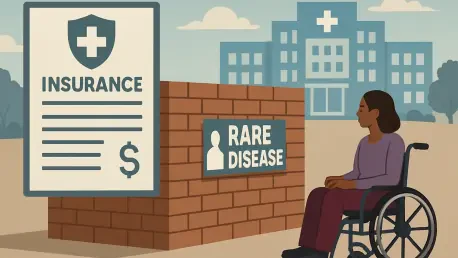

The silent burden of rare diseases often goes unnoticed by the broader public, yet nearly 30 million Americans find themselves navigating a healthcare landscape that was never designed to accommodate their specific needs. This figure, representing roughly one in ten individuals across the country, reveals that while the conditions themselves are clinically rare, the experience of living with them is a surprisingly common American reality. In the District of Columbia, Maryland, and Virginia, collectively known as the DMV, the challenge is amplified by a high density of specialized medical centers contrasted against a patchwork of conflicting insurance regulations. For the approximately 15 million children impacted by these conditions nationwide, the early years of life are often defined not by milestones of growth, but by a relentless struggle against bureaucratic systems that prioritize actuarial tables over individualized clinical necessity. The friction between advanced medical innovation and stagnant insurance policy creates a environment where the possibility of a cure is frequently overshadowed by the impossibility of coverage.
Measuring Progress Across the Mid-Atlantic
The NORD Report Cards: Regional Volatility
When evaluating how the DMV serves its rare disease constituents, the National Organization for Rare Disorders (NORD) provides a vital metric through its annual state report cards, which serve as a diagnostic of legislative health. Currently, D.C., Maryland, and Virginia maintain a respectable “B” average, a grade that suggests a level of competence in addressing patient needs compared to the rest of the nation. However, this letter grade obscures the extreme volatility found within the specific categories of assessment, where a single jurisdiction might lead the nation in one policy area while failing completely in another. This inconsistency creates a “ZIP code lottery” for patients, where moving a few miles across the Potomac River can result in the loss of critical protections for drug cost-of-living caps or specialized provider access. The disparity is particularly glaring in the way different local governments respond to the rising costs of orphan drugs, which are designed for small populations but carry immense price tags.
The lack of a unified regional policy framework means that even within the interconnected DMV economy, a patient’s medical security is tethered to the specific legislative climate of their home state or district. While Maryland has made significant strides in standardizing health plans to provide more predictable out-of-pocket costs, the District of Columbia has faced criticism for gaps in its regulatory oversight that leave families vulnerable to shifting insurance policies. This fragmentation forces families to become experts not only in their own complex medical conditions but also in the intricacies of state-level insurance law. For those living with rare diseases, the burden of advocacy is never-ending, as they must lobby for the basic recognition that their conditions require more than a one-size-fits-all approach to healthcare. The current “B” average in the region is less a sign of success and more a call to action to address the specific, localized failures that still threaten the health and financial stability of thousands of residents.
Geographic Disparities in Access and Coverage
In the Mid-Atlantic region, the presence of world-class institutions like Johns Hopkins and the National Institutes of Health creates a deceptive sense of security for those seeking rare disease care. While the medical expertise is concentrated and accessible, the insurance mechanisms required to pay for that expertise remain stubbornly fragmented. A family living in Northern Virginia might find that their state-regulated insurance plan provides a robust appeals process for denied treatments, whereas a family in Maryland might benefit more from legislative caps on prescription drug prices. These differences are not merely academic; they dictate the actual flow of care, often determining whether a patient can afford to see a specialist who understands their specific mutation or if they must settle for a generalist who lacks the necessary expertise. The geographical proximity of these states should, in theory, lead to a harmonized approach to patient rights, yet the reality remains a disjointed collection of varying mandates and protections.
Furthermore, the regional volatility is exacerbated by the way each jurisdiction handles the interaction between public and private insurance entities. In Washington, D.C., the unique status of the district can sometimes complicate the implementation of broad insurance reforms that are more easily enacted in neighboring states with more traditional legislative structures. This results in a scenario where the most vulnerable populations, often those relying on Medicaid or low-tier private plans, are the ones most likely to fall through the cracks of the system. For a rare disease patient, the continuity of care is paramount, yet the current regional landscape often forces transitions in coverage or providers that can disrupt years of specialized treatment. Bridging these gaps requires a concerted effort to look beyond state lines and develop a more integrated DMV-wide strategy that ensures a patient’s right to care is not surrendered the moment they cross a jurisdictional boundary.
Financial Barriers to Essential Treatment
The High Cost: Medical Nutrition and “Food as Medicine”
One of the most persistent and frustrating hurdles for rare disease patients in the DMV is the battle over the coverage of “medical nutrition,” a term that encompasses highly specialized formulas and foods required for survival. For many genetic and metabolic disorders, these products are not optional supplements but are the primary, if not only, means of managing a life-threatening condition. Despite their clinical necessity, insurance companies frequently exploit a regulatory loophole by categorizing these formulas as “food” rather than “medicine.” This semantic distinction allows insurers to deny coverage, forcing families to pay out-of-pocket for expenses that can easily exceed $2,500 per month. The financial strain is catastrophic, often forcing families to choose between paying for their mortgage or purchasing the specialized protein substitutes that keep their children alive and neurologically intact.
The absurdity of this situation is highlighted by the fact that many of these formulas are federally designated medical foods, specifically formulated to be consumed or administered enterally under the supervision of a physician. When insurance companies refuse to cover these costs, they are essentially overriding a doctor’s prescription based on a technicality in the plan’s definitions. In Virginia and Maryland, advocacy groups have successfully pushed for better grades in medical nutrition coverage, yet the protections remain unevenly applied across different types of insurance plans. For a patient with a condition like Phenylketonuria (PKU), the lack of specialized nutrition leads to the accumulation of toxic substances in the brain, resulting in permanent intellectual disability. The cost of preventing this damage through proper nutrition is a fraction of the cost of long-term disability care, yet the system remains fixated on short-term savings at the expense of long-term human and economic health.
Clinical Impact: Lessons from Metabolic Disorders
The real-world consequences of denying medical nutrition are often immediate and severe, as illustrated by the experiences of patients treated at regional hubs like the Kennedy Krieger Institute. When a patient with a complex metabolic disorder is denied their prescribed formula, the metabolic imbalance that follows can lead to acute psychiatric crises or physical collapse within days. Dr. Ada Hamosh, a prominent geneticist at Johns Hopkins, has documented cases where the refusal to cover a preventative formula led directly to a high-cost emergency room admission and subsequent hospitalization. In these instances, the insurance company ends up paying significantly more for the emergency intervention and psychiatric stabilization than they would have for the monthly formula. This “penny wise, pound foolish” approach is a hallmark of the current insurance landscape, where the immediate bottom line takes precedence over evidence-based preventative care.
Moreover, the psychological toll on families who must constantly litigate their right to basic nutrition cannot be overstated. Parents of children with rare diseases often spend dozens of hours each week on the phone with insurance adjusters, fighting to prove that their child’s “food” is, in fact, a life-sustaining medication. This administrative burden is a form of systemic gatekeeping that disproportionately affects those with limited time and resources. Even in D.C., where some legislative progress has been made with the Medically Necessary Foods Coverage Act, the law is often restricted to a narrow list of diagnoses, leaving many patients with equally severe needs without any legal recourse. The path forward must involve a fundamental reclassification of medical nutrition as an essential health benefit, ensuring that no patient in the DMV is forced to go without the specialized diet that stands between them and irreversible physical or mental decline.
Navigating Administrative and Legislative Hurdles
The Dangers: “Fail First” Protocols and Step Therapy
A particularly insidious administrative barrier facing the rare disease community in the DMV is the widespread use of “step therapy,” a practice often referred to as “fail first.” Under these protocols, an insurance company requires a patient to attempt treatment with a lower-cost, often generic medication before they will agree to cover the more expensive, specialized drug originally prescribed by the physician. For a patient with a common condition, this might be a minor inconvenience; however, for those with rare diseases, it is a dangerous gamble with their health. Many rare disease treatments are highly specific, targeting unique genetic pathways, and there are often no equivalent generic alternatives. Forcing a patient to “fail” on an unrelated medication can cause their condition to progress to a point where the original, intended therapy is no longer as effective, or where permanent damage has already occurred.
The regulatory response to step therapy in the DMV is a study in contrasts, with Virginia currently serving as a national leader by maintaining an “A” grade for its robust patient protections. Virginia law mandates clear timelines for insurance companies to respond to exemption requests and provides a streamlined process for physicians to bypass the “fail first” requirement when it is clinically inappropriate. On the other end of the spectrum, the District of Columbia has received a failing grade because it lacks any formal regulations governing step therapy, leaving the door wide open for insurers to implement these protocols without oversight. In Maryland, the situation is more complex, as the state utilizes “Preferred Drug Lists” that advocates argue do not always align with the most recent clinical innovations. This lack of regional uniformity means that a patient’s safety is often dependent on their state’s willingness to stand up to the cost-containment strategies of large insurance providers.
Addressing “Junk Insurance”: Regulatory Gaps
The proliferation of Short-Term Limited-Duration (STLD) plans, frequently dubbed “junk insurance,” has added another layer of complexity to the insurance barriers in the Mid-Atlantic. These plans were originally intended to provide temporary coverage for individuals between jobs, but they have increasingly been marketed as a low-cost alternative to comprehensive health insurance. Because STLD plans are not required to comply with the Affordable Care Act, they can—and frequently do—deny coverage for pre-existing conditions or exclude essential benefits like specialized prescriptions and laboratory services. For a person with a rare disease, these plans are essentially useless, yet they are often sold through deceptive marketing practices that target individuals looking for affordable options. If a patient unknowingly signs up for such a plan, they may find themselves entirely without coverage for their most critical and expensive medical needs.
The responsibility for regulating these plans has largely fallen to the states, and the DMV area has seen varying levels of success in containing their impact. Maryland and D.C. have implemented relatively strong protections to limit the duration and marketing of these plans, earning them better marks for consumer protection. Virginia, however, has lagged behind in updating its laws to reflect the risks these plans pose to those with complex medical histories. This regulatory gap is further complicated by the McCarran-Ferguson Act of 1945, which reinforces the state-centric nature of insurance oversight. This decentralized system makes it difficult to implement national standards for rare disease care, leaving patients trapped in a fragmented marketplace where their health depends on the strength of local consumer protection laws. To protect the rare disease community, the region must move toward a more synchronized regulatory environment that prioritizes the stability and comprehensiveness of coverage over the proliferation of inadequate, low-cost insurance products.
The Path Toward Systemic Reform
Strategic Advocacy: Advisory Councils and Data
The momentum for reform in the DMV is increasingly driven by the establishment of Rare Disease Advisory Councils (RDACs), which provide a formal platform for patients, clinicians, and advocates to influence state policy. Maryland’s RDAC has become a model for the region, leveraging the expertise of medical leaders and the lived experiences of families to draft legislation that addresses systemic barriers. These councils serve as a bridge between the clinical reality of rare disease care and the legislative process, ensuring that lawmakers understand that their policy decisions have direct, often life-altering consequences for their constituents. By focusing on data-driven advocacy, these groups can demonstrate that investing in preventative care and streamlined insurance processes actually reduces long-term healthcare costs for the state and for private insurers.
A central strategy for these councils is the use of narrative storytelling to humanize the “fine print” of insurance policies. When lawmakers hear directly from a family that went bankrupt trying to buy medical formula or a patient whose health declined because of a “fail first” protocol, the abstract debate over insurance regulation becomes a matter of urgent human rights. This approach has already led to significant victories, such as Maryland’s drug price caps and Virginia’s step therapy reforms. However, the work is far from finished. The next phase of advocacy involves pushing for regional reciprocity agreements that would allow rare disease patients to access specialized care and protections across state lines within the DMV. By creating a unified voice, the rare disease community can move from a position of reacting to insurance denials to one of proactively shaping a healthcare system that honors the complexity of their needs.
Collaborative Solutions: The Role of Technology and Research
In the coming years, the intersection of genetic research and health policy will define the success of rare disease care in the Mid-Atlantic. As precision medicine becomes more common, the insurance industry must adapt its reimbursement models to account for therapies that are designed for an audience of one. The DMV is uniquely positioned to lead this transition, given its concentration of biotech firms and federal research agencies. By fostering partnerships between these entities and state insurance commissioners, the region can develop pilot programs for “value-based” insurance design, where coverage is tied to the long-term clinical outcomes of a treatment rather than its immediate price tag. This shift would provide a sustainable path for funding the next generation of gene therapies and specialized interventions that are currently out of reach for many patients.
The evolution of the Rare Disease Advisory Councils into more robust, multi-state collaborative bodies could further accelerate this progress. By sharing data and best practices across D.C., Maryland, and Virginia, the region could create a “Rare Disease Zone” characterized by high standards of coverage and patient protection. This would not only improve the lives of current residents but also attract the best medical talent and innovative companies to the area, further cementing the DMV’s status as a global hub for specialized medicine. The ultimate success of these reforms will be measured not by the grades on a report card, but by the tangible improvement in the quality of life for the 30 million Americans who no longer have to fear that an insurance denial is a death sentence. Through persistence and regional cooperation, the DMV can turn its fragmented healthcare landscape into a unified system that finally puts the patient first.
The transition toward a more equitable healthcare system for rare disease patients in the Mid-Atlantic was fundamentally shaped by the realization that current insurance models are ill-equipped for precision medicine. State legislators in Virginia and Maryland took the lead by enacting laws that streamlined the exception process for step therapy and expanded the definition of medically necessary nutrition. These actions, combined with the tireless efforts of the District’s advocacy groups, demonstrated that specific, targeted policy changes can mitigate the financial and clinical risks associated with rare conditions. Moving forward, the focus must shift to creating a permanent regional framework that prevents insurance volatility from disrupting patient care during state-level leadership changes. Stakeholders should prioritize the expansion of Rare Disease Advisory Councils to include cross-border representation, ensuring that the DMV operates as a single, high-standard medical corridor. By formalizing these protections, the region can serve as a national blueprint for how to bridge the gap between groundbreaking medical innovation and accessible, compassionate insurance coverage.