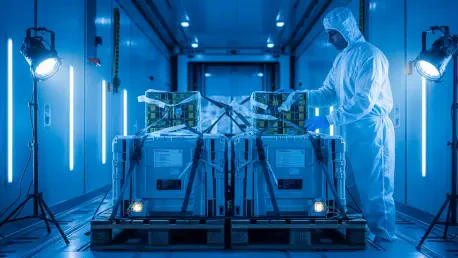

As global demand for specialized computing power reaches unprecedented levels in 2026, the logistics of transporting delicate semiconductor hardware has become a critical bottleneck for technology giants and infrastructure providers alike. The shipping industry has traditionally treated electronic goods as a standard commodity, but the arrival of high-density server racks and liquid-cooled AI clusters changed the risk profile significantly. These components are not merely expensive; they are often irreplaceable within the current manufacturing cycle, making any loss or damage a catastrophic event for the recipient’s quarterly growth. Navium identified this gap and developed a product that accounts for the extreme sensitivity of these assets to vibration, static, and humidity. By offering a dedicated insurance solution for AI infrastructure, the firm provides a safety net that traditional marine cargo policies often fail to cover adequately due to restrictive valuation limits. This move reflects a necessary shift in the insurance market toward hyper-specialization.
Addressing the High Stakes of Semiconductor Logistics
The complexity of modern AI clusters involves more than just silicon; it includes high-speed interconnects and sophisticated cooling systems that are highly susceptible to micro-fractures during transit. A single heavy-handed maneuver by a crane operator or a period of unexpected turbulence at sea can compromise a shipment worth hundreds of millions of dollars. Navium’s policy introduces specific clauses that address these physical vulnerabilities, moving beyond the “total loss” scenarios to include coverage for internal damage that might not be visible during a standard surface inspection. Furthermore, the insurance framework integrates with real-time tracking and telematics, allowing for a more accurate assessment of risk based on the actual conditions the cargo experiences while crossing international waters. This data-driven approach ensures that premiums are reflective of the rigorous safety standards required for such high-value assets, providing a more equitable arrangement for shippers who invest in premium handling and climate-controlled containers.
Beyond the physical replacement cost, the disruption caused by a damaged shipment of AI hardware creates a ripple effect throughout the entire technology ecosystem. In an environment where the race for generative AI supremacy is won by those who can scale their compute capacity the fastest, a three-month delay due to a logistics failure can result in lost market share and missed development milestones. Navium’s initiative recognizes that the true value of these components lies in their operational uptime and the competitive advantage they provide to the end-user. Consequently, the insurance product is designed to facilitate faster claims processing and expedited replacement logistics, minimizing the period of inactivity for the data center operator. By bridging the gap between traditional marine insurance and the high-velocity requirements of the tech sector, Navium has created a financial instrument that supports the rapid expansion of global AI capacity. This strategic alignment helps stabilize the market by reducing the volatility associated with capital-intensive hardware deployments across multiple geographic regions.
Strategic Risk Management in the Global Supply Chain
The technical specifications of the new insurance product involve rigorous standards for packaging and environmental monitoring that go beyond standard industry practices. To qualify for specialized coverage, shippers must often demonstrate adherence to stringent protocols involving shock-absorption materials and humidity-controlled environments that are monitored via satellite-linked sensors. Navium’s underwriters work closely with logistics providers to certify that the end-to-end journey—from the cleanrooms in East Asia to the hyperscale facilities in North America or Europe—meets the necessary safety thresholds. This collaborative process ensures that the risks are mitigated before the hardware even leaves the loading dock, creating a proactive rather than reactive risk management culture. Moreover, the inclusion of “consequential loss” clauses helps protect companies against the indirect financial damages associated with project delays, which are often more significant than the cost of the hardware itself. Such detailed attention to the nuances of tech logistics sets a new benchmark for how insurance providers interact with the global semiconductor supply chain.
Organizations involved in the procurement and deployment of AI infrastructure successfully shifted their focus toward comprehensive risk mitigation strategies following the introduction of these specialized insurance products. The decision to audit existing shipping protocols became a mandatory step for risk management teams, who sought to align their internal logistics with the high standards required by specialized underwriters. Companies that adopted these new insurance frameworks realized that the investment in premium coverage acted as a catalyst for improving their overall supply chain resilience. They implemented advanced telematics and established more transparent relationships with their carriers to ensure full compliance with the new policy requirements. This evolution in cargo insurance proved that the physical protection of technology is as vital as the software it runs. Moving forward, the industry adopted a mindset where stakeholders prioritized predictive analytics to anticipate transit hazards rather than relying on traditional indemnity.