
The intersection of high-stakes commercial development and complex liability insurance often results in legal battles that redefine the boundaries of financial responsibility for major infrastructure projects. In a current federal filing in California, National Union Fire Insurance Company is seeking a judicial declaration to avoid paying a staggering fifteen million dollar judgment stemming from a long-running dispute over the Encore Hotel and Casino in Las Vegas. This case pivots on a fundamental question that has plagued the construction industry for years: whether a subcontractor’s failure to adhere to manufacturer specifications qualifies as an accidental occurrence or simply a breach of contract that falls outside the scope of standard commercial umbrella policies. As the industry watches this case unfold, the distinction between professional error and fortuitous property damage remains a central point of contention, especially when remediation costs are magnified by years of litigation, mounting interest, and massive legal fees that can eventually exceed the original cost of the physical repairs themselves.
Origins of the Technical Failure
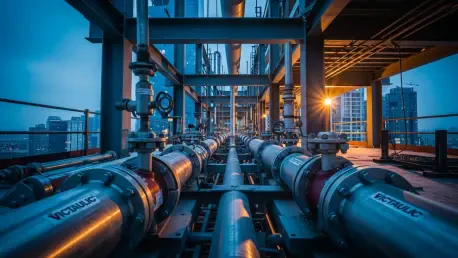
The narrative of this technical failure began during the initial construction phase of the resort when the general contractor secured a specialized subcontractor to install the fire protection infrastructure. While the property opened its doors to the public in 2008, the underlying issues remained hidden within the walls for several years until a significant leak was discovered in 2011, triggering a comprehensive forensic investigation. This inquiry revealed that the subcontractor had utilized Victaulic couplings that were not installed according to the very specific requirements mandated by the manufacturer, leading to systemic vulnerabilities in the fire sprinkler systems. The resulting remediation process was neither quick nor inexpensive, requiring an extensive teardown and replacement effort that lasted until 2016 to ensure the safety and compliance of the entire facility. This timeline highlights the delayed nature of construction defects, where the actual physical manifestation of a failure often occurs long after the initial negligent act was performed by the technicians on-site.
Following the discovery of the defective installation, the parties entered into a protracted legal struggle in the Nevada court system that spanned over a decade of intense litigation and appeals. This process culminated in a grueling forty-eight-day bench trial where the court examined the technical nuances of the plumbing failure and the contractual obligations of the involved parties. Ultimately, the Nevada Supreme Court upheld a ruling that held the fire sprinkler company and its surety jointly liable for millions in primary damages, but the financial burden did not stop there. By the time the judgment was finalized, the total obligation had ballooned to approximately fifteen million dollars due to the inclusion of five and a half million dollars in legal fees and over four million dollars in accumulated interest. Such a massive escalation in costs demonstrates how a localized technical error can transform into a catastrophic financial liability when the legal process extends across multiple years of appeals and procedural challenges in the state courts.
Legal Arguments and Insurance Exclusions
National Union is now leveraging the federal court system to argue that the underlying judgment does not represent a covered loss because it reflects the cost of redoing defective work rather than accidental damage. The insurer contends that the subcontractor’s failure to follow manufacturer instructions constitutes a professional error in execution, which should be excluded under standard industry provisions like the professional liability or contractual liability clauses. From the carrier’s perspective, a commercial umbrella policy is intended to protect against unforeseen accidents that cause third-party property damage, not to serve as a warranty for the quality of a contractor’s workmanship. By framing the issue as a failure of professional standards, the insurer seeks to distance itself from the obligation to pay for what it characterizes as a predictable outcome of poor craftsmanship. This legal strategy relies heavily on the interpretation of the term occurrence, arguing that a deliberate, albeit incorrect, installation method cannot be viewed as a fortuitous event under the policy’s definitions.
The complexity of the case is further deepened by the transition of defense responsibilities and the exhaustion of primary insurance layers over the course of the long-running dispute. National Union only stepped in to manage the defense under a reservation of rights in 2018 after the original wrap-up policy through American Home Assurance Company was completely depleted by other claims related to the project. This shift in the defense posture created a scenario where the umbrella carrier inherited a massive legal burden and a high-stakes judgment that it had limited control over during the early stages of the trial. Now, the insurer is challenging its duty to pay not only the core damages but also the substantial secondary costs that have accrued over time, such as the post-judgment interest and attorney’s fees. This tension illustrates the precarious position of excess insurers who may find themselves responsible for large payouts when primary policies are exhausted, leading to aggressive litigation tactics to prove that the underlying claim was never within the scope of the coverage to begin with.
Future Considerations for Risk Management
The outcome of this federal dispute will likely serve as a significant benchmark for how construction firms and their insurance brokers structure coverage for large-scale developments starting in 2026. Stakeholders must now recognize that the mere existence of property damage does not guarantee coverage if the root cause is linked to a failure in professional execution or a deviation from manufacturer protocols. Moving forward, general contractors should implement more rigorous quality control measures and real-time documentation of installation processes to ensure that all subcontractors are adhering strictly to technical specifications. This proactive approach not only reduces the likelihood of physical failures but also creates a robust evidentiary record that can be used to distinguish between workmanship errors and accidental occurrences in future litigation. Additionally, legal teams should carefully review the language in wrap-up policies to ensure that the definitions of covered events are clearly aligned with the specific risks inherent in complex mechanical and fire protection systems that are prone to long-tail defect claims.
The industry successfully navigated these challenges by adopting more integrated risk management frameworks that prioritized early detection and transparent reporting between project owners and insurance carriers. Legal departments and risk managers evaluated the implications of the National Union case and determined that a more precise definition of property damage was necessary in all new contracts to avoid similar disputes over the definition of an occurrence. These professionals implemented mandatory third-party inspections for critical life-safety systems, ensuring that manufacturer requirements were verified before walls were closed and systems were finalized. Furthermore, the strategic use of project-specific excess policies became a standard practice to prevent the sudden exhaustion of primary limits that previously left many parties vulnerable to secondary litigation. By shifting the focus toward preventative compliance and detailed contractual clarity, the construction sector effectively mitigated the financial volatility associated with long-term defect claims. This transition ensured that liability remained predictable and that insurance products continued to provide the essential protection needed for the continued growth of urban infrastructure projects.