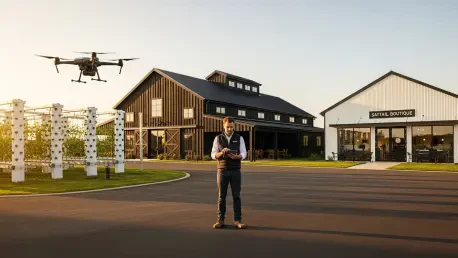

The classic image of a sun-drenched pastoral landscape where a lone tractor works a single crop has vanished, replaced by a multifaceted commercial ecosystem that demands a total reimagining of risk management. Today, the rural horizon is increasingly defined by more than just silos and fence lines; it is a space where industrial food production coexists with high-end hospitality and digital logistics. This transformation reflects a fundamental shift in the economic identity of the American farmer, who now operates at the intersection of traditional land stewardship and modern commercial entrepreneurship.
As these operations evolve, the gap between the physical reality of the farm and the protections offered by legacy insurance policies has widened significantly. What was once a straightforward assessment of livestock and yield is now a complex puzzle of public liability, retail exposure, and technological dependency. The industry is currently witnessing a critical transition where the rigid, one-size-fits-all coverage models of the past are being replaced by specialized, data-driven frameworks designed to keep pace with the hybrid nature of the 21st-century agricultural enterprise.
From Tilling Soil to Hosting Tourists: The New Face of the American Farm
The modern farm is no longer defined solely by the boundary of its fences or the yield of its harvest. On a single property, a grower might manage high-output industrial food production at sunrise, only to open the gates to a bustling retail destination or an upscale wedding venue by noon. This radical shift from mono-sector operations to multifaceted commercial enterprises has effectively outpaced the protection offered by traditional insurance packages. As farmers trade in their older mechanical equipment for tech-integrated logistics and renovate historic barns into event spaces, the industry faces a significant reckoning.
Legacy policies were never designed to cover the hybrid reality of the 21st-century farmer. When a property transitions from a private production site to a public-facing business, the risk profile changes in ways that traditional agricultural underwriters struggle to quantify. The inclusion of retail shops, “pick-your-own” tourism, and overnight hospitality requires a level of liability coverage that mirrors a city-center commercial business, yet it must still function within the context of a working agricultural site. This dual identity creates a unique set of challenges that requires a departure from standard industry practices.
Why Traditional Policies Are Failing the Modern Entrepreneur
The shift in agricultural structure has redrawn the risk map, creating a dangerous mismatch between actual activities and insurance coverage. Historically, insurers relied on static models built for predictable, livestock-heavy or crop-heavy businesses with limited external interaction. However, persistent economic pressures have forced farmers to diversify into retail, tourism, and hospitality to remain financially viable. This diversification introduces fragmented risk profiles where a farmer, focused on labor-intensive production, may lack the rigorous risk controls of a professional metropolitan retailer, despite facing identical public liability exposures.
Without an evolution in underwriting, these hybrid businesses remain exposed to significant gaps in their safety nets. A standard farm policy might cover a tractor accident in a field, but it may offer little protection if a tourist is injured while navigating a repurposed barn or if a boutique food product causes a widespread health concern. The industry now recognizes that the lack of specialized oversight in these diversified ventures poses a threat not just to the individual farmer, but to the stability of the agricultural insurance market as a whole.
The Triple Threat: Climate Pressure, Diversification Gaps, and Digital Risks
Environmental volatility has moved from a peripheral concern to the primary driver of financial strain in the agricultural market. Beyond the immediate cost of property damage, insurers are now grappling with the “cluster effect”—where a single storm damages hundreds of barns, silos, and irrigation systems simultaneously. This phenomenon creates massive logistical bottlenecks, as the demand for specialized repair materials and labor far outstrips availability, leading to prolonged business interruptions that traditional policies often fail to fully mitigate.
Compounding this environmental pressure is the rapid rise of digital exposure across the rural landscape. As farms adopt automated irrigation systems, drone technology for crop monitoring, and digital logistics platforms, they become vulnerable to cyber disruptions that can halt production just as effectively as a flood. These evolving threats necessitate a move away from generalized risk assessments toward precision underwriting. By accounting for geographic nuances and technological dependencies, insurers can better prepare for a world where a software glitch or a concentrated weather event can trigger a cascading series of financial losses.
The Specialized MGA Model and the Shift Toward Technical Depth
In a high-pressure market where standardized products are falling short, the specialist Managing General Agent (MGA) model is emerging as a critical solution. By focusing exclusively on the agricultural sector, these entities provide a level of technical depth that generalist insurers simply cannot match. Experts in the field are now utilizing “layered” coverage—assembling specialized solutions from multiple carriers into a single, comprehensive product—to address complex, overlapping risks. This strategy prioritizes long-term reliability and sector-specific expertise over simple price competition.
This model allows for a more nuanced understanding of how different aspects of a farm interact. For instance, a specialist underwriter can evaluate how a commercial kitchen on a farm property affects the overall fire risk of the nearby grain storage. By providing such granular insights, MGAs help maintain robust coverage even when the broader insurance market faces extreme volatility. This approach ensures that the farmer is not just buying a policy based on the lowest premium, but is investing in a partnership that understands the intricate mechanical and commercial realities of modern food production.
Strategies for Navigating the New Landscape of Agricultural Risk
To protect a modern farming operation effectively, stakeholders moved toward a data-led approach that favored precision over broad generalizations. This transition involved implementing sophisticated modeling that incorporated real-time weather patterns, historical data, and specific geographic exposures to refine pricing and coverage. Owners of diversified farms sought out policies that bridged the gap between traditional agricultural protection and commercial hospitality or retail liability, ensuring that no facet of their business remained vulnerable.
The industry successfully prioritized building resilience through proactive risk selection and a focus on enhanced claims-handling capacity. By the end of this transformative period, insurers and farmers alike understood that the only way to withstand both the elements and the complexities of modern business was through a collaborative, technical approach. Specialists provided the necessary framework to secure the future of the farm, turning what was once a series of fragmented risks into a unified and manageable strategy. This shift ensured that the farm remained a pillar of the economy, capable of adapting to any challenge that appeared on the horizon.