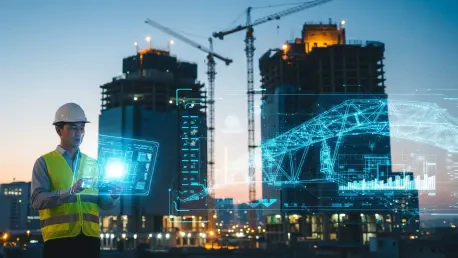

A single malicious command executed from a remote server can now bring a sprawling skyscraper project to a more abrupt halt than a catastrophic failure of heavy lifting equipment on the ground. While the industry has spent decades perfecting safety protocols for tangible hazards like falls and machinery accidents, the center of gravity for project risk is undergoing a radical migration. Today, digital vulnerabilities and geopolitical shifts paralyze job sites more effectively than localized equipment failures, signaling a fundamental change in how the sector defines construction safety. This shift suggests that the most significant threats no longer reside solely within the physical perimeter of the project, but rather in the interconnected systems that support it.
Beyond the Hard Hat: The Invisible Threats Redefining Project Safety
Could the most significant threat to a multi-million-dollar construction project exist entirely within a digital cloud rather than on a physical scaffold? As modern builds become increasingly reliant on complex data sets and remote automation, the definition of a “safe” project has expanded to include cyber-hygiene and information integrity. Failure to recognize these invisible threats leads to systemic vulnerabilities that traditional site inspections were never designed to catch. Consequently, risk management is evolving into a discipline that demands constant vigilance over both the digital infrastructure and the physical environment to prevent a total operational collapse.
Furthermore, the migration of risk is reflected in how insurance providers evaluate the safety of a build. The focus has moved from the frequency of minor on-site injuries to the potential for catastrophic systemic shocks that can originate thousands of miles away. A disruption in a specialized software update or a sudden shift in international trade policy can render a job site idle for weeks. This new reality forces developers to look beyond the hard hat, recognizing that the health of a project is now inextricably linked to the stability of the global and digital networks that feed it.
The Evolution From Physical Hazards to Systemic Vulnerabilities
Historically, construction insurance and risk management were anchored by physical site inspections and “check-the-box” compliance. Safety was measured by the absence of accidents and the presence of protective gear, creating a localized focus that served the industry for a century. However, the rapid adoption of building information modeling and a reliance on globalized manufacturing have created a more complex, fragmented landscape. The traditional focus on localized incidents is no longer sufficient because the primary drivers of delay and liability are now often found in the planning and procurement phases rather than the execution phase.
Modern projects are increasingly susceptible to systemic shocks that originate far from the actual build. When a project relies on components manufactured in another hemisphere, a single logistical bottleneck becomes a project-wide emergency. This shift from physical to systemic vulnerability means that a site can be perfectly compliant with local safety laws and yet remains at extreme risk of failure. This evolution demands a new framework where risk is managed as a continuous flow across the entire project lifecycle, rather than a series of isolated events occurring on the ground.
Mapping the New Frontier: Cyber Assets, Supply Chains, and Human Friction
The modern risk profile is dominated by three distinct yet interconnected areas that move beyond the physical perimeter of the job site. First, the transition to digital endeavors—using automated systems and remote monitoring—has turned data breaches into critical operational hazards that can compromise structural integrity. If the digital blueprint is altered by a malicious actor, the physical result could be a catastrophic structural failure. This turns cybersecurity into a primary safety concern, as the integrity of the data directly dictates the safety of the physical structure and the people within it.
Second, the fragility of the global supply chain, characterized by single-source dependencies and material volatility, means that logistical delays are now systemic threats. In contrast to the past, where a missing part might be sourced locally, today’s specialized components often have no immediate substitute. This lack of redundancy creates a “bottleneck risk” where the entire timeline of a multi-billion-dollar project hinges on a single overseas factory. The risk is no longer just about the cost of materials, but the cascading financial impact of a prolonged work stoppage caused by external logistical failures.
Finally, the friction between rapid technological adoption and an aging workforce has created a skills gap that introduces new dangers. The very tools designed to increase efficiency become sources of risk if the human element is not adequately prepared to handle them. When workers utilize advanced robotics or AI-driven monitoring without comprehensive training, the likelihood of technical error increases significantly. This human friction necessitates a move toward continuous, evidence-based education, ensuring that the workforce can safely navigate the high-tech demands of the modern build environment.
Underwriting a Digital Future: Expert Insights on Project Resilience
Industry experts, such as Becky Jones of Touchstone Underwriting, suggest that the strongest insurance submissions now prioritize a narrative of active, real-time management over static risk assessments. Underwriters are increasingly scrutinizing the wider project ecosystem, moving their focus from simple property damage to broader strategic business health. This shift emphasizes project resilience—the ability of a project to withstand and recover from shocks—rather than merely tracking the frequency of minor on-site accidents. The goal is to determine how well a firm can adapt when an invisible risk suddenly becomes a tangible problem.
Moreover, the relationship between brokers and developers is becoming more collaborative to address these complex exposures. Underwriters now look for evidence that a firm has mapped out its digital and logistical dependencies with the same precision used for engineering calculations. A project that demonstrates a robust recovery plan for a cyber-attack or a supply chain failure is viewed as a much better risk than one that only focuses on physical site security. This evolution in underwriting reflects a broader industry realization that resilience is the only effective defense against the unpredictable nature of systemic risk.
Building a Resilient Framework: Practical Strategies for the Modern Developer
The transition toward a resilient framework required developers to rethink the fundamental nature of liability. They established new protocols for data security that paralleled physical site safety measures, recognizing that a firewall was as vital as a guardrail. To navigate this shifting landscape, firms adopted a proactive strategy that treated risk as a strategic business priority. Practical steps included diversifying supply chains to avoid single-source dependencies and implementing continuous, evidence-based training programs to bridge the technological skills gap among workers. These actions allowed firms to maintain operational continuity even when external pressures threatened to derail the project timeline.
Furthermore, early and collaborative engagement between brokers and underwriters became a standard practice for projects utilizing modern methods like off-site fabrication. This ensured that insurance coverage remained seamless across the entire project lifecycle, covering the transition from the factory floor to the final assembly on-site. The successful integration of real-time monitoring tools allowed for a dynamic response to emerging threats, effectively neutralizing risks before they manifested as project-ending delays. By fostering a culture of technological literacy, developers ensured that their teams were prepared to manage the sophisticated tools that now define the construction process. Ultimately, the industry moved toward a holistic model where every digital and logistical link was reinforced, creating a build environment that was as robust in the cloud as it was on the ground.