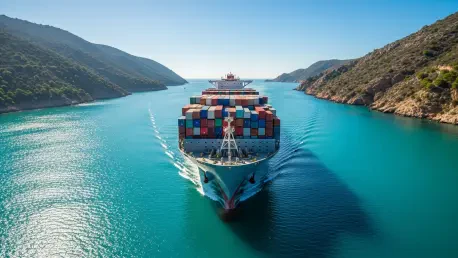

The volatile nature of modern geopolitical conflicts has transformed the Strait of Hormuz into a high-stakes arena where the safety of commercial vessels is no longer a guaranteed aspect of international commerce. As global energy markets remain sensitive to every ripple of instability, the maritime industry has faced an unprecedented need for a more robust financial infrastructure to protect its assets. Lloyd’s of London and Chubb have responded to this crisis by forming a strategic insurance consortium specifically designed to mitigate the risks associated with navigating these hazardous waters. This partnership represents a significant shift in how the industry handles concentrated risk, moving away from reactive measures toward a proactive, unified underwriting approach. By pooling their immense resources, these two industry leaders are attempting to stabilize the flow of goods through one of the most vital shipping lanes in the world, ensuring that the supply chain does not succumb to regional hostility.
Strategic Underwriting Models: High-Capacity Shipping Solutions
The consortium introduced a centralized underwriting model that significantly deviates from the traditional, often fragmented insurance markets that previously struggled to provide adequate coverage during periods of active conflict. Operating as of mid-2026, this new facility has begun offering up to $200 million in coverage for hull and liability risks, providing shipowners with a substantial buffer against the physical destruction of their fleets. Furthermore, an additional $200 million has been earmarked specifically for cargo protection, ensuring that the value of the goods themselves is not lost even if the vessel encounters significant interference. This massive financial commitment is intended to give operators the confidence required to maintain their routes despite the looming threats of seizures or structural damage. By centralizing the expertise of seasoned underwriters, the initiative streamlines the process of securing high-limit policies that were previously difficult to obtain in the open market.
This strategic pooling of resources serves as a critical stabilization mechanism for global energy markets, which often experience extreme price fluctuations when shipping lanes are threatened. In the past, shipowners had to patch together coverage from various sources, a process that was not only time-consuming but also prone to gaps that left operators vulnerable to catastrophic losses. This consortium eliminates these inefficiencies by providing a single, high-capacity point of entry for brokers and their clients. By consolidating the risk, Lloyd’s and Chubb are able to offer more competitive terms and a higher degree of transparency than was possible under the old system. This efficiency is particularly important during times of escalating tension, as it allows for the rapid deployment of insurance capital to vessels that must continue their journeys to meet global demand. Consequently, the maritime industry now possesses a more resilient framework that can absorb financial shocks without halting the movement of essential commodities.
Managing Regional Volatility: Security in Critical Energy Routes
The necessity for this specialized coverage is highlighted by the evolving nature of maritime threats in the Middle East, where vessels are increasingly targeted by sophisticated sea mines and drone attacks. These incidents have historically caused insurance premiums to skyrocket, sometimes increasing by several thousand percent within a few days of a high-profile strike. While military escorts provide a measure of physical security, they cannot fully eliminate the financial uncertainty that plagues shipowners operating in contested zones. The consortium acts as a vital financial safeguard that complements existing security measures, allowing trade to continue even when the situation on the water remains unpredictable. This multi-layered approach to risk management acknowledges that physical protection and financial indemnity must work in tandem to maintain the integrity of global trade. Without the assurance of comprehensive insurance, the cost of shipping through the Strait of Hormuz would likely become prohibitive for many commercial operators.
Building on this foundation of private-sector cooperation, the initiative is closely aligned with government-backed programs such as the expanded U.S. Maritime Reinsurance plan. By collaborating with major American insurers and the U.S. International Development Finance Corporation, the overall capacity for maritime insurance has effectively doubled to $40 billion. This synergy between private industry and federal agencies creates a formidable barrier against economic disruption, as it provides a deep reservoir of capital to draw upon in the event of widespread conflict. This alignment is not merely a financial strategy but a key component of a broader geopolitical effort to ensure that energy markets remain functional regardless of regional instability. The collaboration ensures that even if private markets experience extreme volatility, there is a secondary layer of support to keep essential shipping routes open. This system provides a level of certainty essential for the long-term planning and operational stability of shipping firms.
Implementing Operational Standards: Resilience in Global Trade
Maintaining the integrity of the insurance pool requires the application of rigorous underwriting standards and a commitment to international regulatory compliance. Each vessel and shipping route is evaluated on its individual merits, with underwriters considering factors such as the age of the ship, its safety record, and the specific geopolitical climate of its destination. This granular approach ensures that coverage is tailored to the actual threats faced by each operator, preventing the broad application of excessive premiums to those with lower risk profiles. Furthermore, the consortium has integrated advanced screening technologies to ensure that all policies adhere to strict international sanctions and export control regulations. This technological integration allows brokers to secure legally sound coverage in real-time, reducing the administrative burden that often slows down the movement of goods in high-risk areas. By prioritizing transparency, the consortium provides a reliable path for legitimate commerce while effectively isolating risks.
The establishment of this consortium represented a fundamental shift in how the global maritime industry approached the management of systemic risks in volatile regions. By moving beyond reactive measures, Lloyd’s and Chubb created a blueprint for how the private sector could protect international commerce from the unpredictability of modern conflict. This initiative not only stabilized insurance rates but also reinforced the role of financial services as a pillar of economic security. For the maritime sector, the next steps involved further integration of real-time threat intelligence into the underwriting process to ensure that coverage remained responsive to rapidly changing conditions. Shipowners were encouraged to invest in advanced hull monitoring and anti-drone technologies to qualify for more favorable terms under the new framework. This stance suggested that trade resilience would depend on a continuous dialogue between insurers, technology providers, and government agencies to anticipate and neutralize threats.