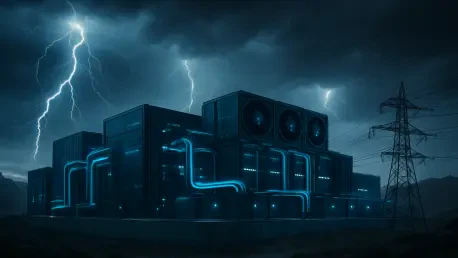

The global push to centralize artificial intelligence processing has created a construction boom that is disproportionately concentrating hardware in zones susceptible to natural catastrophes. The rapid expansion of artificial intelligence is driving a construction frenzy unlike anything seen in the digital age. However, a startling trend has emerged: approximately 80% of new data centers are being built in regions with a heightened risk of natural catastrophes. As annual investment in this infrastructure is projected to reach $1 trillion by 2027, the industry faces a critical intersection between technological progress and environmental vulnerability. This analysis explores why the backbone of the AI era is being anchored in high-risk zones and what this shift means for digital stability.
The Paradox of the Global AI Infrastructure Boom
Anchoring the digital future in high-risk zones creates a unique paradox for modern developers. The shift toward AI necessitates examining operational resilience in these facilities as a priority. Modern data centers are no longer just warehouses; they are the mission-critical heart of global stability. As demand surges, the industry must balance the need for rapid deployment with the reality of increasing environmental volatility. Understanding this paradox is essential for navigating the complex relationship between physical location and digital security.
From Niche Real Estate to Mission-Critical Infrastructure
Historically, data centers were viewed as specialized real estate assets with stable risk profiles. The AI revolution fundamentally altered this landscape, transitioning these facilities into mission-critical infrastructure for finance and national security. Past developments focused on proximity to fiber-optic backbones and technical talent, often leading developers to cluster facilities in established hubs like Northern Virginia or Northern California. These legacy shifts created an environment where geographical convenience often outweighs climate-related caution, concentrating value in areas susceptible to wildfires and seismic activity.
Navigating the Complexity of Modern Risk Management
The Concentration: High-Density Value and Hardware Loss
Value in modern AI centers is concentrated in internal specialized hardware rather than the building shell. AI-ready facilities utilize high-density GPUs that are incredibly sensitive to environmental changes. While fire damage is statistically rare, it remains the leading cause of loss severity, accounting for 59% of the total value of insurance claims. This intensity of value means a single localized incident can result in hundreds of millions of dollars in losses, forcing insurers to rethink traditional assessment models.
Interdependency: Power Grids and Cooling Systems
Modern facilities are deeply integrated into local utility grids and water supplies. The massive power requirements of AI training necessitate on-site generation and advanced cooling architectures. This interdependency creates a ripple effect where a failure in the local power grid or a drought affecting water supplies can immediately compromise operational integrity. Consequently, the risk profile has expanded from simple physical damage to a complex web of supply chain and utility vulnerabilities that trigger widespread outages.
Regional Vulnerabilities: The Geography of Claims
The United States serves as the primary hub for this sector, representing 36% of the global volume of data center insurance claims. While water damage remains the most frequent cause of claims worldwide, natural catastrophes account for 12% of claim activity. Site selection is often driven by existing fiber routes and talent availability in the American West or Atlantic coast. A location may be high-risk for storms but low-risk for latency—a trade-off that developers have historically accepted to remain competitive.
Technological Shifts: The Future of Resilience
The future of the industry is being shaped by climate-aware site selection and advanced engineering. As the insurance market for these facilities is expected to reach $24 billion by 2030, financial industries are beginning to dictate construction standards. Innovations in liquid cooling and modular energy storage will likely reduce dependency on fragile local utilities. Furthermore, regulatory changes will soon make comprehensive environmental risk disclosures mandatory for firms seeking the massive project financing required for next-generation AI hubs.
Strategic Recommendations: Building Operational Stability
To navigate this high-risk landscape, developers must adopt a strategy focused on long-term resilience. Risk management must evolve to prioritize the concentration of value inside the building. This includes investing in sophisticated fire suppression designed for high-density electronics and diversifying fiber routes for redundancy. For professionals, climate-aware site selection is no longer optional; it is a prerequisite for investment. Organizations should implement rigorous supply chain audits to ensure localized disasters do not lead to global hardware shortages.
Securing the Backbone of the AI Era
The industry prioritized rapid growth over environmental caution, which necessitated a significant pivot toward operational safety. Leaders recognized that physical security was just as vital as digital security when managing hardware-heavy AI systems. These organizations implemented rigorous audits to ensure localized disasters did not impact global hardware supplies. Operational continuity became the new gold standard for a digital world facing escalating physical challenges. Ultimately, the long-term success of the AI rollout depended on the ability to build a future that withstood the volatility of a changing planet.