
The traditional reliance on historical accident logs and basic driver backgrounds has rapidly given way to a landscape where insurers demand granular, second-by-second operational transparency. In the current market, a clean record from the past three years no longer guarantees the most competitive premiums or even basic coverage eligibility for high-capacity fleets. Insurance carriers have shifted their focus from what happened in the previous quarter to what is happening on the road at this exact moment. This transformation is driven by the realization that historical data is a lagging indicator of risk, often failing to capture the subtle behavioral patterns that precede a catastrophic event. Modern logistics providers are now required to prove their safety culture through an active stream of data rather than a static binder of compliance documents. As the industry moves toward a more integrated digital ecosystem, the definition of a safe operator is being rewritten to include technological proficiency and the ability to mitigate risks before they manifest in physical collisions.
The Evolution of Risk Evaluation in the Logistics Sector
Moving Beyond Retrospective Loss Histories
Traditional underwriting models formerly relied on a three-to-five-year window of claims data to determine the risk profile of a commercial fleet. However, this retrospective approach often missed the underlying volatility of modern transit environments, where traffic density and driver distraction have reached unprecedented levels. Underwriters now prioritize “near-miss” data and minor traffic infractions that were previously ignored but are now recognized as precursors to high-severity accidents. By focusing on these micro-events, insurance companies can more accurately price policies based on the actual probability of future incidents rather than merely reacting to past failures. Organizations that fail to provide this depth of information are often categorized into higher risk pools, regardless of whether their historical loss run is currently empty. The shift represents a move toward a more scientific and less speculative form of insurance that rewards operators who maintain constant vigilance over their daily activities.
The Significance of Real-Time Behavioral Telemetry
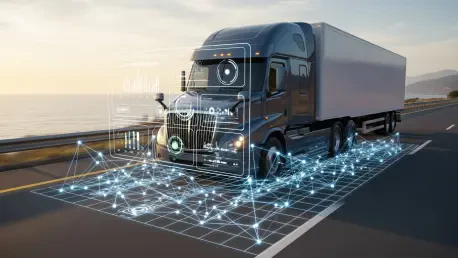
The integration of telematics has fundamentally changed the relationship between fleet owners and insurance providers by creating a continuous feedback loop of driver behavior. Standard metrics like hard braking, rapid acceleration, and excessive speeding are now captured and analyzed through sophisticated onboard diagnostics and integrated sensors. These data points provide a vivid picture of a driver’s decision-making process under pressure, offering insights that a simple background check could never reveal. Insurers are increasingly offering usage-based insurance programs where premiums fluctuate based on real-time performance scores, incentivizing fleets to implement rigorous training and monitoring systems. This level of oversight ensures that safety is not just a policy on a piece of paper but a measurable daily outcome. For a fleet to remain insurable at favorable rates, it must demonstrate a mastery of these telemetry tools, showing that it can identify and correct dangerous habits before they lead to an insurance claim.
Strategic Data Integration for Long-Term Risk Mitigation
Artificial Intelligence and Predictive Modeling
Artificial intelligence has become the primary tool for synthesizing vast amounts of fleet data into actionable intelligence that can predict accident hotspots and high-risk timeframes. Advanced machine learning algorithms analyze weather patterns, traffic flow, and historical driver performance to suggest safer routes or specific rest periods for operators. This predictive capability allows fleet managers to intervene before a driver enters a high-risk situation, effectively lowering the overall liability profile of the company. Insurance providers have begun to value these proactive measures as much as the actual safety equipment installed in the vehicles themselves. When a company can prove that its routing software is actively avoiding dangerous urban intersections or navigating around hazardous road conditions, it demonstrates a level of risk management that warrants lower deductibles. The ability to synthesize disparate data sets into a cohesive safety strategy has become the hallmark of the most successful and well-insured transportation companies in the current era.
Strategic Roadmaps for Risk Optimization
Organizations that successfully navigated the transition to modern insurance standards did so by treating data as their most valuable asset for risk mitigation. These companies established comprehensive digital frameworks that integrated dashcam footage, sensor data, and driver health metrics into a single source of truth for underwriters. Fleet managers moved away from punitive safety measures and instead adopted coaching-based cultures that utilized real-time alerts to help drivers improve their skills on the fly. By the end of this transition, the industry observed that the most competitive insurance rates were reserved for those who could demonstrate a 360-degree view of their operations. To maintain this advantage, executives invested in scalable API integrations that allowed their internal safety platforms to communicate directly with insurance databases for seamless renewals. This proactive posture allowed fleets to stabilize their overhead costs even as external market pressures shifted, ensuring long-term financial viability and a significantly safer environment for every driver sharing the road.