
The staggering trajectory of digital infrastructure investment suggests that more than $6.5 trillion will be committed to hyperscale data centers by 2030, creating a landscape where the physical backbone of artificial intelligence is expanding faster than the financial systems designed to protect it. As organizations scramble to secure the computing power necessary for large language models and real-time data processing, the scale of these projects has reached unprecedented levels. This rapid expansion is not occurring in a vacuum; it is colliding with a global environment characterized by increasingly volatile weather patterns and fragile logistical networks. The primary challenge now lies in determining whether the global insurance market can actually sustain this level of concentrated value. With individual campuses now representing tens of billions of dollars in replacement costs, the industry is entering uncharted territory where traditional risk transfer mechanisms may no longer be sufficient to provide a safety net for developers.
The Mismatch Between Asset Value and Market Capacity
Part 1: Evaluating the Financial Scale of Modern Hyperscale Facilities
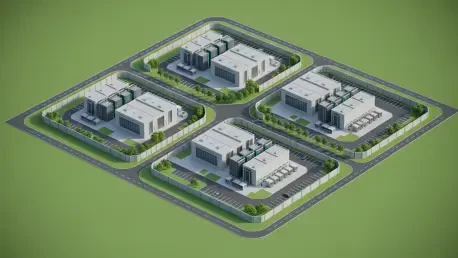
A single modern hyperscale campus can now reach an insurable value of $20 billion to $30 billion, a figure that significantly dwarfs traditional infrastructure projects such as large bridges, tunnels, or even major sports stadiums. This extreme concentration of capital creates a unique problem for the global insurance market, which currently lacks the depth and liquidity required to cover these facilities to their full replacement value. Even though major brokerage firms have attempted to bundle coverage and increase available limits, the total global capacity for property insurance remains just a small fraction of the total value at risk in these massive developments. Underwriters are becoming increasingly cautious, often limiting their exposure to a specific percentage of a project’s total cost, which leaves developers with a substantial coverage gap. This shortfall in the commercial market is forcing a reimagining of how high-value tech assets are protected during their lifespan.
Part 2: Exploring Financial Consequences and Risk Retention Strategies
This persistent shortage of insurance coverage is beginning to influence the fundamental financial viability of large-scale infrastructure projects across the globe. Some institutional investors and major lenders have reportedly paused funding for new developments because they were unable to secure the comprehensive insurance packages necessary to protect their underlying debt obligations. To keep essential projects moving forward, many developers and hyperscalers are being forced to absorb much higher levels of risk on their own corporate balance sheets. This often involves the establishment of captive insurance companies—subsidiaries created specifically to provide coverage for the parent firm—or simply choosing to self-insure a larger portion of the potential losses. While these strategies allow construction to continue, they also expose technology companies to significant financial volatility should a major disaster occur, shifting the burden of risk from the insurance industry directly to the tech giants.
Evolving Environmental Threats and Geographic Shifts
Part 3: Navigating Secondary Perils in New Geographical Hubs
As the demand for available land and massive power connections grows, developers are increasingly moving away from established data center hubs like Northern Virginia and looking toward secondary markets in the American interior. While shifting projects to states like Ohio, Iowa, or Nebraska helps avoid coastal risks such as hurricanes and storm surges, it exposes these sensitive facilities to a different set of hazards known as secondary perils. Severe convective storms, intense tornadoes, and damaging hail have become the primary drivers of insurance losses for data center construction in recent years. These events are often more localized and harder to predict than major hurricanes, yet they can cause catastrophic damage to the specialized cooling equipment and electrical substations that sit outside the main building. Insurers are now adjusting their pricing models to reflect these interior risks, which were once considered minor compared to the threat of coastal flooding.
Part 4: Managing Global Environmental Risks and Regional Instability
The threat landscape is also changing on a global scale, requiring developers to account for a diverse range of environmental challenges that vary significantly by region. In Europe, the emergence of frequent heat domes and extreme summer temperature spikes is placing immense pressure on the liquid and air cooling systems that modern data centers rely on to function, increasing the likelihood of thermal-related hardware failures. Meanwhile, expansion into the Asia-Pacific region requires engineering teams to account for primary disasters such as earthquakes, typhoons, and even volcanic activity. These geological and meteorological threats require specialized site selection and advanced structural engineering to ensure long-term stability and operational continuity. Because these risks are often systemic to an entire region, finding insurers willing to provide “all-risk” coverage in these high-exposure zones has become a complex and expensive endeavor, necessitating a deeper focus on site-specific mitigation.
Supply Chain Security and Strategic Risk Mitigation
Part 5: Mitigating Logistics Delays and Hardware Procurement Risks
The inherent fragility of the global supply chain adds another layer of complexity to the data center construction boom, as specialized hardware now faces extreme lead times for replacement. Critical infrastructure components, including high-end graphics processing units, massive power transformers, and precision-engineered cooling units, can take anywhere from twelve to twenty-four months to deliver. If a facility suffers even a relatively small physical loss, such as a localized fire or a minor flood, the incident can quickly spiral into a major financial disaster simply because the equipment needed to restore operations is not readily available in the market. This scarcity has created a situation where the time it takes to repair a facility is often longer than the time it took to build it originally. Consequently, insurers are focusing less on the cost of the physical building and more on the long-term logistical hurdles associated with getting a damaged hyperscale site back online.
Part 6: Integrating Resilience into Early-Stage Engineering Design
To address these overlapping financial and physical risks, the industry is transitioning toward a model where insurance experts and risk engineers are involved in the earliest conceptual stages of a project’s design. Rather than attempting to secure insurance for a facility after the blueprints are finalized, developers are prioritizing engineering-led resilience to make their assets more attractive to underwriters. This approach involves selecting building materials, elevation levels, and redundant power systems that are specifically tailored to withstand the unique hazards of a chosen location. By embedding protection into the physical foundation of these multi-billion-dollar investments, companies aim to create infrastructure that remains fundamentally insurable despite a volatile global environment. This proactive strategy also helps reduce business interruption exposure, which often results in much higher financial losses than the actual physical damage to the structure, by ensuring that critical systems are shielded from failure.
Part 7: Finalizing Resilience Strategies for Infrastructure Growth
The era of rapid data center expansion necessitated a fundamental shift in how the technology sector approached risk management and financial protection. Stakeholders successfully moved beyond traditional insurance models by integrating sophisticated engineering standards and diversifying their risk-transfer mechanisms to account for limited market capacity. Companies that prioritized the hardening of their physical assets against regional environmental threats found themselves better positioned to secure necessary funding and maintain operational uptime. This transition highlighted the importance of viewing insurance not as an afterthought, but as a core component of the initial construction and procurement strategy. Moving forward, the industry adopted more robust contingency planning for supply chain disruptions, ensuring that critical components were stockpiled or sourced from multiple regions to minimize downtime. These actionable steps ultimately bridged the gap between massive capital investments and the economic security required to sustain the digital age.