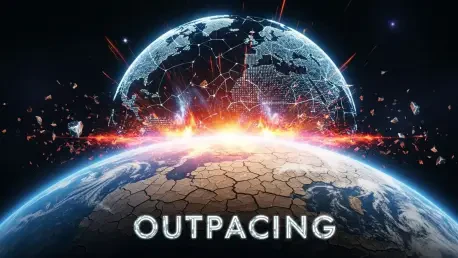

The current trajectory of the global climate system appears to be diverging from even the most sophisticated numerical simulations available to modern atmospheric science. While researchers have long relied on historical datasets to project future atmospheric behavior, the sheer velocity of contemporary warming suggests that the planet is entering a regime where past analogs no longer apply with precision. Recent satellite observations reveal that the Earth’s energy imbalance has effectively doubled since the start of the decade, a phenomenon that forces a reassessment of global heat absorption and retention. This discrepancy between theoretical frameworks and physical reality poses a significant threat to long-term planning across multiple sectors. As temperatures continue to rise beyond the boundaries established by the Intergovernmental Panel on Climate Change, the challenge lies in identifying whether these anomalies are permanent. This requires a fundamental shift in how predictive technologies are used.
Dynamics of the Accelerating Pacific Warming Cycle
Rapid Progression of the Recent El Niño Event
The transition from a cooling phase to record-breaking heat occurred with startling speed, as central Pacific temperatures surged nearly 2.0 degrees Celsius above historical averages. This particular “super El Niño” trajectory suggests that natural climate cycles are being fundamentally altered by underlying anthropogenic heat accumulation. In previous decades, such transitions typically followed a more gradual multi-year progression, providing ample time for meteorological services to issue warnings. However, the current event moved from a neutral state to extreme warmth in less than twelve months, surpassing the intensity seen during the historic 2015 peak. Scientists are now investigating whether the thermal inertia of the deep ocean is finally venting heat at a rate that traditional oceanic models failed to capture. This development challenges the reliability of seasonal forecasting, as the intensity of these shifts now frequently exceeds standard deviation parameters that were previously thought stable.
Societal and Financial Risks of Elevated Surface Temperatures
Rising temperature spikes have immediate repercussions for the global insurance sector and international food security. Severe droughts in equatorial regions threaten primary crop yields and exacerbate political instability, while drier winters across North America set the stage for explosive wildfire seasons. Because many catastrophe models used by the financial industry are calibrated primarily to historical weather patterns, insurers face a systemic risk of underpricing premiums. This inability to accurately reserve capital for increasingly frequent and severe disasters could lead to market insolvencies if a cluster of extreme events occurs simultaneously. From 2026 to 2028, the industry must integrate real-time satellite telemetry into its risk frameworks to account for the loss of predictability. Relying on twenty-year averages is no longer a viable strategy for maintaining fiscal solvency in a world where extreme weather events are increasingly becoming the baseline for seasonal operations.
Investigating the Root Causes of Predictive Disparities
Impact of Aerosol Reduction and Diminishing Albedo
A significant driver of the current warming surge is the unintended consequence of improving global air quality through the reduction of sulfate aerosols in shipping fuels. While these regulations were essential for public health, the removal of these reflective particles has inadvertently allowed more solar radiation to reach the ocean surface. This reduction in “global dimming” has compounded the Earth’s energy imbalance by stripping away a temporary cooling shield that had masked the full extent of greenhouse warming for decades. Furthermore, the degradation of the planet’s albedo—the ability of the surface to reflect sunlight—has reached a critical tipping point as sea ice continues to vanish. Darker open waters absorb more heat than reflective ice, creating a self-reinforcing feedback loop that accelerates the melting process. Current mathematical models often struggle to quantify the precise speed of these interactions, leading to projections that consistently underestimate the pace of polar degradation.
Redefining Climate Sensitivity and Future Projections
Observations indicate that climate sensitivity—the temperature response to atmospheric carbon dioxide concentrations—might be significantly higher than the standard estimates provided by leading authorities. If the environment is more responsive to emissions and aerosol changes than previously anticipated, the window for effective mitigation is closing faster than international agreements currently assume. Stakeholders in government and private industry are now forced to focus on recalibrating risk assessments to account for an environment that is evolving more rapidly than the tools designed to monitor it. The mismatch between theoretical temperature caps and actual thermal trends suggests that the “best-estimate” figures used for the last few years require urgent upward revision. Without these adjustments, infrastructure projects and urban planning initiatives will likely be designed for a climate that no longer exists by the time construction is finished. Adapting to this high-sensitivity reality requires a shift from reactive monitoring to proactive modeling.
Strategic Frameworks for Future Environmental Resilience
Implementing Dynamic Risk Management Systems
The misalignment between observed global temperatures and predictive models necessitated a complete overhaul of environmental risk management strategies throughout the industry. Decision-makers moved away from static historical data and adopted dynamic, AI-driven simulations that prioritized real-time atmospheric changes over long-term averages. This shift allowed for more resilient infrastructure development and more accurate pricing of climate-related financial risks in the insurance sector. By integrating high-resolution satellite telemetry with machine learning, organizations identified emerging vulnerabilities in coastal and agricultural zones much earlier than previously possible. This proactive approach replaced the reactive stance of the past, ensuring that capital was allocated to projects capable of withstanding the accelerating rate of change. The era of relying on conservative estimates ended as the reality of a rapidly changing planet demanded more aggressive data sharing across international borders and scientific disciplines.
Global Investment in Adaptive Infrastructure
Governments and private enterprises also accelerated the deployment of localized adaptation measures, such as advanced sea walls and drought-resistant agricultural corridors, to mitigate the impact of warming. By acknowledging the limitations of earlier theoretical frameworks, the international community was able to prioritize investments in carbon removal technologies and large-scale grid modernization. These efforts focused on creating redundant systems that could function under extreme thermal stress, moving beyond the safety margins established in previous decades. This strategic transition ensured that even as the climate outpaced older models, human systems remained agile enough to endure the transition to a more volatile environment. Ultimately, the successful recalibration of global responses demonstrated that while the environment changed faster than expected, human ingenuity and technological adaptation could scale to meet the challenge. These actions provided a blueprint for resilience in an era where predictability was no longer guaranteed.