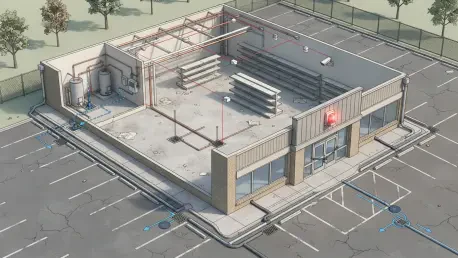

Property owners and managers are discovering that the once-forgiving landscape of commercial insurance has transformed into a rigorous testing ground where even a single missed log entry can jeopardize millions in coverage. The modern insurance market is currently facing a significant challenge regarding unoccupied properties, particularly in the hospitality and retail sectors where vacancies have persisted for longer durations. This trend is driven by a shift in how loss adjusters approach claims, moving away from the difficult task of proving outright fraud toward a more surgical focus on identifying breaches of policy conditions.
Adhering to best practices is no longer just a matter of good housekeeping; it has become a prerequisite for claim survival. As legislative shifts and digital advancements reshape the industry in 2026, the burden of proof has shifted entirely to the policyholder. This guide addresses the intersection of new planning regulations, the evolution of digital evidence, and the necessity for a level of documentation that can withstand the most intense forensic scrutiny.
Understanding the Shift Toward Strict Policy Compliance
The regulatory environment in England changed significantly on August 17, 2026, creating a ripple effect across the insurance sector. New planning policies now require property owners to prove that a pub or retail space is no longer commercially viable before conversion can be approved, often necessitating a full year of active marketing. This mandatory vacancy period has expanded the window of exposure for insurers, who now find themselves covering empty buildings for much longer than they did in previous years.
Because of this extended exposure, insurance firms have tightened their investigative protocols. They recognize that the costs of maintaining a vacant property can lead some owners to misrepresent the status of their assets. Consequently, adjusters are less interested in proving a criminal conspiracy and more focused on whether the policyholder performed the exact tasks specified in the fine print. This shift represents a transition from subjective trust to an environment of verifiable, data-driven compliance.
The Vital Importance of Meeting Unoccupied Property Conditions
Strict adherence to policy conditions serves as the primary defense against claim denial in a high-scrutiny environment. Beyond merely securing a potential payout, these best practices reduce the immediate risk of vandalism and structural deterioration, which in turn helps maintain lower insurance premiums over time. When a property is properly managed, it remains legally defensible, ensuring that any loss is attributed to unavoidable circumstances rather than negligence.
In contrast, the strategy of claiming a property is “occupied on paper” has become a high-stakes gamble with diminishing returns. Misrepresenting a vacant care home or office as an active site to lower premiums often results in the immediate voiding of the entire policy upon discovery. The financial risks of such misrepresentation far outweigh any temporary savings, especially as investigators become more adept at spotting the telltale signs of a building that has been left to decay.
Best Practices for Maintaining Policy Compliance and Claim Integrity
Bridging the gap between making “reasonable checks” and providing “ironclad proof” requires a systematic approach to property management. Owners must understand that in the eyes of an insurer, an inspection that is not documented essentially never happened. The goal is to create a transparent, contemporaneous record that leaves no room for interpretation or doubt regarding the state of the building.
Implementing Rigorous and Contemporaneous Inspection Logs
Modern policy mandates typically require a physical inspection of both the interior and exterior of the premises at least once every seven days. These checks must be more than a cursory glance from the sidewalk; they require a thorough walkthrough to identify signs of forced entry, water ingress, or equipment failure. The standard for record-keeping has moved away from paper notebooks toward digital systems that provide real-time, timestamped entries.
The authenticity of these logs is paramount. Real-time logging prevents the temptation to fill in weeks of missed inspections after a loss has occurred. When adjusters review a claim, they look for specific details that prove the inspector was physically present and attentive to the unique conditions of the property during each visit.
Case Study: The Danger of “Post-Loss” Documentation
In a recent investigation involving a vacant social club, a claimant submitted an inspection log that appeared perfect on the surface. Every entry was neatly recorded, showing that a check had been performed every Friday at exactly 10:00 AM for several months. However, the uncanny regularity of the timing raised a red flag for the loss adjuster, who suspected the entries were manufactured in bulk following a major pipe burst.
The claim was ultimately denied when a forensic review of the owner’s digital files revealed that the log was created as a single document just two days after the damage was discovered. This case highlighted how easily suspicious patterns can trigger a deeper investigation. It served as a stark reminder that inconsistent but genuine records are often more credible than a perfectly uniform log that lacks metadata support.
Verifying Physical Security and Utility Decommissioning
Meeting specific policy mandates often involves the total decommissioning of non-essential systems. Best practices dictate that water systems should be professionally drained and electricity shut off at the main breaker, except for circuits required for active fire or burglar alarms. Furthermore, the physical perimeter must be reinforced with high-quality boarding and secure locks that meet the specific standards outlined in the insurance contract.
If a breach occurs, such as a broken window or a forced door, it must be repaired or re-secured immediately. Policyholders who allow a property to remain vulnerable for even a few days after a minor incident may find that subsequent, larger claims are rejected. Documentation of these security upgrades and maintenance tasks provides the necessary evidence that the owner acted with due diligence.
Case Study: The £1.5 Million Copper Theft and Faked Compliance
A former supermarket in the Midlands became the center of a massive claim after thieves stripped the building of its copper cabling and boilers. The owners claimed the site was occupied by tenants and protected by security fencing. However, investigators discovered that the tenants were fictitious and the fencing had only been rented and propped up for a few minutes to take a photograph for the insurance application.
The total loss of claim eligibility in this case was a direct result of the owners’ failure to maintain actual, physical security. Because they could not provide verifiable evidence of consistent monitoring or utility management, the insurer was able to demonstrate a clear breach of condition. This incident underscored the reality that faking compliance is a transparent tactic that modern investigators can easily dismantle.
Navigating Digital Evidence and the “AI Defense”
The emergence of AI-generated imagery has introduced a new layer of complexity to property claims. Some claimants have attempted to dismiss legitimate photographic evidence of property neglect by arguing that the footage was fabricated using artificial intelligence. To counter this, property managers must ensure that all digital photographs of their premises contain intact metadata, including GPS coordinates and precise timestamps.
Protecting the integrity of digital evidence involves using secure platforms that prevent the editing of image files once they are captured. When an investigator can verify the “digital footprint” of a photograph, the argument for AI fabrication quickly falls apart. This level of technical transparency has become a vital tool in defending the authenticity of a property’s condition.
Case Study: Debunking the AI Fabrication Argument
During a high-value claim for structural damage, a property owner tried to argue that the insurer’s footage of a collapsed roof was an AI-generated fake intended to avoid payment. The claimant insisted that the roof had been intact just days prior. However, the investigator was able to cross-reference the digital footage with physical evidence found on-site, such as specific weathering patterns and local news reports.
The use of physical verification to confirm digital findings proved that the AI defense was a desperate attempt to obscure the truth. By matching the digital damage patterns with the physical debris, the investigator established a factual timeline that contradicted the claimant’s story. This victory for the insurer emphasized the importance of maintaining a verifiable trail of evidence that can withstand technological challenges.
Navigating the Future of Unoccupied Property Management
The most successful property owners transitioned from a reactive mindset to a disciplined, proactive stance that prioritized transparency above all else. They established clear protocols for every inspection and utilized digital tools that provided indisputable evidence of their diligence. This shift in management style ensured that their assets remained protected and their insurance coverage remained valid, even during the most challenging periods of vacancy.
Forward-thinking managers also sought out specific policy wording that eliminated the subjectivity of “reasonable” requirements, replacing vague terms with clear, actionable benchmarks. They recognized that the long-term value of a property was intrinsically linked to its insurability. By investing in rigorous compliance and verifiable documentation, these entities turned their property management practices into a robust shield against financial loss.