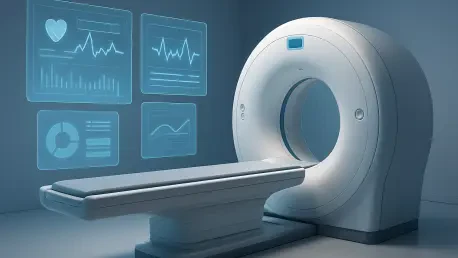

Direct access to images and reports through integrated technology platforms allows adjusters to make real-time decisions that drive faster recovery outcomes. In the current landscape of 2026, the strategic deployment of Magnetic Resonance Imaging (MRI) has moved far beyond its traditional role as a simple diagnostic tool to become a primary lever for managing claim complexity. As cumulative trauma and musculoskeletal injuries continue to dominate the workers’ compensation sector, industry leaders are pivoting away from outdated models that focused exclusively on minimizing the price of individual scans. Instead, a new standard has emerged: the care compression model. This approach views the MRI not as a standalone expense but as the catalyst for the entire recovery pipeline. By prioritizing early imaging and high-speed diagnostics, payers can effectively shorten the duration of claims, reduce administrative friction, and significantly improve the quality of life for injured workers. The urgency of this shift is underscored by a massive resurgence in diagnostic volume, with the United States projected to exceed 40 million annual scans by the end of this year. For stakeholders, an MRI order now represents a critical inflection point where clinical certainty must be achieved immediately to prevent the compounding financial and human costs associated with a stagnant or delayed recovery process.
The Economic Paradox: Speed vs. Unit Pricing
Modern claims management has uncovered a significant economic paradox where the historical focus on unit cost containment actually drives up the total exposure of a file. Over the last 15 years, the reimbursement rates for diagnostic imaging outside of hospital settings have plummeted by approximately 60% due to aggressive fee schedule compression and shifts in relative value units. However, while the physical price tag of a lumbar spine or shoulder MRI might be lower than ever, the cost of waiting for that scan has reached an all-time high. In states like California or New York, where costs vary significantly, the actual price of the scan is often secondary to the daily burn rate of the claim. When an injured worker is unable to return to their position, the combination of wage replacement, temporary disability payments, and the loss of employer productivity creates a massive financial burden. A standard claim can easily accrue hundreds of dollars in daily indemnity costs, meaning that even a minor ten-day delay in scheduling an MRI results in expenditures that far outweigh any savings achieved by searching for the cheapest provider in a specific geographic network.
The true fiscal responsibility in the 2026 workers’ compensation market lies in the rapid execution of scans to drive immediate clinical decisions rather than in negotiating marginal discounts. Industry experts emphasize that the downstream consequences of a stagnant claim are far more damaging to the bottom line than the upfront cost of the diagnostic procedure itself. Beyond the direct indemnity payments, delays in imaging lead to increased administrative overhead, as adjusters and nurse case managers must spend more time tracking down reports and managing frustrated claimants. Furthermore, a delay in diagnosis often leads to a “treatment vacuum” where the injured worker may be prescribed generic or ineffective therapies that do not address the underlying pathology. This lack of direction can turn a simple strain into a chronic condition, requiring more intensive and expensive interventions later. By prioritizing rapid turnaround times and high-quality imaging partners, payers can ensure that the clinical path is clarified within days of the injury, allowing for targeted treatment that facilitates a much faster return to work and lowers the overall total cost of risk for the employer.
Strategic Shifts: From Reactive to Proactive Imaging
Historically, the workers’ compensation industry followed a conservative wait-and-see approach, often adhering to guidelines that recommended delaying advanced imaging for several weeks to see if conservative care would resolve the issue. This caution was largely fueled by the fear of discovering pre-existing, age-related wear and tear that a payer might then be legally obligated to treat. However, this reactive strategy is increasingly being replaced by a proactive imaging model that eliminates administrative hurdles and utilization review friction. Organizations have realized that the cost of an early MRI is a small price to pay for the clarity it provides in determining causation and injury severity. By removing the traditional 30-day or 45-day waiting periods for imaging, payers are now able to identify the exact nature of the trauma almost immediately. This allows for the creation of a precise medical roadmap, preventing the worker from undergoing unnecessary treatments or surgeries based on incomplete information, which was a common occurrence under the older, more restrictive authorization frameworks.
To mitigate the risk of paying for pre-existing conditions while embracing this faster pace, forward-thinking organizations are now utilizing sophisticated clinical decision tools like age-of-injury analysis. This methodology allows expert radiologists to distinguish between acute trauma sustained on the job and chronic, degenerative baseline conditions that were present prior to the incident. By pairing early scans with these high-level forensic reviews, payers can fulfill their moral and legal obligations to the worker without assuming liability for unrelated health issues. This level of diagnostic precision ensures that a 40-year-old worker’s shoulder is not treated as though it belongs to a 20-year-old athlete, but rather is evaluated within the context of their specific age and occupational history. The ability to separate workplace injury from natural aging processes at the very start of a claim protects the integrity of the compensation system while ensuring that the actual injury is addressed with the correct surgical or rehabilitative protocols right from the start.
Maximizing Impact: The Care Compression Model
Care compression represents the systematic reduction of administrative friction and coordination delays that have historically extended the lifespan of workers’ compensation claims. When the diagnostic phase is successfully compressed, the subsequent stages of the recovery process, such as physical therapy, specialized injections, or orthopedic surgery, can begin without the typical lag times that frustrate patients and providers alike. This efficiency is the primary driver of superior clinical outcomes, as early intervention is almost always more effective than delayed treatment. In the 2026 environment, where labor shortages and productivity are top concerns for employers, the speed of recovery is the most critical metric for success. By shortening the time between the initial injury and the definitive diagnosis provided by an MRI, the entire system becomes more responsive. This acceleration not only moves the worker through the medical system more effectively but also reduces the psychological stress of the injury, which is a key factor in preventing long-term disability and secondary complications such as depression or chronic pain syndromes.
Beyond the purely clinical and financial benefits, the care compression model serves as a powerful tool for reducing the likelihood of litigation within the workers’ compensation system. Data consistently shows that injured workers who experience quick progress in their medical care and clear communication regarding their diagnosis are significantly less likely to seek legal representation. Litigation often arises from a sense of uncertainty or the feeling that the insurance carrier is intentionally delaying necessary care. When a worker is scheduled for an MRI within 48 hours of an injury and receives a clear explanation of the results shortly thereafter, the trust in the recovery process is maintained. This operational advantage extends to insurance adjusters and nurse case managers, who can manage their caseloads more effectively when files move through the system with predictable speed. By eliminating the back-and-forth phone calls and authorization disputes that characterize slower models, the care compression approach creates a more professional and streamlined experience for everyone involved, ultimately resulting in a more stable and predictable insurance environment.
Integrating Intelligence: The Role of AI and Automation
As the healthcare industry continues to grapple with a projected deficit of over 40,000 radiologists by the early 2030s, the integration of artificial intelligence (AI) has become an indispensable component of high-speed diagnostic imaging. In 2026, AI is no longer a futuristic concept but a functional tool used to enhance administrative efficiency by extracting critical data from unstructured referral files. This smart automation identifies demographic information, injury details, and specific physician orders from dense medical documents, reducing the need for manual data entry and significantly accelerating the scheduling process. By automating these repetitive tasks, imaging networks can ensure that the care compression objective is met even when human resources are stretched thin. This technological backbone allows for the seamless transfer of information between the treating physician, the imaging center, and the insurance adjuster, ensuring that no time is lost to human error or administrative bottlenecks that previously delayed the start of the diagnostic phase.
On the clinical side of the equation, AI serves as a vital support system that assists radiologists in prioritizing and interpreting complex studies with greater precision. These tools act in a human-in-the-loop capacity, highlighting potential positive findings and summarizing lengthy reports into actionable data points for non-clinical stakeholders. This allows radiologists to focus their expertise on the most critical cases while maintaining a high volume of output without compromising accuracy. For the workers’ compensation adjuster, this means receiving a report that is not only faster but also more clearly aligned with the questions of causation and work-relatedness. The use of AI-driven analytics also enables the industry to track trends across thousands of claims, identifying which imaging protocols and providers yield the fastest return-to-work results. By leveraging these insights, payers can continuously refine their networks and authorization rules, creating a self-improving system that utilizes the latest technological advancements to maintain the health and productivity of the modern workforce.
Systemic Evolution: Implementing High-Speed Diagnostic Frameworks
The transition toward a high-speed diagnostic framework proved essential for stabilizing the economic impacts of rising claim complexity throughout the current cycle. Organizations that successfully integrated early MRI intervention into their standard operating procedures observed a marked decrease in the average lifespan of their claims, which translated directly into lower overall reserves and improved experience mods for policyholders. This strategic shift moved beyond the theoretical stage as payers adopted clinical decision support tools that enabled them to distinguish acute trauma from chronic conditions with unprecedented accuracy. By prioritizing the speed of the scan over the unit cost, the industry finally addressed the root cause of indemnity inflation. The results were clear: faster answers led to faster healing, which in turn protected the productivity of the workforce and reduced the overall volatility of the workers’ compensation market. These initiatives demonstrated that investing in high-quality, rapid diagnostics was not an additional cost but a primary savings mechanism that benefitted every stakeholder in the process.
The successful implementation of these models also highlighted the critical importance of technological integration and human-centric outcomes. By utilizing AI to clear administrative bottlenecks and prioritizing the psychological well-being of the injured worker through rapid communication, the system achieved a level of efficiency that was previously unattainable. The conclusion of this evolutionary period established that the “wait-and-see” approach of the past was no longer viable in a modern economic environment that demanded agility and precision. Moving forward, the industry stabilized around a model where care compression and proactive imaging became the expected norm rather than the exception. Stakeholders recognized that the ultimate goal of the workers’ compensation system was the restoration of health, and that every day saved in the diagnostic phase was a day returned to the worker. This comprehensive strategy effectively bridged the gap between clinical necessity and fiscal responsibility, ensuring that the system remained resilient and capable of supporting the diverse needs of the modern labor force.