
The traditional landscape of commercial fleet management has undergone a radical shift as insurers pivot from using historical loss records to analyzing real-time behavioral data streams that predict collisions before they occur. This transition has been fueled by the widespread adoption of sophisticated Internet of Things devices and high-speed 5G connectivity, which allow for the continuous transmission of vehicle performance metrics. In the past, commercial auto insurance premiums were largely dictated by static variables like driver age, often leading to inaccurate risk profiles that burdened safe operators with high costs. Today, the integration of edge computing and sensor arrays enables a granular understanding of every mile driven, transforming the insurance contract into a dynamic partnership. As operating margins for logistics companies continue to tighten, the ability to leverage this technological synergy has become a factor for survival. By shifting the focus toward prevention, the industry is creating a safer environment while reducing overhead.
Data-Driven Risk Assessment: The New Gold Standard
Integration of Telematics Into Daily Operations
Modern telematics systems have moved beyond basic GPS tracking to incorporate multi-axial accelerometers and gyroscopes that monitor every nuance of driver behavior. These systems record instances of harsh braking, rapid acceleration, and aggressive cornering with pinpoint accuracy, providing insurers with a comprehensive digital footprint of a vehicle’s journey. For instance, a fleet operating in a congested urban environment like Chicago or New York can now demonstrate its safety record through empirical evidence rather than being penalized by regional averages. This level of transparency has led to the rise of Usage-Based Insurance models, where premiums are adjusted in real-time based on the actual safety performance of the fleet. Logistics managers utilize these insights to implement targeted coaching programs, addressing specific risky habits before they escalate into costly liabilities. By utilizing these precise data sets, carriers can offer lower rates to those who prioritize safety, thereby incentivizing a culture of responsibility.
Asset Performance and Preventive Maintenance
Beyond behavioral monitoring, the current technological ecosystem emphasizes the importance of vehicle health and diagnostic data in the underwriting process. Advanced telematics platforms are now directly integrated with a vehicle’s onboard computer to track engine health, tire pressure, and brake wear in real-time. This connectivity allows for predictive maintenance, ensuring that commercial vehicles are not only driven safely but are also kept in peak mechanical condition to prevent equipment failure-related accidents. Insurers are increasingly offering discounts to fleets that adhere to automated maintenance schedules driven by these IoT insights, recognizing that a well-maintained vehicle is inherently less risky. Furthermore, this data stream provides evidence during the claims process, as digital logs can reconstruct the exact conditions leading up to an incident. This reduction in ambiguity speeds up the resolution of claims and minimizes legal expenses. The result is a more efficient, data-centric approach that benefits both the insurer and the policyholder.
Artificial Intelligence and the Evolution of Claims
Machine Learning for Predictive Underwriting
Artificial intelligence has become the primary engine driving the next generation of predictive underwriting, moving far beyond the capabilities of human analysts. Machine learning algorithms now ingest trillions of data points from diverse sources, including weather patterns, traffic density, and historical road safety data, to assess the probability of an accident on any given route. This allows commercial insurers to offer dynamic pricing that reflects the specific risks of a delivery path at a particular time of day. For example, a heavy truck navigating through a mountainous region during a winter storm can be assigned a temporary risk adjustment that reverts once the vehicle reaches safer terrain. This micro-segmentation of risk ensures that premiums are always aligned with the reality of the road. Additionally, AI-powered computer vision in dashcams now identifies external hazards such as distracted pedestrians or erratic nearby drivers. These systems provide audible alerts to the driver, effectively acting as an intelligent co-pilot that actively works to prevent accidents.
Automated Claims and Future Safety Strategies
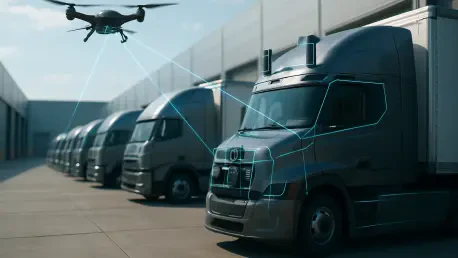
The strategic deployment of these technologies fundamentally altered the landscape of the commercial auto insurance market. Success was found by organizations that embraced a proactive stance, moving away from the reactive paradigms of the past. Stakeholders learned that the key to long-term profitability resided in the seamless integration of AI-driven insights into every facet of fleet management. Moving forward, the focus shifted toward the total automation of the claims lifecycle, where damage assessment was performed by drones and AI algorithms. Fleet operators who invested in these digital infrastructures realized substantial savings and improved their safety ratings significantly. It became evident that the future of the industry depended on the ability to turn raw data into actionable safety protocols. The industry demonstrated that when technology and insurance converged, the results were financial gains and a reduction in fatalities. Continued investment in autonomous safety remained the path for those seeking to lead in this technologically sophisticated environment.