
The global commercial insurance landscape is undergoing a period of unexpected stabilization as rates continue to decline across major markets despite the persistence of inflationary pressures. This phenomenon defies traditional cycles where rising repair costs and legal liabilities usually trigger aggressive price hikes for businesses seeking coverage. Instead, the surplus of underwriting capacity and the rapid adoption of sophisticated predictive analytics have created a competitive environment that favors the policyholder over the insurer. Many industry analysts are observing that the traditional hard market has evolved into a more nuanced equilibrium where risk assessment is becoming increasingly precise. Large-scale investments in data processing have allowed firms to move away from broad-based premium increases toward surgical adjustments that reflect actual risk exposure. This shift suggests that the current softening of rates is not merely a temporary dip but a fundamental change in how global risks are valued. It highlights the growing resilience of the corporate sector through more sophisticated asset protection.
Technological Advancements: The Role of Digital Risk Mitigation
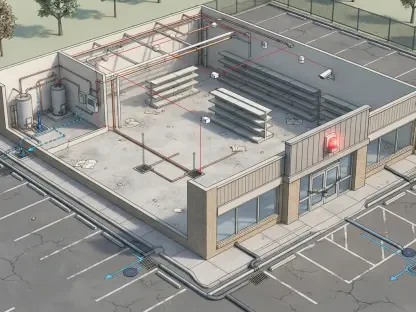
The integration of Artificial Intelligence and Internet of Things sensors has revolutionized how commercial properties are monitored and insured in the current market. Previously, insurance pricing relied heavily on historical loss data which often failed to account for real-time improvements in facility management and safety protocols. Today, smart building technologies provide continuous streams of data regarding fire hazards, water leaks, and structural integrity directly to underwriting platforms. This granularity allows insurers to offer lower rates to companies that demonstrate proactive risk management through automated systems. Furthermore, the deployment of machine learning algorithms has enhanced the ability of carriers to detect fraudulent claims with unprecedented accuracy, thereby reducing the overhead costs that were historically passed on to clients. By eliminating the guesswork associated with traditional surveying, insurers are now able to price their products more competitively while maintaining healthy margins through loss prevention rather than premium hikes.
Beyond physical monitoring, the evolution of cyber risk modeling has played a significant role in stabilizing rates within one of the most volatile segments of the industry. As companies adopt more robust zero-trust architectures and encrypted communication protocols, the actual frequency of successful ransomware attacks has seen a localized plateau in specific high-tech sectors. Insurers have responded by refining their cyber policies, rewarding businesses that implement mandatory multi-factor authentication and rigorous employee training programs. This shift toward a partnership-based model of insurance means that premiums are no longer just a cost of doing business but a reflection of a firm’s internal security posture. The current trend shows that as businesses become more resilient through technological upgrades, the financial burden of insuring those assets naturally decreases. Consequently, the downward pressure on rates is being driven by a genuine reduction in the severity of risks rather than a simple desire for market share by aggressive new entrants looking to disrupt the status quo.
Market Dynamics: The Impact of Capital Influx and Competition
Moreover, the sustained decline in commercial insurance rates is also deeply rooted in the massive influx of alternative capital that has entered the reinsurance sector over the past few years. Pension funds and private equity firms have increasingly viewed insurance-linked securities as a stable asset class that offers diversification away from traditional equity and bond markets. This abundance of capital has created a buffer for primary insurers, allowing them to offload risk more efficiently and keep their own pricing lower for end-users. In a market where capital is plentiful, the competition to secure high-quality corporate accounts becomes fierce, leading to better terms and conditions for buyers. Even in geographic regions prone to natural catastrophes, the availability of catastrophe bonds has helped to temper the sharp price spikes that once characterized the post-event recovery phase. The liquidity provided by these non-traditional sources ensures that the global insurance ecosystem remains robust even when faced with significant localized losses that would have previously paralyzed the entire market.
The strategic focus for corporate risk managers transitioned from simply seeking the lowest price to optimizing the overall value of their insurance portfolios through data-driven negotiation. Decision-makers leveraged their internal analytics to demonstrate superior risk profiles, which forced underwriters to provide more flexible policy structures than were available in previous cycles. Businesses that invested heavily in safety automation and comprehensive disaster recovery plans found themselves in a position of strength during renewal discussions. The market favored transparency and verified performance over the broad actuarial assumptions that defined the earlier part of the decade. Looking ahead, the emphasis shifted toward maintaining these technological advantages to ensure long-term premium stability. Companies that failed to modernize their risk infrastructure faced a widening gap compared to their more agile competitors who successfully secured lower rates. Ultimately, the industry moved toward a future where the cost of insurance was directly tied to the proactive resilience of the insured entity.