
National expansion of Medicaid work mandates could trap millions in a cycle of worsening health and unemployment by removing the very services that facilitate economic mobility. Following the implementation of the One Big Beautiful Bill Act, or HR 1, in July 2025, a strict mandate was established requiring “able-bodied” adults in the forty states that opted for expansion to document at least eighty hours of work or qualifying activities each month. While the legislation was framed as a method to encourage economic self-sufficiency, current federal discussions regarding a nationwide rollout have sparked significant concern among health policy experts. The core of the debate centers on whether the administrative and physical thresholds set by the new law accurately reflect the capabilities of the Medicaid population. As lawmakers consider expanding these requirements to all working-age beneficiaries, the potential for unintended consequences looms over the national healthcare landscape.
Assessing the Health Profile of At-Risk Enrollees
The Disparity: Policy Requirements vs. Physical Reality
Recent analysis utilizing data from the 2022 to 2023 Medical Expenditure Panel Survey indicates that approximately 8.3 million working-age adults are at immediate risk of losing their health coverage under these mandates. This group represents roughly 50.4 percent of the total Medicaid population within this age bracket, a figure that underscores the massive scale of potential disenrollment across the United States. These individuals do not currently meet the eighty-hour work threshold and, perhaps more critically, do not qualify for the existing, narrowly defined exemptions established under the current law. The research highlights a profound disconnect between the legislative definition of “able-bodied” and the lived physical realities of those served by the program. By setting such a high bar for compliance, the policy essentially assumes that half of the non-working Medicaid population is fully capable of immediate labor, an assumption that is increasingly challenged.
Functional Limitations: The Gray Area of Disability
The disparity in health status between those who meet work requirements and those at risk of losing coverage is stark, with severe physical impairment nearly three times more prevalent in the at-risk group. Data suggests that 12.4 percent of the vulnerable population suffers from significant physical limitations, compared to only 4.5 percent of those who currently work twenty or more hours per week. Furthermore, neuropsychological impairments—including cognitive difficulties and psychological distress—are more than three times as common among those likely to be disenrolled. Nearly one-third of the at-risk population reported having a chronic illness or disability that actively limits their ability to seek or maintain employment. However, because these conditions often do not meet the stringent legal criteria for a formal Social Security disability exemption, these individuals remain classified as “able-bodied” and are thus subject to the same work mandates as those with no barriers.
Identifying Barriers to Maintaining Coverage
Administrative Hurdles: The Burden of Verification
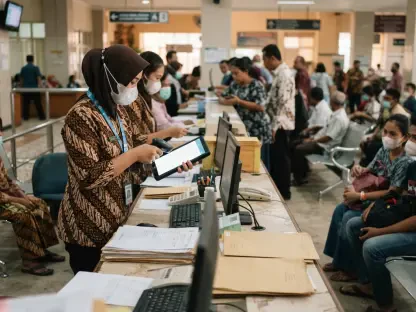
Beyond physical challenges, the administrative complexity of the One Big Beautiful Bill Act serves as a formidable secondary barrier to maintaining essential health coverage. The requirement for biannual work verification forces enrollees to navigate a dense bureaucratic system that many are ill-equipped to handle, leading to what experts describe as administrative churn. This phenomenon occurs when individuals who are technically eligible for the program lose their insurance due to paperwork errors, missed deadlines, or technical failures in reporting systems. Projections suggest that between 4.9 million and 10.1 million enrollees could lose coverage from 2026 to 2028 solely due to these procedural hurdles. The burden of proof falls heavily on the individual, particularly for those who are self-employed or serving as family caregivers, as current state infrastructures often lack the capability to verify these exemptions automatically through existing employment databases.
Economic Implications: The Paradox of Employment
The prevailing logic that work requirements drive employment is often contradicted by evidence suggesting that Medicaid coverage itself acts as a catalyst for entering the workforce. Research has demonstrated that when unemployed individuals receive the healthcare necessary to manage chronic pain, diabetes, or mental health conditions, their chances of returning to steady employment nearly double. By making work a prerequisite for medical care, the policy risks creating a paradoxical trap where enrollees become too ill to work because they lack the insurance needed to treat their underlying conditions. This creates a negative feedback loop that undermines the economic goals of the mandate, as the removal of health services effectively reduces the overall employment rate among the most vulnerable segments of the population. Instead of fostering independence, the loss of medical oversight can lead to emergency room visits and long-term disability, further straining state budgets.
Strategic Refinement: Lessons for Future Policy
Policy analysts and researchers concluded that the exemption frameworks within the One Big Beautiful Bill Act were too narrow to account for the complex health realities of the Medicaid population. The data from early implementation phases suggested that millions of low-income Americans faced a high probability of losing access to essential medical services due to both functional impairments and prohibitive administrative demands. To address these systemic failures, experts recommended that future legislative adjustments focus on the integration of automated verification systems and the expansion of exemption criteria to include a broader range of functional limitations. Rather than relying on punitive mandates, the most effective path forward involved leveraging healthcare as a foundational tool for economic mobility. By ensuring that enrollees had the medical support necessary to achieve stability, states were better positioned to help citizens transition back into the workforce without jeopardizing health.