
Installing central station fire alarms and automatic water shutoff valves has transitioned from a recommendation to a vital strategy for improving a home’s standing with selective insurance providers. In the affluent enclaves of the South Fork, such as Southampton and Bridgehampton, the homeowners insurance landscape is currently undergoing a period of intense volatility and contraction that has left many residents reevaluating their financial safety nets. This tightening of the market is primarily characterized by a shrinking pool of available insurance carriers, which has directly led to a sharp escalation in premium costs across the board. Industry experts note that rate increases ranging from 10 to 20 percent have become the new standard as the marketplace struggles with a fundamental imbalance. As major insurance carriers actively exit the region to minimize their exposure to significant coastal risks, the companies that remain are forced to shoulder a disproportionate amount of liability. This concentration of risk on a 125-mile-long peninsula creates a precarious environment where the potential for a single major windstorm to cause catastrophic financial loss is ever-present. Consequently, the transition from a broad, competitive market to one defined by exclusivity and high barriers to entry has fundamentally altered the experience of owning property in these prestigious coastal communities, making insurance a primary concern rather than a secondary administrative task.
Economic Pressures: The Impact of Inflation and Regulation
Beyond the inherent geographical risks of the Atlantic coast, systemic economic factors like inflation have dramatically increased the baseline cost of maintaining homeowners insurance in 2026. Over the recent span from 2026 to 2028, the soaring prices of skilled labor and high-end construction materials have made the process of “restitution”—rebuilding or repairing a damaged home to its original state—far more expensive for insurance companies than in previous cycles. For a South Fork property owner, this means that even if the risk profile of their home has not changed, the financial requirement to cover a potential total loss has ballooned. Insurers must account for the reality that a custom-built home in East Hampton now requires a significantly larger payout than it did just a few years ago due to the scarcity of specialized contractors and the increased cost of imported lumber and finishes. This rise in underlying costs necessitates higher premiums just to maintain the same level of coverage that was previously available, creating a situation where homeowners are paying more for the exact same protections. Furthermore, this inflationary pressure acts as a deterrent for new carriers who might otherwise consider entering the market, as the capital requirements to remain solvent are increasingly difficult to meet.
The regulatory environment in New York adds another layer of complexity to this ongoing pricing crisis. The Department of Financial Services (DFS) is tasked with overseeing and limiting how much insurance companies can charge, requiring carriers to petition for any proposed rate increases. However, the approved hikes are often significantly lower than what the companies requested; for instance, a carrier might ask for a 20 percent increase to offset inflation but only receive approval for 8 percent. This creates a “valuation gap” and leads to a period of volatility and turbulence, as insurers find it difficult to match their premiums to the actual cost of doing business. In response, many carriers have chosen to pause their activities or severely limit new policy writing in high-risk zones like the South Fork until the economic and regulatory climate stabilizes. Furthermore, global geopolitical instability, including ongoing conflicts in Eastern Europe and the Middle East, contributes to a general sense of caution among international reinsurers. These entities, which provide the financial backbone for local carriers, are currently waiting for more predictable conditions before expanding their capacity in regions prone to catastrophic weather. This combination of local regulatory delays and global economic uncertainty has effectively paralyzed the market for many new buyers.
Forensic Evaluations: The New Standard for Property Maintenance
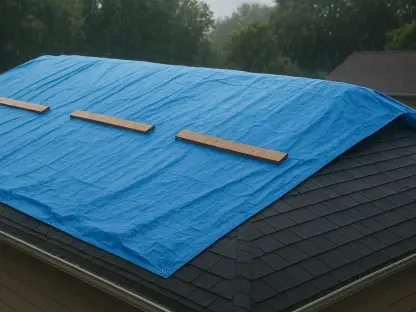
Insurance providers are becoming increasingly forensic in their evaluation of property conditions, and neglected maintenance has emerged as a primary driver for policy denials or non-renewals. A notable example is the scrutiny applied to the age and condition of a home’s roof; insurers in 2026 often view a 30-year-old roof as an unacceptable liability, regardless of whether it is currently leaking. From an underwriter’s perspective, an aging roof is statistically more likely to fail during a wind-driven rain event, which could lead to massive interior damage claims. If a leak occurs during a storm, an insurance adjuster might cover the damage to the drywall and flooring but refuse to pay for a new roof, citing “wear and tear” or age-related deterioration rather than the weather event itself. This puts a heavy financial burden back on the homeowner, who must now fund a complete roof replacement out of pocket to remain eligible for coverage. This shift toward preventative denial means that homeowners can no longer afford to defer major maintenance tasks. Carriers are now using high-resolution drone imagery and detailed physical inspections to identify these vulnerabilities before a policy is even issued, leaving very little room for error or oversight in property management.
Beyond structural integrity, other “red flags” have become focal points for insurance underwriters seeking to minimize potential losses. Outdated plumbing systems, ancient electrical circuit breakers, and even unprotected exterior woodwork prone to rot are now sufficient grounds for a carrier to decline a renewal. Furthermore, liability hazards that were once overlooked, such as the presence of undisclosed diving boards, trampolines, or specific high-risk dog breeds, are being identified through more rigorous application processes. Conversely, homeowners who take a proactive approach to risk management by investing in modern safety technologies are finding themselves in a much stronger position. The installation of central station burglar and fire alarms, alongside automatic water shutoff valves, serves as a powerful signal to insurers that a property is being actively monitored against common causes of loss. These systems do more than just provide peace of mind; they offer tangible proof of a homeowner’s commitment to property preservation, which can be the deciding factor in whether a selective carrier like Chubb or Pure agrees to write a policy. In a market where carriers are looking for any reason to say “no,” these technological safeguards provide a compelling reason to say “yes.”
Strategic Asset Management: Bundling and Risk Mitigation
To successfully navigate this restrictive environment, insurance brokers are increasingly recommending “policy bundling” as a primary strategy for securing high-quality coverage. Elite carriers like Chubb, Pure, and Berkley One have become remarkably selective, often refusing to insure a coastal home as a standalone risk. Instead, they require a “full package” approach, which involves the homeowner moving their entire insurance portfolio—including automobile policies, umbrella liability, and scheduled personal property like jewelry or fine art—to the same company. This strategy allows the carrier to spread its risk across multiple lines of business, making the high-exposure coastal property more palatable from a corporate perspective. Additionally, these high-end providers show a strong preference for clients who own non-coastal secondary residences, such as a primary home in New York City or a suburban estate in Connecticut. By balancing the wind-driven risks of the South Fork with more stable, inland properties, homeowners can present a diversified risk profile that fits more neatly into a carrier’s preferred underwriting guidelines. This shift toward holistic asset management means that homeowners must view their insurance as a comprehensive portfolio rather than a series of disconnected policies.
Another effective tactic for maintaining stability in the current market involves the strategic use of higher deductibles and a commitment to transparency regarding property usage. Choosing a higher deductible can significantly lower annual premiums, but more importantly, it serves as a defensive move to prevent the filing of small claims that might trigger a non-renewal. In 2026, many homeowners are opting to treat their insurance as a “catastrophic-only” safety net, handling minor repairs independently to preserve their standing with the carrier. Furthermore, with the continued rise of short-term rentals on the South Fork, brokers emphasize the absolute necessity of disclosing rental activities. Failure to do so can lead to a summary denial of a claim if an incident occurs while a tenant is occupying the property, leaving the owner fully liable. Beyond these financial adjustments, ensuring that a home meets the most modern and stringent building codes is vital. Homes that have been recently updated with impact-resistant glass, reinforced roofing ties, and flood-resilient foundations are viewed much more favorably by underwriters. These structural enhancements provide physical evidence that a home is capable of withstanding the increasingly severe weather events that define the modern coastal experience.
The Last Resort: Transitioning to the Excess Lines Market
When homeowners find themselves unable to secure coverage through “standard” providers like Allstate or State Farm, they are often forced to turn to the “excess lines” or “surplus” market. This secondary tier of the insurance industry includes globally recognized entities such as Lloyd’s of London or Scottsdale, which are designed to handle risks that traditional carriers are unwilling to touch. While these companies are often financially robust and maintain high industry ratings, they operate under a different set of rules that homeowners must understand. The most significant drawback is the lack of backing from the New York State guaranty fund; if an excess lines company were to become insolvent, there is no state-level mechanism to ensure that pending claims are paid to the policyholders. Despite this lack of a safety net, the excess market is rapidly becoming the only viable option for a growing number of residents on the South Fork who are caught in the squeeze of the traditional market’s retreat. These policies often come with even higher premiums and more restrictive terms, but for many, the alternative of remaining completely uninsured is a risk too great to take in an era of unpredictable coastal storms.
While the South Fork has not yet reached a state of total market collapse comparable to the crisis in Florida, the current trajectory remains a significant cause for concern among regional experts. In Florida, the private market became so fragile that a state-created entity had to step in as a primary provider for many residents. New York has managed to avoid this level of extreme intervention so far, but the trend of private carriers retreating and weather patterns becoming more severe suggests that the gap between risk and coverage is widening. If the frequency of major hurricanes on Long Island increases, the region may eventually need to explore government-backed solutions or new legislative frameworks to ensure that property owners can remain protected. For now, the prevailing sentiment among local brokers is that the current available private options, however expensive, remain preferable to a state-run system that might offer even less flexibility. The transition from a thriving, competitive market to one defined by scarcity and high-stakes negotiation indicates that the South Fork is at a crossroads, where only the most proactive and well-prepared property owners will find long-term stability and protection.
Proactive Resilience: Long-term Protection Strategies
In reflecting on the shifts that defined the homeowners insurance market over the recent period, it became clear that a passive approach to property management was no longer sustainable. Successful homeowners transitioned toward a model of active risk mitigation, where every aspect of the residence was treated as a potential variable in an underwriting equation. They invested in high-end surveillance and mitigation technology, such as the aforementioned water shutoff systems, to prove their property’s resilience against avoidable losses. Furthermore, the most prepared residents established deep, transparent relationships with specialized brokers who could navigate the complexities of both the standard and excess lines markets. These owners also took the necessary steps to bundle their assets and maintain their properties in peak condition, effectively insulating themselves from the most aggressive rate hikes and policy cancellations. By choosing higher deductibles and focusing on long-term structural integrity rather than short-term cost savings, they secured a position of relative safety within a volatile environment. The lessons learned during this period of market contraction highlighted that maintaining a foothold on the South Fork required a sophisticated blend of financial strategy and technological adoption.
Moving forward, the focus for homeowners shifted from simply finding a policy to ensuring the property was a “preferred risk” through continuous improvement. This involved not only structural upgrades to meet modern building codes but also a shift in mindset regarding the role of insurance in wealth preservation. Homeowners who viewed their coverage as a critical asset rather than a monthly bill were able to adapt to the new reality of the 125-mile-long peninsula. They regularly updated their disaster recovery plans and maintained clear records of all maintenance, ensuring that they could provide a forensic history of the home to any prospective insurer. This proactive stance allowed them to bypass the “last resort” markets and maintain coverage through top-tier carriers that prioritized stability and quality. Ultimately, the burden of proof shifted entirely to the property owner, who had to demonstrate that their home was a risk worth taking in an increasingly unforgiving marketplace. This sophisticated approach to property ownership became the hallmark of the South Fork, where the high cost of entry was matched by an equally high requirement for diligent management. By embracing these changes, residents ensured that their coastal investments remained protected against both environmental and economic storms.