
The financial stability of a household often depends on securing a flood policy well before a tropical wave is identified, as reactive purchasing is prevented by federal regulations. While the Florida insurance market remains technically operational throughout the year, the window for obtaining robust property protection narrows significantly as the Atlantic hurricane season reaches its peak in mid-September. Many residents mistakenly assume that coverage is a simple commodity available on demand, yet the reality is governed by complex weather-driven risks and rigid industry protocols. This misunderstanding often leads to a dangerous state of vulnerability when tropical threats begin to develop. Navigating this period requires a clear understanding of how standard policies differ from specialized flood protections, especially since waiting until a storm is imminent usually results in a total loss of coverage options. For those living in coastal or low-lying areas, the intersection of regulation and timing is the most critical factor in safeguarding their long-term financial health.
The Timing of Coverage and Market Constraints
Administrative Barriers: The Impact of Waiting Periods
A significant hurdle in securing protection is the mandatory 30-day waiting period associated with the National Flood Insurance Program (NFIP). Managed by the Federal Emergency Management Agency, this program does not allow for immediate coverage; instead, policies only become active a full month after the initial purchase date. This rule acts as a deliberate market mechanism designed to prevent “last-minute” buying once a storm has already been identified or a specific threat is looming. Consequently, a homeowner who attempts to buy flood insurance when a tropical wave is first spotted is usually too late to cover that specific meteorological event.
This delay creates substantial risks for new residents or those in the middle of home purchases. If a buyer schedules a closing during the height of the season, they must ensure the flood policy is initiated well in advance to avoid a gap in coverage. Failing to account for this timeframe can leave a new asset entirely unprotected during its most vulnerable month of the year. Furthermore, the 30-day rule applies strictly to the effective date, meaning that payments made on the eve of a disaster will not accelerate the activation of the policy benefits.
Industry Moratoriums: Navigating Blackout Periods
When a named storm or a significant atmospheric disturbance approaches the Florida coast, insurance carriers typically implement what is known as a moratorium. During these blackout periods, which often begin 24 to 48 hours before a predicted landfall, companies cease issuing new policies or increasing existing coverage limits entirely. Because insurers focus on unforeseen future events rather than near-certainties, the market effectively “freezes” as soon as a storm enters a specific geographic radius. This administrative lockdown makes it nearly impossible to find new coverage once a system is actively tracked by the National Hurricane Center.
The implementation of these boundaries is a survival strategy for the industry, ensuring that the pool of insured properties remains stable and predictable. Homeowners who delay their applications until the clouds darken find themselves locked out of the market. This reinforcement of early action is the only way to bypass the sudden cessation of binding authority that occurs when tropical risks escalate. Even if a policy was quoted days earlier, the ability to bind that coverage is suspended until the threat has passed and the moratorium is officially lifted by the carrier.
Financial Risks and Policy Classifications
Financial Consequences: The Economics of Underinsurance
The financial consequences of being uninsured during a hurricane are severe, as even an inch of floodwater can cause upwards of $25,000 in damages to a residence. Many residents mistakenly rely on federal disaster assistance as a primary safety net, but this support is often provided in the form of low-interest loans from the Small Business Administration that must eventually be repaid. These loans can become a heavy burden, adding significant monthly debt to a family already struggling to rebuild their lives. In contrast, insurance payouts do not carry repayment obligations, making traditional policies the only true path to recovery.
Relying on government grants is also a gamble, as such funds are only available if a formal disaster declaration is made by the President. Without this declaration, homeowners are left entirely on their own to fund repairs. Securing a private or federal policy ensures that the funds for restoration are guaranteed by contract, providing a level of certainty that government aid simply cannot match. This contractual obligation is the cornerstone of property protection, allowing for a structured and predictable financial response to the unpredictable nature of extreme weather events.
Policy Classifications: Understanding Homeowners Forms
Navigating the Florida market requires a firm grasp of the eight different homeowners insurance forms, ranging from HO-1 to HO-8. The most common choice for single-family homes is the HO-3 “Special Form,” which covers all perils except those specifically excluded. It is vital to recognize that flood damage is almost always one of these primary exclusions. Choosing this form provides broad protection for wind and fire, but it leaves a massive gap that must be filled by a separate flood policy. This dual-layered approach is the standard for responsible property management in the Southeast.
Other specialized options include the HO-6 for condominium owners, which covers “walls-in” property and personal belongings, and the HO-8 for older homes where repair costs might exceed the current market value. Selecting the correct form ensures that the specific structural risks of the property are adequately addressed according to its age and construction type. Proper classification prevents the common tragedy of discovering a coverage limit is too low after a storm has passed. Understanding these nuances allows homeowners to tailor their protection to the specific needs of their unique housing situation.
Proactive Management for the Peak Season
Strategic Awareness: Current Meteorological Risks
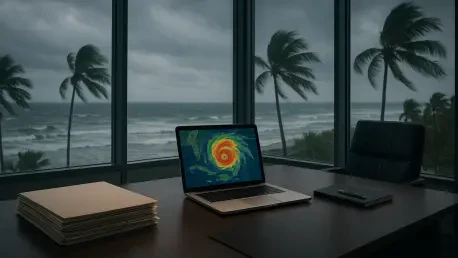
The threat of tropical activity is a constant reality for Floridians, especially during the height of the season when the National Hurricane Center maintains a 24-hour watch on the Atlantic. With the potential for rapid storm intensification, which has become more frequent in recent years, homeowners cannot afford to take a reactive stance toward their insurance needs. A system can evolve from a disorganized cluster of thunderstorms into a major hurricane in less than 48 hours, leaving very little time for administrative adjustments. Monitoring these tropical waves is essential for identifying the right moment to act.
As the cycle from 2026 to 2028 progresses, the importance of maintaining high situational awareness has only increased. Homeowners who track the progress of the season effectively can anticipate the implementation of market moratoriums before they are officially announced. This proactive approach allows for the adjustment of deductibles or the addition of endorsements while the market is still open and receptive to new business, providing a critical buffer against sudden weather shifts. Early preparation is the only way to outpace the speed at which modern tropical systems now develop.
Proactive Steps: Reviewing Gaps and Policy Obligations
Before any major disaster occurred, wise residents conducted a thorough review of the exclusions and the “Duties After Loss” sections of their insurance documents. They identified coverage gaps early, which allowed them to supplement their protection before moratoriums took effect. By understanding the specific limitations of their HO-form policy and the timing of flood insurance activation, these individuals built a comprehensive recovery plan. This strategy successfully bypassed the need for high-interest government loans and ensured that funds were available immediately for restoration efforts.
The most prepared homeowners also documented their property with photos and videos before the winds arrived, ensuring a smooth claims process later. They confirmed that their deductibles were manageable and that their living expense coverage was sufficient for an extended evacuation. These proactive steps moved them from a position of uncertainty to one of relative security. By the time the season reached its peak, their financial defenses were fully established, and they faced the storms with the confidence that their most valuable assets were legally and financially protected.