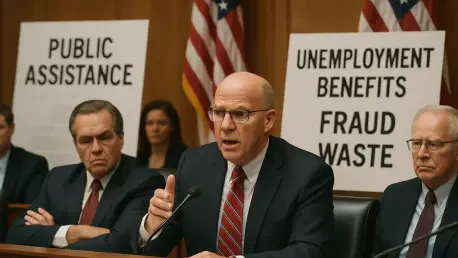

Republican lawmakers are currently pushing for the Pandemic Unemployment Fraud Enforcement Act to double the statute of limitations for benefit theft to ten years. This move highlights a growing national anxiety over the integrity of the safety net, which has been under intense pressure since the start of the decade. The United States Unemployment Insurance (UI) system, established in 1935, remains a vital lifeline for millions, yet it operates as a fragmented federal-state hybrid that often struggles to maintain consistency across jurisdictions. Recent assessments indicate that while the system was designed to provide temporary relief during downturns, it is currently mired in bureaucratic complexity and high rates of fiscal leakage. As lawmakers in 2026 grapple with these issues, the debate has moved beyond mere funding to encompass fundamental questions about administrative clarity and the program’s sustainability in an era of rapid economic change.
Structural Friction and Administrative Evolution
The Foundations of the Federal-State Partnership
Since its inception, the UI program has relied on a unique architecture where the federal government oversees broad standards while states manage the day-to-day operations and fund the actual benefit payments. Traditionally, this system offers up to 26 weeks of regular compensation, which can be supplemented by the Extended Benefit program during periods of severe recession. However, this decentralized structure has led to significant disparities in how benefits are distributed and managed. While the program returned to its standard operating procedures after the emergency measures of the early 2020s, it has remained under the watchful eye of the Office of Management and Budget. The “high-priority” designation is a direct result of chronic fiscal leakage, as the system has struggled to balance the need for rapid deployment of funds with the verification required to prevent errors. This balance is harder to strike in 2026 as labor markets become more complex.
The fiscal reality of the last few years reveals a system where improper payment rates have consistently exceeded 10%, a figure that alarms both fiscal hawks and social advocates. With annual losses frequently surpassing the $100 million threshold, the federal government is under immense pressure to tighten oversight. This leakage is not just a matter of intentional fraud but also involves administrative mistakes, such as miscalculating weekly benefit amounts or failing to verify if a claimant is actively seeking work. The challenge lies in the fact that many state agencies are using procedures that were developed for a simpler era of employment. As the economy shifts toward fluid work arrangements, the existing framework for identifying eligible recipients and calculating compensation has become increasingly prone to error. Consequently, the push for modernization is now viewed as a financial necessity rather than just an administrative preference for agencies.
Legislative Priorities and Systemic Integrity
Within the 119th Congress, Republican leaders have centered their legislative strategy on system integrity, viewing fraud recovery as the most immediate priority. The Pandemic Unemployment Fraud Enforcement Act is the centerpiece, seeking to extend the window for legal action against those who exploited the system. By doubling the statute of limitations to ten years, proponents argue they are giving investigators the time needed to untangle complex criminal networks that utilized sophisticated technology to steal billions. This approach also places a heavy emphasis on holding financial institutions accountable, particularly those that processed large volumes of suspicious payments without adequate scrutiny. The goal is to reclaim lost capital to replenish trust funds, ensuring that future taxpayers are not left holding the bill for past negligence. This platform focuses heavily on historical accountability, targeting the root causes of fiscal leakage.
Conversely, Democratic proposals are built around a fundamental overhaul of the UI system to better reflect the realities of the modern workforce. The Unemployment Insurance Modernization and Recession Readiness Act represents a vision of a more unified national standard, where the federal government takes on a larger role in financing and regulation. Key features include a mandatory nationwide minimum for benefit duration and the establishment of a “Jobseeker Allowance” specifically designed to include gig workers and independent contractors. By creating a more inclusive safety net, proponents hope to build long-term economic resilience that can withstand the rapid shifts of the digital economy. This approach prioritizes social equity, ensuring that all workers have access to a predictable level of support during times of transition. This strategy centers on social equity and ensuring the program can handle the diversity of the modern job market.
Pathways Toward a Resilient Safety Net
The challenges facing the American unemployment insurance system required a shift from reactive crisis management toward a proactive and unified strategy. Stakeholders recognized that balancing the need for fiscal integrity with the expansion of worker protections was the only way to ensure the program’s longevity. Legislative bodies eventually moved beyond partisan gridlock to prioritize the technological overhaul of state agencies, recognizing that modern IT systems were the foundation of both fraud prevention and benefit delivery. Policymakers also addressed the insolvency of state trust funds by implementing sustainable federal-state sharing models that prevented regional economies from being overwhelmed by debt. By integrating gig workers into the system and simplifying eligibility rules, the program became more reflective of the labor market. These actions transformed the UI system into a robust automatic stabilizer, providing a reliable safety net that supported stability.