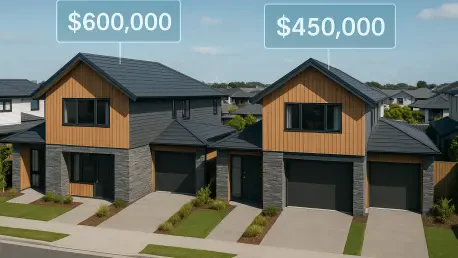

New Zealand’s insurance market is currently witnessing an unprecedented era of divergence, where two neighbors living on the same street might pay thousands of dollars in difference for nearly identical coverage levels. Data from the latest quarterly index shows that the gap between the highest and lowest comprehensive car insurance quotes now averages $651. This phenomenon is not merely a statistical anomaly but a reflection of a fundamental shift in how risk is quantified and sold across the nation. For homeowners, the situation is even more pronounced, with the spread between the cheapest and most expensive house insurance policies frequently exceeding $1,400. Such a massive disparity suggests that the era of predictable, uniform pricing has vanished, replaced by a highly fragmented landscape where the choice of provider is now the single most significant factor in determining an individual’s annual financial burden. This shift demands a more proactive approach from consumers who want to avoid overpaying.
Drivers of Market Disparity and Premium Shifts
Localized Risk: The End of Uniform Pricing
The primary force driving these widening gaps is the comprehensive adoption of risk-based pricing, a model where insurers utilize highly granular data to assess specific hazards such as flooding, earthquakes, and landslips. Rather than applying broad regional averages as they might have done in the past, companies now price policies based on the precise risks associated with a specific street address or property type. This granular approach means that a house on one side of a hill might be viewed very differently than a house on the other side, even if they are in the same suburb. Because every insurer has a unique methodology and a different appetite for these localized risks, their quotes have begun to diverge more sharply than ever before. This level of precision allows insurers to be much more selective about which properties they want on their books, leading to price variations that were previously unthinkable in a market that favored general regional uniformity.
Strategic Underwriting: Pricing as a Signal
In many instances, what looks like a prohibitively high quote is actually a strategic signal from an insurer indicating that they do not wish to provide coverage for a specific property or risk profile. When a provider views a particular risk as being outside their current strategy or beyond their capacity for loss, they may quote a price so high that it effectively acts as a polite refusal. Conversely, another provider might have a different risk assessment model or a desire to grow their portfolio in that specific area, leading them to offer a much lower rate for the exact same coverage. This mismatch in corporate strategy and risk tolerance creates the massive quote gap seen in the current market. As a result, the difference between the highest and lowest price is no longer just about profit margins; it is an indicator of how much an insurer actually wants your business, making it vital for consumers to look beyond their current provider to find those with a higher risk appetite.
Sector Fluctuations: A Tale of Divided Costs
While the gap between individual quotes is growing at a record pace, the actual premiums paid by consumers show a distinctly divided trend across various insurance sectors. House insurance premiums have recently experienced a surprising dip of approximately 3% year-on-year, which suggests a period of temporary stabilization despite the recent history of extreme weather events and rising construction costs. This slight decrease offers some breathing room for homeowners who have been struggling with escalating costs over the last several years. However, this downward trend in property coverage is not mirrored in the automotive sector, where car insurance has become noticeably more expensive. Comprehensive vehicle premiums have risen by an average of 6%, driven by the increasing complexity of modern car repairs and a higher frequency of claims. These contrasting movements indicate that while some areas of the market are finding a new equilibrium, others are still facing significant upward pressure.
Consumer Adaptation: The Shift in Coverage
The rising cost of vehicle coverage has sparked a visible shift in consumer behavior across the country, as more New Zealanders look for ways to keep their household budgets intact. A growing number of motorists are choosing to trade down from comprehensive plans to more basic options, such as Third Party, Fire, and Theft policies. This move is often a direct response to the 6% hike in comprehensive premiums, as families prioritize essential spending over full vehicle protection. While this transition reduces immediate monthly outlays, it also exposes vehicle owners to greater financial risk in the event of an accident where they are at fault or if their car is damaged by an uninsured driver. This trend toward lower-tier coverage highlights the financial strain many are feeling and underscores the importance of the quote gap; if consumers could find a cheaper comprehensive policy through better comparison, they might not feel forced to sacrifice the security of full insurance.
Regional Variations and Consumer Tactics
Geographical Impact: How Location Dictates Premiums
Geography continues to play a decisive role in determining the cost of insurance, with major metropolitan areas experiencing vastly different price movements and market dynamics. For instance, residents in Wellington have recently benefited from a significant decrease in both house and contents premiums, a trend that provides some relief in a city traditionally known for its high insurance costs due to seismic risks. Meanwhile, the Canterbury region has seen the sharpest drop in house insurance costs, reflecting a stabilizing market after years of post-earthquake adjustments. In stark contrast, Auckland presents a much more volatile picture for consumers. While house insurance prices in the nation’s largest city have remained relatively flat, contents insurance has surged by 10% in a very short period. This regional fragmentation proves that there is no longer a national trend in insurance; instead, local factors are the primary drivers of what a person will pay.
The Excess Lever: Trading Risk for Savings
To combat the rising cost of living and the widening gap in quotes, many New Zealanders are increasingly using excess levels as a strategic financial tool to lower their premiums. By agreeing to pay a higher amount out-of-pocket at the time of a claim, policyholders can secure significantly lower monthly or annual payments. Recent data shows that the average chosen excess has jumped by 15% across all types of insurance, as consumers look for any available lever to reduce their fixed costs. Homeowners have been particularly aggressive in this regard, opting for excesses that are, on average, 19% higher than they were in the previous cycle. This shift indicates a sophisticated understanding of the trade-off between premium costs and claim-time liabilities. By self-insuring for smaller losses through a higher excess, many are finding that they can keep their high-value assets protected without being overwhelmed by the immediate cost of maintaining those insurance policies.
The Loyalty Tax: Why Brand Devotion Costs More
The widening gap between quotes demonstrated that brand devotion was no longer a viable strategy for those seeking value in the insurance sector. As companies utilized more complex algorithms to determine pricing, the variance in quotes for the same person grew to hundreds or even thousands of dollars. Many policyholders realized that their existing insurer had slowly increased their premiums over time, assuming that the inconvenience of switching would prevent them from looking elsewhere. However, the sheer size of the potential savings became too large to ignore. Those who took the time to review their policies often discovered that they were paying a premium for loyalty that provided no tangible benefit in the event of a claim. This realization sparked a broader movement toward active market participation, where the previous year’s price was no longer accepted as the baseline for the current year, and every renewal notice was treated as an invitation to shop around.
Digital Transparency: Empowering the Modern Policyholder
The rise of digital comparison platforms empowered consumers to navigate this complex and fragmented market with much greater ease and confidence. With over 100,000 users utilizing these tools to compare dozens of different insurers simultaneously, there was a clear shift toward transparency in the financial sector. These platforms allowed individuals to see the full range of the quote gap in real-time, stripping away the mystery of how different companies valued their specific risks. For the modern consumer, the strategy for affordability was no longer just about finding a cheap provider, but about actively comparing limits, exclusions, and price points in a centralized digital space. This technological shift broke down the information barriers that had previously protected traditional insurers, forcing them to be more competitive. Ultimately, the most important step for any New Zealander became the commitment to never accept a renewal quote without first seeing what else the market offered.