
When insurance investigators in Southern California received claims for luxury vehicles allegedly mauled by wild animals, they initially suspected a routine interaction between residential expansion and local wildlife habitats. However, the subsequent investigation, dubbed “Operation Bear Claw,” revealed a far more theatrical and calculated attempt to manipulate the insurance system using a full-sized bear costume. Three residents from the Los Angeles area have now been sentenced for their roles in a conspiracy that involved staging attacks on high-end automobiles, including a Rolls-Royce Ghost and two Mercedes-Benz models. By submitting video evidence of what appeared to be a black bear ransacking the interiors of these cars, the group attempted to collect nearly $142,000 in fraudulent payouts. This case underscores the lengths to which some individuals will go to exploit natural phenomena for illicit financial gain. The scheme took advantage of the documented reality of bear-human conflicts in the San Bernardino Mountains, attempting to blend a manufactured crime into the fabric of common environmental occurrences to avoid detection.
The Mechanics of the Deception: Staging the Crime
The core of the operation relied on creating convincing visual evidence that could withstand the scrutiny of initial claims processing. To achieve this, the suspects orchestrated a series of events in the Lake Arrowhead region, a known habitat for California’s black bear population. By filming the interior of the vehicles while a person dressed in a realistic, full-body bear suit moved through the cabins, the group sought to mimic the chaotic damage typically left by a scavenging animal. The footage captured what looked like a bear ripping through expensive leather upholstery and scratching door panels with surprising intensity. These recordings were then presented to various insurance companies as definitive proof of wildlife damage, which is often covered under comprehensive policy clauses. The group’s choice of high-value targets, such as a 2010 Rolls-Royce Ghost, was a deliberate move to maximize the potential payout for each individual claim, assuming that the sheer cost of repairs for such luxury items would lead to a substantial settlement.
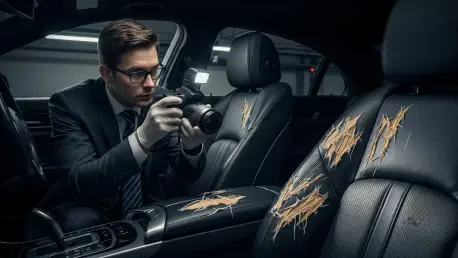
In addition to the visual performance, the suspects carefully documented the physical aftermath of the staged attacks, providing photographs of shredded seats and deep gouges in the vehicle’s interior surfaces. These claw marks were meticulously applied to simulate the destructive capabilities of a large predator seeking food or exploring the vehicle. By utilizing multiple insurance providers and different luxury cars, the conspirators hoped to avoid a centralized pattern of claims that might trigger a broader investigation. The sophistication of the scheme lay in its thematic consistency; since bears are known to enter cars in mountain communities, the claim seemed plausible on the surface. However, the sheer volume of claims and the similarity in the “bear’s” behavior across different incidents eventually raised red flags. This repetition suggested that the events were not isolated wildlife encounters but rather a coordinated effort to extract funds from the insurance industry by manufacturing evidence that exploited the predictable habits of local fauna.
Forensic Analysis and the Role of Biological Expertise
Suspicion grew among insurance adjusters as they compared the footage from different claims and noticed inconsistencies in the “bear’s” physical proportions and movement. Recognizing that traditional claims tools might be insufficient for such a unique scenario, the insurance companies collaborated with the California Department of Insurance and sought a professional opinion from a biologist at the California Department of Fish and Wildlife. This shift toward specialized forensic analysis proved to be the turning point in the investigation. The biologist conducted a detailed review of the video files, focusing on the biomechanics of the creature on screen. By analyzing the way the figure articulated its limbs and distributed its weight while moving within the confined space of the vehicle, the expert was able to distinguish between the anatomical capabilities of a biological bear and the limitations of a human actor. This expert testimony provided the scientific foundation needed to transition the case from a wildlife dispute into a full-scale criminal insurance fraud probe.
The biological assessment highlighted several glaring errors in the defendants’ performance that were not immediately obvious to the untrained eye. For instance, the biologist noted that the “bear” in the video displayed range-of-motion characteristics and joint rotations that were inherently human. Furthermore, the hair on the costume, while appearing realistic from a distance, did not react to light or movement in the same way that genuine bear fur would under similar conditions. The distribution of the claw marks also failed to align with the typical behavior of a bear attempting to exit a vehicle or forage for food, showing a pattern that was more indicative of manual manipulation than instinctual scratching. These insights were combined with digital forensic analysis of the video files to establish a timeline of events that contradicted the statements provided by the claimants. This multidisciplinary approach demonstrated how traditional insurance investigations are increasingly integrating niche scientific fields to identify and prosecute complex fraud schemes.
Legal Consequences and Protective Strategies for Insurers
The investigation culminated in the execution of search warrants at the suspects’ residences, where law enforcement officials discovered the physical evidence required to secure a conviction. Among the items seized was the bear costume used in the videos, complete with integrated claws designed to create the specific damage patterns seen in the claims. Confronted with this evidence, the three primary defendants eventually entered no contest pleas to felony insurance fraud charges. The judicial system responded with a combination of weekend jail programs, mandatory probation, and significant financial penalties intended to serve as a deterrent. The defendants were ordered to pay restitution exceeding $50,000 to the affected insurance companies, a fraction of the total amount they had attempted to steal but a substantial burden nonetheless. A fourth individual involved in the conspiracy still faces ongoing legal proceedings, ensuring that the full scope of the criminal enterprise is addressed through the court system as the remaining hearings progress.
The resolution of this case established a significant precedent for the insurance industry’s response to creative criminal tactics. To mitigate future risks, organizations moved to implement more robust verification protocols for wildlife-related claims, including the mandatory use of high-resolution image analysis and third-party expert consultations. Insurers recognized that the costs of fraud are ultimately distributed among honest policyholders, leading to increased premiums and administrative overhead across the state. Moving forward, the industry adopted enhanced data-sharing networks that allow providers to flag suspicious similarities in claims across different companies in real-time. Stakeholders advised that any claim involving unusual circumstances should be subjected to immediate cross-agency review to prevent the drainage of resources. By integrating biological forensics and collaborative investigation techniques, the sector strengthened its defenses against the exploitation of natural incidents, proving that specialized expertise is vital for protection.