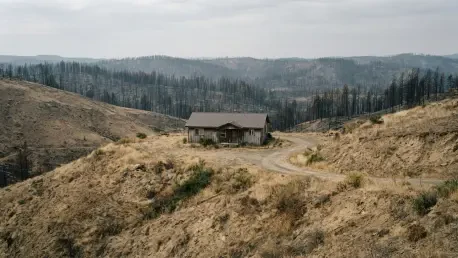

The massive $40 billion wildfire that scorched Los Angeles in 2025 served as a final catalyst for a total reimagining of how the Golden State protects its citizens against the increasing volatility of nature. With the election of Jane Kim as the new Insurance Commissioner, California has signaled a departure from traditional market-driven models in favor of a state-backed, nonprofit framework designed to stabilize a $3 trillion insurance industry. Kim, a protégée of Senator Bernie Sanders, secured her victory by promising a transformative single-payer-style disaster pool, specifically aimed at addressing the vacuum left by private insurers who have increasingly restricted coverage or exited the state entirely. This bold approach seeks to decouple basic fire protection from the profit motives of large corporations, creating a safety net that treats catastrophe resilience as a public utility rather than a discretionary product. As homeowners face skyrocketing premiums and limited options, the state government now finds itself at the helm of an unprecedented economic experiment.
Structural Foundations of the Public Option
Coverage Mandates and Universal Protections
The core of the newly proposed public insurance pool revolves around a universal coverage mandate that provides rebuilding costs up to a specific $400,000 threshold. By focusing on this specific amount, the administration intends to protect middle-income residents and modest family dwellings rather than subsidizing the high-value reconstruction of luxury estates. This nonprofit pool is structured to absorb the most significant wildfire risks that private companies have deemed uninsurable in the current climate. By removing the burden of catastrophic wildfire claims from the balance sheets of traditional firms, the state hopes to invite them back into a more predictable market environment where they can operate without the constant threat of insolvency following a single dry season. This strategic division of labor ensures that the state manages the systemic risk of climate change while maintaining a competitive landscape for secondary insurance needs that do not fall under the umbrella of natural disasters.
Integration of Supplemental Private Markets
Under this proposed hybrid model, private insurers would not be entirely displaced but would instead shift their focus toward supplemental policies and standard residential risks. These companies will continue to provide coverage for traditional losses such as theft, localized water damage, and structural fires that are not related to large-scale wildfire events. Furthermore, for homes valued above the $400,000 state-guaranteed limit, private carriers will offer bridge policies to cover the remaining equity, allowing for a tiered system where the state provides the foundation and the private sector provides the finish. This arrangement aims to lower the overhead costs for insurers, who will no longer need to price in the massive tail risks associated with historic infernos. For the consumer, this could lead to more transparent pricing and a reduction in the “fire tax” currently embedded in almost every homeowner policy across the state. The transition requires delicate coordination between the Department of Insurance and existing market players to ensure no coverage gaps.
Financial and Environmental Strategic Shifts
Capital Reallocation and Risk Mitigation
A significant pillar of Commissioner Kim’s platform is the aggressive redirection of capital from corporate expenditures toward localized fire safety and future loss reserves. The administration argues that hundreds of millions of dollars currently allocated to shareholder dividends, executive bonuses, and expensive television advertisements during sporting events could be better utilized to harden communities against the elements. By operating as a nonprofit entity, the public pool is designed to reinvest every dollar of excess premium revenue back into risk mitigation efforts, such as forest thinning and the installation of fire-resistant building materials in high-risk zones. This shift reflects a philosophy that the only way to make insurance truly affordable is to reduce the physical possibility of destruction in the first place. This proactive stance contrasts sharply with the traditional reactive model of the insurance industry, which has historically prioritized short-term financial returns over the massive long-term investments needed to adapt to a changing environment.
Climate Adaptation and Regulatory Oversight
The final assessment of the state’s current “insurer of last resort,” the FAIR Plan, revealed a system under immense pressure, covering 700,000 properties with a total valuation exceeding $773 billion. Recent premium hikes of 29% underscored the volatility of the old model, which forced the state to determine that a complete overhaul was necessary to prevent a total market collapse. Governor-elect Xavier Becerra and the legislature collaborated to ensure the proposed premium structure remained balanced between specific risk assessments and collective stability. They prioritized the restriction of the program to existing homes to effectively discourage new construction in high-risk zones, while also identifying rising sea levels as the next major challenge for coastal cities. Industry leaders were encouraged to shift their focus toward tech-driven risk reduction strategies rather than simple premium increases. By moving toward this nonprofit structure, California established a precedent for other states to treat climate resilience as a shared public necessity.