
Casualty insurance currently lacks the consistent data standards that allow property insurers to model risk accumulations with high precision across their entire portfolios. This deficiency is particularly glaring as the $300 billion U.S. casualty market enters a pivotal era of modernization, often likened to the transformation of the property catastrophe sector three decades ago. While property insurers learned through devastating natural disasters to move toward sophisticated probabilistic modeling, the casualty sector remained reliant on historical accounting methods that often fail to predict sudden shifts in liability trends. Today, the industry is witnessing a concerted effort to shift from a reactive mindset to a proactive, model-driven approach. This evolution is necessary because the nature of risk itself has changed, with social inflation creating a landscape where past performance is no longer a reliable indicator of future claims. By leveraging advanced data science, insurers aim to build a framework that identifies liabilities.
Analytical Evolution: Moving from Physical to Behavioral Models
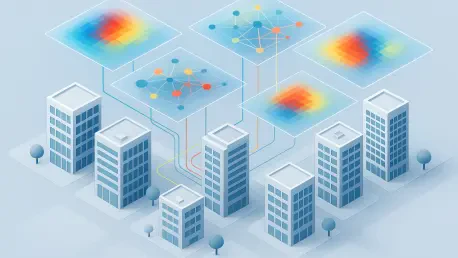
The historical roadmap for this seismic shift is found in how the property sector responded to unprecedented disasters in the early 1990s. Events such as Hurricane Andrew and the Northridge earthquake exposed the limitations of traditional actuarial methods, forcing the industry to integrate geographic and structural data into sophisticated probabilistic models. Currently, the casualty market is undergoing a similar metamorphosis, though it benefits from significantly more powerful technology than was available during the property revolution. Instead of relying solely on physical maps and meteorological data, casualty underwriters are now utilizing massive datasets and machine learning algorithms to map potential litigation clusters. This transition marks a fundamental departure from the status quo, moving away from simple trend analysis toward a complex simulation of how legal and social pressures might interact over time. This approach allows for a much more nuanced understanding of the systemic risk profiles that define the current liability environment.
Despite these technological advancements, the transition is inherently more complex due to the stark differences between physical and behavioral risks. Property risks are generally grounded in tangible factors such as geography and structural integrity, all of which are governed by the predictable laws of physics. In contrast, casualty risk is predominantly shaped by the inherent unpredictability of human behavior, evolving social norms, and a highly volatile legal environment. This distinction creates a unique challenge for modelers because liability risks are often categorized as “long-tail,” meaning they can accumulate silently for several decades before a catalyst triggers a massive payout. Traditional modeling techniques often fail to capture the sudden impact of a single landmark court ruling or a new scientific discovery regarding chemical toxicity. Consequently, the industry is developing new analytical frameworks that can simulate these social and legal shifts with the same rigor as weather events or seismic activity.
Strategic Integration: Data Standards and Predictive Analytics
A significant barrier to achieving property-style precision in casualty insurance is the persistent lack of standardized data across the global sector. While the property market established a clear consensus decades ago on how to record and share location-based data, the casualty industry remains characterized by fragmented information systems. Underwriting data is often trapped in isolated silos, making it nearly impossible for insurers to accurately measure accumulation risk on a portfolio-wide basis. This visibility gap is particularly dangerous when a single issue, such as exposure to a specific industrial chemical, triggers claims across multiple industries simultaneously. Without a unified language for categorizing liability exposures, insurers remain vulnerable to interconnected losses that bypass traditional risk filters and aggregate into catastrophic events. Establishing these data standards is the primary hurdle that must be overcome to enable the same level of capital efficiency seen in the property market.
The successful transformation of the casualty market required a fundamental reassessment of how data was collected and analyzed across the insurance value chain. Organizations prioritized data hygiene by standardizing their input processes and investing in interdisciplinary teams that combined legal expertise with data science. They moved beyond the limitations of historical claims data and began to treat liability risk as a dynamic, evolving landscape by implementing natural language processing to monitor unstructured court filings for emerging threats like PFOS and glyphosate. By adopting these forward-looking methodologies, the industry established a more resilient framework that better protected capital from the volatility of social and legal shifts. This progress demonstrated that while behavioral risks were more difficult to quantify than physical ones, they were manageable with the right technological infrastructure. Ultimately, these actions allowed the sector to achieve an analytical maturity that ensured long-term stability for all stakeholders.