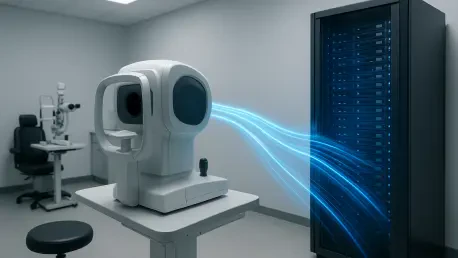

Managing the intersection of technological innovation and patient privacy requires optometry practices to maintain rigorous oversight of how third-party apps handle sensitive medical records. As 2026 progresses, the rapid integration of automated screening systems in primary eye care has fundamentally altered the actuarial calculus used by insurance providers to assess clinic risk. Consider a typical modern clinic where high-resolution imaging and real-time algorithmic analysis have turned the office into a high-density data hub. Insurance underwriters are no longer just looking at firewalls; they are now scrutinizing the specific neural networks used to detect macular degeneration or glaucoma. This evolution means that a simple software update can instantly change a practice’s liability profile. When an AI tool processes thousands of retinal scans, the potential for a large-scale data breach or a systemic diagnostic error grows significantly. Consequently, cyber insurance policies are being rewritten to account for these autonomous variables.
1. The Shifting Landscape of Liability and Diagnostic Accuracy
The introduction of deep-learning algorithms into clinical workflows has created a unique hybrid risk that bridges the gap between medical malpractice and cybersecurity. In the current 2026 environment, if an AI-driven screening tool fails to identify a retinal detachment due to a corrupted data packet or a biased training set, the resulting legal claim may fall into a difficult grey area of coverage. Cyber insurance providers are increasingly concerned with algorithmic integrity, which refers to the reliability and security of the code itself. Unlike human error, which is often isolated, a flaw in a widely used AI software package can lead to thousands of simultaneous diagnostic failures across multiple practices. This systemic risk has forced insurers to implement more stringent vetting processes for the software vendors that optometrists choose. Practices that utilize uncertified diagnostic tools may find themselves facing significantly higher premiums or even total exclusions for AI-related incidents.
Furthermore, the financial consequences of a cyber incident involving AI go far beyond simple data recovery costs. As these systems become more integrated with Electronic Health Records, a single ransomware attack can effectively paralyze the entire diagnostic capability of a practice. Insurance carriers now analyze how these AI platforms interact with legacy systems, looking for vulnerabilities that could be exploited by sophisticated threat actors. In 2026, the cost of business interruption coverage is heavily influenced by the redundancy protocols a practice has in place for its automated tools. If a clinic cannot operate without its AI assistant, underwriters perceive a much higher level of risk. This has led to the emergence of specialized riders that specifically address the loss of access to algorithmic tools. Optometrists are finding that maintaining comprehensive coverage requires a granular understanding of their software’s architecture and the specific data-sharing agreements they signed.
2. Data Governance and the Vulnerabilities of Automated Processing
Data privacy regulations have grown more complex as AI systems now require massive datasets to maintain their predictive accuracy. In 2026, the sheer volume of protected health information being uploaded to cloud-based AI servers presents a massive target for cybercriminals. Each interaction between a local imaging device and a remote processing server is a potential point of interception. Insurance providers are responding by requiring practices to implement end-to-end encryption that meets specific, modern standards. They are also examining the data lifecycle within the clinic, from the moment a scan is taken to its final archival state. If an AI vendor stores patient data indefinitely for its own training purposes, the optometry practice remains legally responsible for that information. This secondary use of data is a major red flag for cyber insurers, as it increases the attack surface—the total number of points where an unauthorized user can try to enter or extract data from a digital environment.
To address these emerging threats, optometric practices successfully transitioned to a model of proactive risk management that emphasized vendor transparency and robust digital hygiene. Looking toward 2027 and beyond, the integration of blockchain-verified audit trails for AI decisions became a standard requirement for those seeking the lowest insurance rates. Practitioners began to conduct quarterly security audits that specifically targeted the API connections between their diagnostic hardware and third-party software providers. These audits ensured that no unauthorized data leakage occurred during the high-speed transfer of patient files. By prioritizing the selection of AI partners who adhered to the highest standards of data security, clinics minimized their exposure to multi-million-dollar settlements. Ultimately, the industry moved toward a framework where cyber insurance was not just a safety net, but a catalyst for better data practices. This shift ensured that the benefits of artificial intelligence were harnessed without compromising the fundamental trust.