
As the war of attrition targets the industrial heartland, the transition from ad-hoc emergency aid to structured legislative support has become a cornerstone of Ukraine’s economic resilience strategy. The systematic targeting of manufacturing centers, energy nodes, and distribution hubs has forced a fundamental rethink of how the private sector can continue to operate when traditional market mechanisms fail. For several years, businesses faced a vacuum where commercial insurance providers either withdrew entirely or demanded premiums that rendered operations mathematically impossible. This economic paralysis posed a threat as severe as any kinetic strike, necessitating a robust state intervention to ensure that the engine of the national economy did not grind to a halt. By shifting toward a comprehensive state-backed insurance framework, the government has begun to provide the predictability required for long-term capital investment. This evolution represents a sophisticated understanding that modern warfare is fought as much through financial stability as it is through military strength, creating a precedent for how a nation can sustain industrial output under the most extreme conditions imaginable.
Broadening Geographical Coverage and Asset Protections: A New Map
Recent legislative refinements, particularly through the implementation of Resolution No. 1157, have fundamentally redrawn the boundaries of state-supported economic protection. Previously, insurance assistance was largely reactive and concentrated on the immediate vicinity of active combat zones, leaving a vast portion of the country’s industrial base exposed to long-range aerial threats. The realization that no square inch of the territory is truly beyond the reach of modern strike capabilities necessitated a pivot toward geographical inclusivity. By formally incorporating the Kyiv region and other metropolitan centers into the high-risk classification, the state has acknowledged that the capital’s density of commercial and industrial assets requires the same financial safeguards as those near the front lines. This shift has allowed thousands of businesses to finally access the risk mitigation tools they need to maintain their operations, effectively stabilizing the economic core that provides the tax revenue and employment necessary for national endurance.
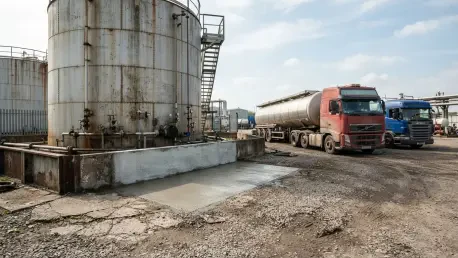
Beyond simply expanding the map, the government has modernized the definition of what constitutes an insurable asset to reflect the complexities of a wartime logistical network. The current framework now encompasses essential infrastructure that was previously overlooked, such as fuel storage tanks, complex inventory systems, and the specialized transport vehicles that form the backbone of the domestic supply chain. This is particularly vital in 2026, as the resilience of the energy and fuel sectors remains a top priority for national security. Furthermore, the inclusion of leased properties into the premium compensation scheme addresses a critical gap in the earlier versions of the program. Many entrepreneurs do not own the buildings they operate from, and by allowing these businesses to protect their equipment and operations within rented facilities, the state has ensured that the “protection gap” does not disproportionately affect small and medium-sized enterprises that lack the capital to own their own real estate.
Direct Property Compensation: Establishing the Financial Thresholds
The state has anchored its protective strategy in a direct property compensation mechanism designed to provide immediate liquidity following an incident of physical destruction. This system serves as a first-tier safety net, allowing businesses to recover from the shock of asset loss without facing instant bankruptcy. To participate, a company must proactively register and contribute a nominal “skin in the game” fee, calculated at 0.5% of their declared potential coverage limit. This requirement ensures that the program is not merely a passive entitlement but a partnership between the state and the private sector. By creating a pooled resource funded in part by those it protects, the government has managed to create a more sustainable financial model that encourages businesses to maintain high standards of safety and risk management, even as they operate under the constant shadow of potential missile or drone strikes.
However, the efficacy of this mechanism is governed by strict financial and temporal boundaries that businesses must carefully navigate. The current cap of UAH 30 million per entity represents a significant lifeline for smaller operations, yet it is often insufficient for heavy industrial plants or massive logistics centers whose replacement costs run into the hundreds of millions. This financial ceiling highlights a strategic choice to prioritize the survival of the broadest possible range of businesses rather than the total replacement of a few large-scale assets. Additionally, the program’s prospective nature is a critical administrative hurdle; only those losses incurred after January 1, 2026, are eligible for these specific funds. This decision was made to ensure the program’s solvency, but it leaves many legacy losses from the earlier stages of the conflict to be handled through alternative, often more complex, international legal and reparations channels that are still being established.
Subsidizing Private Insurance: Rebuilding the Commercial Market
Recognizing that the state cannot indefinitely replace the entire private insurance sector, the government has launched a robust premium reimbursement scheme to entice commercial insurers back into the fold. In high-risk environments, private premiums can frequently exceed 10% of the total asset value, a cost that most businesses find impossible to absorb. To mitigate this, the state provides up to UAH 5 million in annual reimbursements for insurance premiums, effectively lowering the net cost of coverage to a level that aligns with sustainable business models. This strategy aims to create a “blended” insurance market where the state absorbs the most extreme risks, allowing private firms to resume underwriting standard commercial risks. By reducing the overhead for businesses, this subsidy acts as a catalyst for economic activity, encouraging owners to keep their doors open in regions that might otherwise have been abandoned.
Despite the logical appeal of these subsidies, their success is often tethered to the complexities of the global reinsurance market. For a domestic insurer to write a policy, they must typically offload a portion of that risk to international reinsurers, many of whom remain extremely cautious about exposure within a conflict zone. The UAH 5 million subsidy is a powerful tool, but its utility depends on the existence of a willing private partner. The government has therefore focused on building relationships with international financial institutions to provide the backstop that these global reinsurers require. The ultimate goal is to foster a competitive environment where multiple insurers offer diverse products, moving away from a monolithic state-run system and toward a diversified market that can withstand the unique pressures of the current environment without relying solely on the national treasury.
The UAH 1 Billion Recovery Loan Program: Financing Reconstruction
Access to immediate cash is only one part of the recovery equation; long-term reconstruction requires significant capital that few businesses have on hand. To address this, Resolution No. 594 established a framework for subsidized recovery loans that offer up to UAH 1 billion in financing for a single business entity. This program is specifically geared toward large-scale projects that require substantial investment to return to full capacity or to modernize their operations. By setting a high maximum limit, the state has signaled its commitment to the survival of major industrial players who are critical to the national GDP and export potential. These loans are not intended for temporary fixes but are instead earmarked for the substantial rebuilding of facilities that have been significantly damaged or destroyed, ensuring that the industrial base can be restored with modern, more efficient technologies.
To ensure these loans do not become a debt trap in an economy characterized by high inflation, the state has implemented a significant interest rate mitigation strategy. The government compensates 5.5 percentage points of the bank’s base interest rate, which effectively caps the borrower’s exposure at a maximum of 18%. This subsidy is vital for making large-scale debt service manageable, allowing companies to focus their cash flow on operations and reconstruction rather than interest payments. Furthermore, these funds are prioritized for “hardened” infrastructure projects, such as the construction of underground storage facilities or distributed electricity generation systems. This focus on resilient adaptation ensures that the reconstructed assets are better prepared to survive future disruptions, shifting the economic strategy from simple repair to a more robust and decentralized model of industrial organization.
The Proposed International Compensation Fund: Scaling the Shield
The most ambitious component of the current economic defense strategy is the proposal to launch a massive international compensation fund, valued between $3 billion and $4 billion. This initiative was designed to transition the financial responsibility of war risk protection from the overburdened national budget to a multi-lateral international instrument. By pooling resources from global partners and international financial institutions, the fund aims to provide a scale of coverage that a single nation simply cannot sustain during a prolonged conflict. This fund would allow for significantly higher coverage limits, potentially up to $10 million per legal entity, which would meet the needs of the country’s largest manufacturers and infrastructure providers. This move toward internationalization is seen as a crucial step in normalizing the business environment and signaling to the world that the domestic economy is a viable place for continued investment.
The architecture of this proposed fund utilizes a tiered risk-sharing model that is intended to provide the certainty required by the global financial community. Under this structure, the state-backed international fund would cover the first layer of losses—the “first $10 million”—while private insurance and reinsurance markets would provide “excess of loss” coverage for amounts exceeding that threshold. This layered approach effectively de-risks the entry point for private capital, as commercial insurers only have to account for the most catastrophic, high-value losses rather than every individual strike. By providing this initial layer of financial certainty, the government and its international partners hope to trigger a broader return of private capital to the market. This structure is not just about paying for damage; it is about creating a sophisticated financial ecosystem that can absorb the shocks of a high-intensity conflict without collapsing.
Addressing the Logistics Crisis: Protecting the Supply Chain
The urgency of expanding insurance protections is most visible in the logistics and warehousing sector, which has faced unprecedented levels of destruction. Since late 2026, nearly 42% of the country’s modern warehouse space has been either completely destroyed or rendered unusable, a staggering loss of approximately 2.1 million square meters. This destruction has created a pervasive “logistics tax” that impacts every level of the economy, as the lack of storage capacity drives up transport costs and increases the spoilage of sensitive goods. Without a robust insurance and loan framework, the cost of rebuilding these facilities would be so high that many operators would simply exit the market, leading to a permanent degradation of the nation’s ability to move food, fuel, and medical supplies efficiently.
Recognizing these risks, the government has prioritized the logistics sector in its property compensation and recovery loan programs. The restoration of warehousing capacity is viewed as a prerequisite for price stability and food security. By incentivizing the construction of new, more distributed storage networks, the state is attempting to mitigate the impact of future attacks. These programs encourage developers to build away from high-density clusters and to invest in protective measures that can withstand fragmentation and fire. The success of these initiatives is critical not only for the immediate survival of the supply chain but also for the country’s long-term integration into global trade networks. A functional and resilient logistics sector is the foundation upon which the rest of the economic recovery will be built, making it the primary focus of current state-backed financial interventions.
Evaluating Current Gaps and Strategic Operational Needs
While the expansion of war risk insurance has provided a much-needed foundation for stability, several significant challenges persisted that required immediate attention from policymakers. The primary constraint was the sheer limitation of the national budget, which remained heavily tilted toward direct defense expenditures. This created an environment of “conditional certainty” where businesses were promised support, but the actual disbursement of funds was often contingent on available liquidity at the moment of the claim. This uncertainty made it difficult for corporate boards to commit to multi-year reconstruction projects, as the risk of a “funding gap” remained a constant variable in their calculations. Addressing this required a more transparent and dedicated funding stream that was isolated from the fluctuating demands of the military front.
Furthermore, the exclusion of state-owned and municipal enterprises from the primary compensation frameworks left a massive portion of the nation’s critical infrastructure exposed. These entities often manage the very utility and transport networks that are the most frequent targets of aerial campaigns, yet they were forced to rely on slower, more bureaucratic ministerial funding channels. Additionally, the refusal to cover losses retrospectively meant that companies which bore the brunt of the initial years of the conflict were left with depleted reserves and no state-backed path to recovery for those earlier damages. To address these gaps, stakeholders emphasized the need for better operational data and public reporting. Transparency in rejection rates and payout timelines became essential for building the trust necessary to convince the private sector that these insurance frameworks were reliable tools rather than just theoretical promises on a legislative page.
Advancing Operational Transparency and Strategic Implementation
The government eventually recognized that the effectiveness of the expanded insurance framework was measured not by the volume of legislation passed, but by the speed and reliability of capital transfers to businesses on the ground. To facilitate this, the state moved to digitize the entire claims and verification process, reducing the administrative burden on companies that were already struggling to survive. This modernization effort included the creation of a centralized portal where businesses could track the status of their applications in real-time, providing the transparency that had been missing in earlier iterations of the program. By streamlining the bureaucratic requirements, the government successfully shortened the time between an incident and the approval of a recovery loan, which allowed for faster stabilization of the industrial workforce and a reduction in long-term economic scarring.
Ultimately, the journey toward a comprehensive war risk insurance system established a blueprint for how a state can protect its economic sovereignty during a systemic conflict. Stakeholders determined that the focus must remain on securing the $3-4 billion international fund to move the system beyond the constraints of the domestic budget. This transition required proving to international partners that the domestic legal and administrative systems were capable of managing large-scale payouts with integrity. The government also prioritized the inclusion of broader sectors, including municipal infrastructure and earlier-stage recovery claims, to ensure that no part of the economy was left behind. These actions transformed the insurance framework from a temporary emergency measure into a permanent pillar of the national economic strategy, providing the long-term confidence needed for the eventual full-scale reconstruction of the country.